FINTRAC
Technical Bulletin #14: Agrochemical General Information Sheet - Imidacloprid
Imidacloprid is an insecticide that mimics nicotine, a naturally occurring compound found in plants such as tobacco.
2011 · 2 pages
Sign in to readA free account is required to download.
Abstract
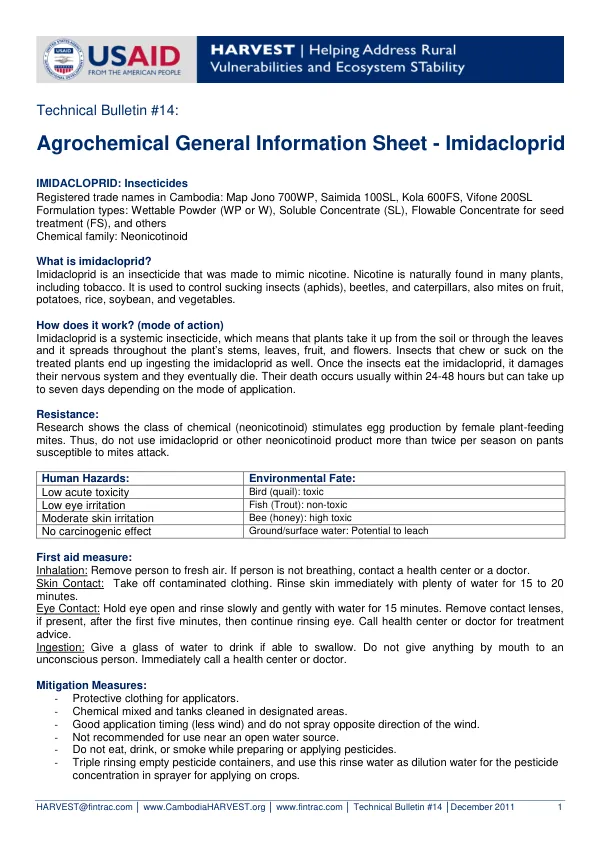
It is used to control a wide range of sucking insects, beetles, and caterpillars, as well as mites on various crops including fruit, potatoes, rice, soybeans, and vegetables. Imidacloprid is a systemic insecticide, meaning it is absorbed by plants and distributed throughout their stems, leaves, fruit, and flowers. When insects feed on treated plants, they ingest the imidacloprid, which damages their nervous system and ultimately leads to their death. The mode of action typically occurs within 24-48 hours, but can take up to seven days depending on the application method. Research has shown that the neonicotinoid class of chemicals, to which imidacloprid belongs, can stimulate egg production in female plant-feeding mites. As a result, imidacloprid and other neonicotinoid products should not be used more than twice per season on plants susceptible to mite attack. Imidacloprid has been registered for use in Cambodia under various trade names, including Map Jono 700WP, Saimida 100SL, Kola 600FS, and Vifone 200SL. The chemical has a low acute toxicity to humans but can be toxic to birds and bees. It also has moderate skin irritation potential and can leach into ground and surface water. Protective measures should be taken when handling imidacloprid, including wearing protective clothing, mixing and cleaning equipment in designated areas, and avoiding application during windy conditions. The use of imidacloprid is subject to certain restrictions and guidelines. It is not recommended for use near open water sources, and applicators should avoid eating, drinking, or smoking while preparing or applying the pesticide. Empty pesticide containers should be triple-rinsed and used as dilution water for the pesticide concentration in the sprayer. Additionally, chemical rotation, avoiding application during flowering, and correct implementation of integrated pest management practices are essential to minimize the risks associated with imidacloprid use. Imidacloprid is specifically registered for use on vegetables and fruits, targeting a range of pests including brown plant hoppers, green plant hoppers, thrips, aphids, mealy bugs, black bugs, and striped flea beetles. The recommended application rate varies depending on the active ingredient concentration, and the pre-harvest interval is typically 7-14 days.
Related documents