USAID
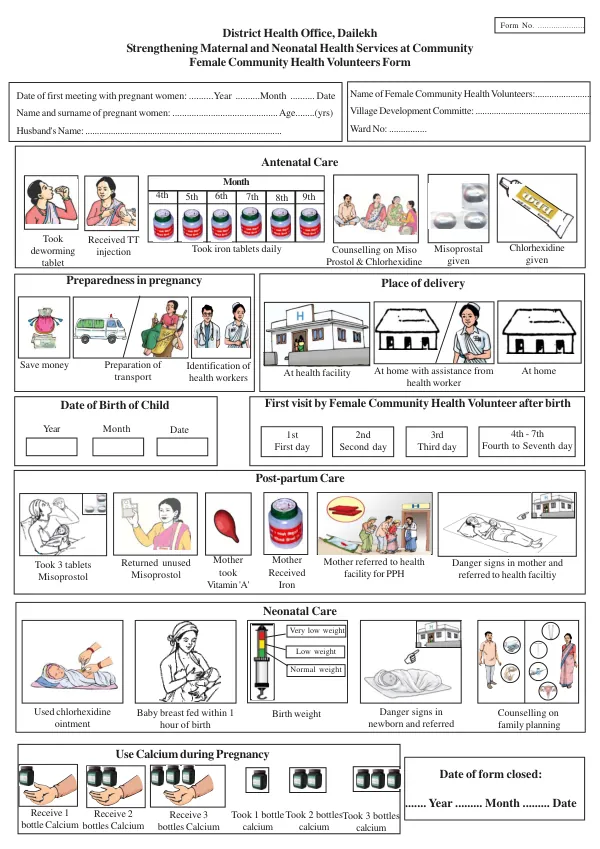
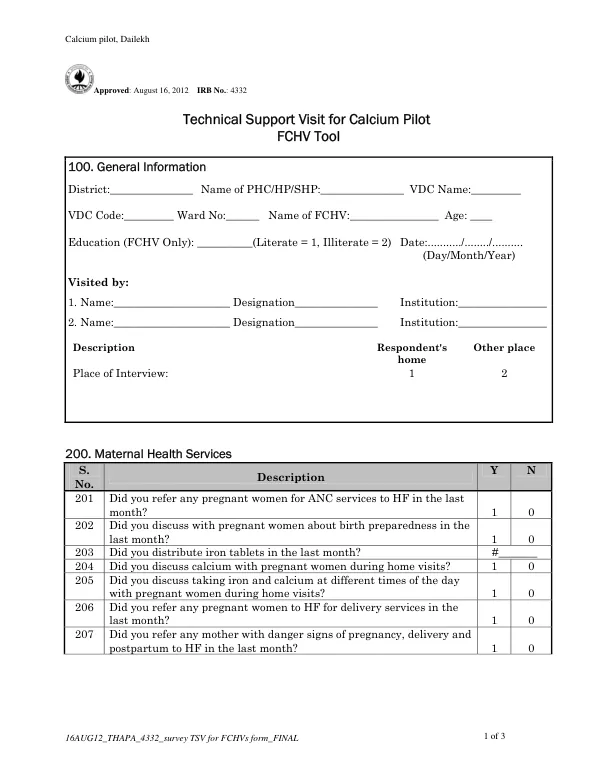
Technical Support Visit for Calcium Pilot FCHV Tool
The Calcium Pilot in Dailekh District was initiated to improve maternal health outcomes through calcium supplementation.
2012 · 3 pages
Sign in to readA free account is required to download.
Abstract
The pilot began in 2012, with a focus on pregnant women in the region. The primary objective was to assess the effectiveness of calcium counseling and distribution among Female Community Health Volunteers (FCHVs). FCHVs played a crucial role in the pilot, serving as the primary interface between the community and the healthcare system. They were responsible for conducting home visits, distributing iron tablets, and providing calcium counseling to pregnant women. The FCHVs were also expected to refer pregnant women to the nearest health facility (HF) for antenatal care (ANC) services, delivery, and postpartum care. The pilot's success was measured through a series of surveys conducted among FCHVs. The surveys aimed to assess the FCHVs' knowledge and practices regarding calcium counseling, as well as their ability to distribute iron tablets and refer pregnant women to the HF. The results of the surveys indicated that FCHVs were knowledgeable about the importance of calcium supplementation during pregnancy, with 100% of respondents recognizing its benefits in preventing complications such as pre-eclampsia and eclampsia. However, the surveys also revealed some gaps in FCHVs' knowledge and practices. For instance, only 50% of respondents knew that calcium should be taken in the morning with breakfast or a morning meal, while 25% believed that it could be taken at any time during the day. Similarly, 50% of respondents were unsure about the correct dosage of calcium, with some believing that 1-3 tablets should be taken daily. The pilot also aimed to assess the availability of commodities, including iron tablets, at the HF level. The surveys revealed that iron tablets were available in stock, but the quantity was not specified. The FCHVs also reported participating in monthly meetings and biannual review meetings, which were organized to discuss their progress and challenges. Overall, the Calcium Pilot in Dailekh District aimed to improve maternal health outcomes through calcium supplementation and counseling. The pilot's success was measured through a series of surveys conducted among FCHVs, which revealed some gaps in their knowledge and practices. However, the pilot's findings provided valuable insights into the effectiveness of calcium counseling and distribution among FCHVs, and its potential to improve maternal health outcomes in the region.
Related documents