MINISTRY OF JUSTICE
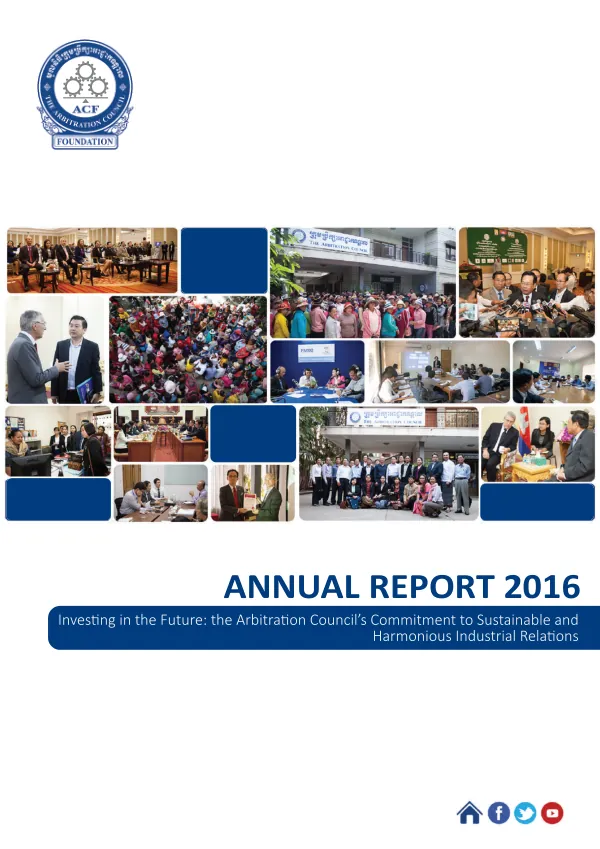
The Arbitration Council - Annual Report 2016
The Arbitration Council, established in May 2003, has seen a fluctuating trend in labour dispute cases over the years.
2016 · 52 pages
Sign in to readA free account is required to download.
Abstract
The council received a total of 2,656 cases as of December 2016, with a peak of 361 cases in 2014. However, the number of cases declined to 338 in 2015 and further dropped to 248 in 2016. Despite the decline, the council's caseload in 2016 remained relatively stable, with an average of 31 cases per month for the first eight months. However, there was a significant drop in the last four months, with an average of 8 cases per month. The Arbitration Council's caseload includes strike cases, with a total of 321 cases received between January 2011 and December 2016. The council issued Return-To-Work Orders (RTWO) in 143 cases, with a compliance rate of 93.7%. The council's caseload also includes collective labour disputes, with a total of 2,335 cases received as of December 2016. The Arbitration Council's services are supported by the Arbitration Council Foundation (ACF), which has been working to strengthen the council's services and expand its reach. The ACF has been seeking contributions from employers and employees to support the council's sustainability, with a proposed contribution of 2,000 Riel per worker per year. However, a mechanism for collecting contributions is still being studied. The Arbitration Council has been working closely with the Ministry of Labour and Vocational Training (MoLVT) to strengthen its services and expand its reach. The council has also been working with other stakeholders, including employer and employee representatives, to promote industrial relations and resolve labour disputes. The council's services have been recognized as an important mechanism for resolving labour disputes and promoting industrial relations in Cambodia. The Arbitration Council's caseload trends and services have been influenced by various factors, including the implementation of the new Trade Union Law in September 2016. The council's services have also been affected by the decline in labour dispute cases, which may be associated with the implementation of the new law. However, further study is needed to understand the root causes of the decline and its impact on the council's services. The Arbitration Council's services have been recognized as an important mechanism for resolving labour disputes and promoting industrial relations in Cambodia. The council's caseload trends and services have been influenced by various factors, including the implementation of the new Trade Union Law. The council's services have been supported by the Arbitration Council Foundation, which has been working to strengthen the council's services and expand its reach.