TETRA TECH
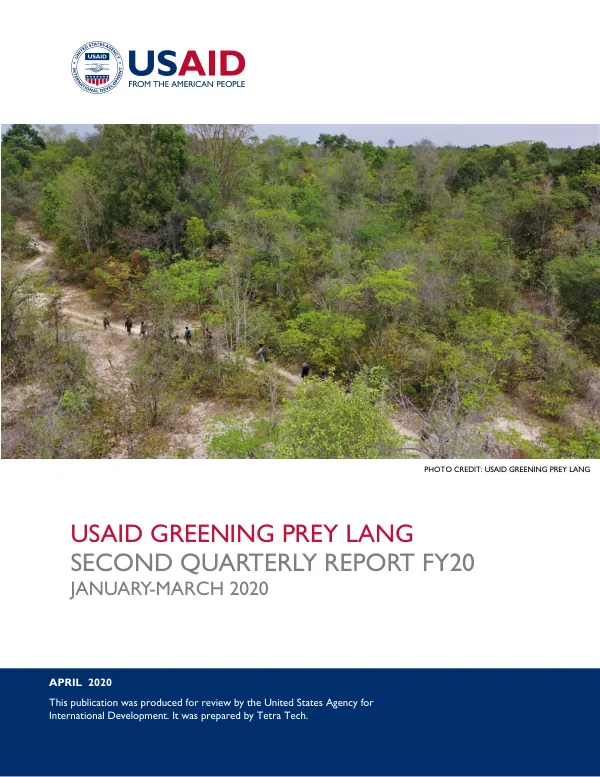
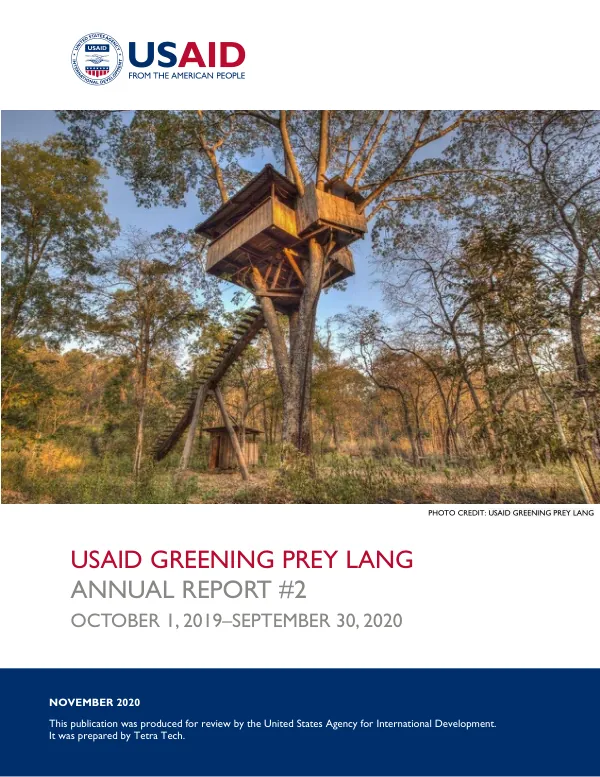
USAID Greening Prey Lang Annual Report #2
The Greening Prey Lang Activity, a USAID-funded program, aimed to improve biodiversity conservation and ecosystem health in the Prey Lang Extended Landscape.
2020 · 131 pages
Sign in to readA free account is required to download.
Abstract
The program's geographic focus was on the Prey Lang Extended Landscape, which spans across Preah Vihear, Kampong Thom, and Kratie provinces in Cambodia. The program's implementation began in October 2018 and concluded in September 2020. The program's objective 1 focused on improved biodiversity conservation and ecosystem health. Key activities included the establishment of community protected areas, community forests, and community fisheries. The program also supported the development of a biodiversity conservation corridor, which aimed to connect fragmented habitats and promote the movement of wildlife. The program's objective 1 challenges included the need to balance human-wildlife conflict with conservation efforts and the lack of effective law enforcement in the region. The program's objective 2 aimed to increase sustainable and equitable economic opportunities, community livelihoods, and natural capital reinvestment. Key activities included the development of sustainable agriculture practices, the promotion of ecotourism, and the establishment of community-managed forests. The program also supported the development of a sustainable finance plan, which aimed to promote the use of green finance mechanisms to support conservation efforts. The program's objective 2 challenges included the need to address the root causes of deforestation and the lack of effective governance structures in the region. The program's objective 3 focused on strengthened inclusive and effective landscape governance. Key activities included the development of a landscape management plan, the establishment of a community-led monitoring and evaluation system, and the promotion of community engagement and participation in decision-making processes. The program also supported the development of a performance indicator tracking table, which aimed to monitor progress towards program objectives. The program's objective 3 challenges included the need to address the lack of effective coordination among stakeholders and the need to promote greater community engagement and participation in decision-making processes. The program's management and communications activities included the development of a project management plan, the establishment of a communications and outreach strategy, and the promotion of community engagement and participation in decision-making processes. The program also supported the development of a performance indicator tracking table, which aimed to monitor progress towards program objectives. The program's results included the establishment of 12 community protected areas, covering an area of 12,000 hectares, and the development of a biodiversity conservation corridor, which aimed to connect fragmented habitats and promote the movement of wildlife. The program also supported the development of sustainable agriculture practices, the promotion of ecotourism, and the establishment of community-managed forests. The program's sustainability was promoted through the development of a sustainable finance plan, which aimed to promote the use of green finance mechanisms to support conservation efforts. The program also supported the development of a landscape management plan, which aimed to promote effective governance and coordination among stakeholders. The program's results were monitored through a performance indicator tracking table, which aimed to monitor progress towards program objectives.
Related documents