AVENIR HEALTH
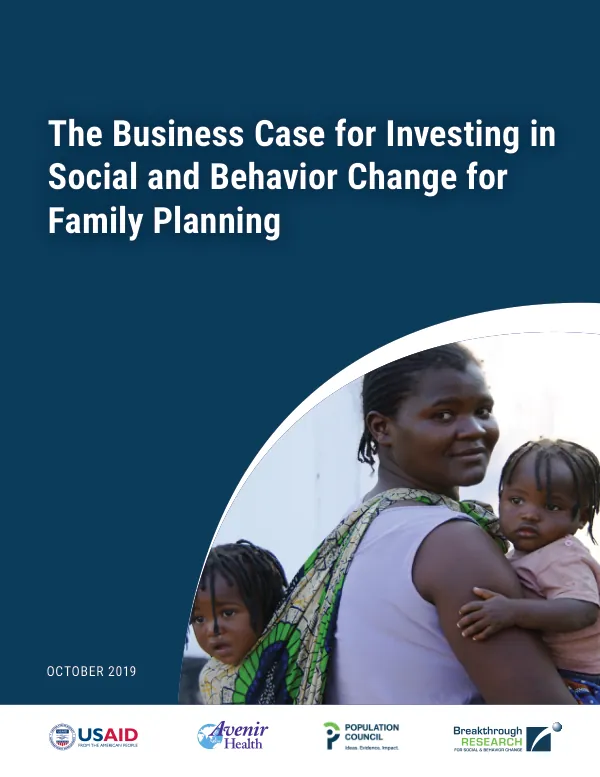
The Business Case for Investing in Social and Behavior Change for Family Planning
The Business Case for Investing in Social and Behavior Change for Family Planning is a document that presents a comprehensive analysis of the effectiveness and cost-effectiveness of social and behavior change (SBC) interventions for family planning.
2019 · 48 pages
Sign in to readA free account is required to download.
Abstract
The document is a result of a collaboration between Breakthrough RESEARCH, a consortium led by the Population Council, and other global health organizations. The document begins by explaining the need for an SBC business case, which is a systematic approach to evaluating the costs and benefits of SBC interventions. The purpose of the SBC business case is to provide a framework for decision-makers to assess the value of investing in SBC interventions for family planning. The document defines SBC as a set of strategies and activities aimed at changing individual and community behaviors to improve health outcomes. It highlights the importance of SBC in promoting modern contraceptive use, which is a critical component of family planning. The document presents a review of the literature on the effectiveness of SBC interventions for family planning. The review finds that SBC interventions are effective in increasing modern contraceptive use, particularly among young women and in low-income settings. The review also identifies the key intermediate outcomes that are associated with SBC interventions, including knowledge, attitudes, and practices related to family planning. The document also presents a review of the literature on the costs of SBC interventions for family planning. The review finds that the costs of SBC interventions vary widely depending on the specific intervention and the context in which it is implemented. However, the review suggests that SBC interventions can be cost-effective, particularly when they are implemented in combination with other family planning interventions. The document presents a case example from the literature on the cost-effectiveness of SBC interventions for family planning. The case example highlights the importance of considering the costs and benefits of SBC interventions in the context of broader family planning programs. The document also presents a country-level modeling of the cost-effectiveness and return on investment of SBC interventions for family planning. The modeling suggests that SBC interventions can be a cost-effective way to increase modern contraceptive use and reduce unintended pregnancies. The document concludes by highlighting the importance of investing in SBC interventions for family planning. It emphasizes the need for decision-makers to consider the costs and benefits of SBC interventions in the context of broader family planning programs. The document also highlights the need for further research on the effectiveness and cost-effectiveness of SBC interventions for family planning. The document is a valuable resource for decision-makers, researchers, and practitioners working in the field of family planning. It provides a comprehensive analysis of the effectiveness and cost-effectiveness of SBC interventions for family planning and highlights the importance of investing in these interventions to improve health outcomes. The document is also a useful resource for policymakers and program managers working in the field of family planning. It provides a framework for evaluating the costs and benefits of SBC interventions and highlights the importance of considering the context in which these interventions are implemented. Overall, the document presents a compelling case for investing in SBC interventions for family planning. It highlights the importance of these interventions in promoting modern contraceptive use and reducing unintended pregnancies, and emphasizes the need for further research on the effectiveness and cost-effectiveness of these interventions.
Related documents