USAID DEC
The effects of condom choice on self-reported condom use among men in Ghana, Kenya and South Africa: a randomized trial
Sign inFAMILY HEALTH INTERNATIONAL
The effects of condom choice on self-reported condom use among men in Ghana, Kenya and South Africa: a randomized trial
Male latex condoms are readily available and affordable in many settings, but risky sexual acts still go unprotected.
2011 · 8 pages
Sign in to readA free account is required to download.
Abstract
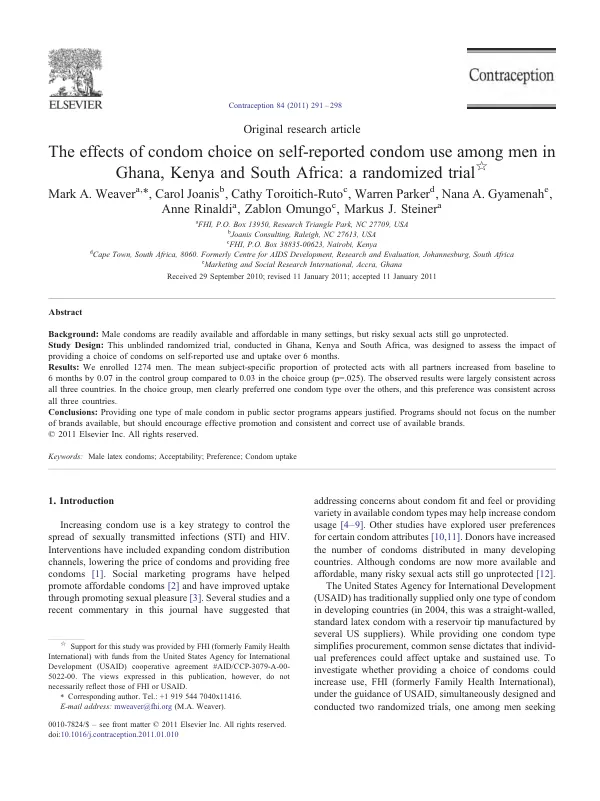
This study aimed to assess the impact of providing a choice of condoms on self-reported condom use among men in Ghana, Kenya, and South Africa. The trial was conducted from June 2002 to March 2004 at sites in the three countries. Prior to initiation, the study protocol and informed consent were approved by institutional review boards. The study recruited 1274 men from different locations within each country. Eligibility criteria included being at least 18 years of age, having used condoms in the previous 30 days, and agreeing to participate in the study for up to 6 months. Exclusion criteria included history of adverse reactions to latex or abstinence in the previous month. Participants were randomly allocated to either the control group or the choice group through sequentially numbered, sealed envelopes. The control group received free supplies of the standard USAID condom, while the choice group received free supplies of three condom brands: Rough Rider, inSpiral, and socially marketed or public-sector brands. All condoms were provided free of charge and participants could return for condom re-supply as needed. The primary outcome was change from baseline to 6 months in the subject-specific, self-reported proportion of sexual acts protected with male condoms. The results showed that the mean change from baseline to 6 months in the proportion of protected acts was 0.07 in the control group and 0.03 in the choice group. The difference between the two groups was statistically significant (p=0.025). The results were largely consistent across all three countries. In the choice group, men clearly preferred one condom type over the others, and this preference was consistent across all three countries. The study found that providing one type of male condom in public programs appears justified. Programs should not focus on the number of brands available, but rather encourage effective promotion and consistent use of available brands. The study also suggests that addressing concerns about condom fit and providing variety in available condom types may help increase condom usage.