USAID DEC
The Exploratorium: A Facility for Exploring the Eastern Desert and Red Sea
The Eastern Desert and Red Sea region is characterized by a complex web of human and natural relationships.
2009 · 37 pages
Sign in to readA free account is required to download.
Abstract
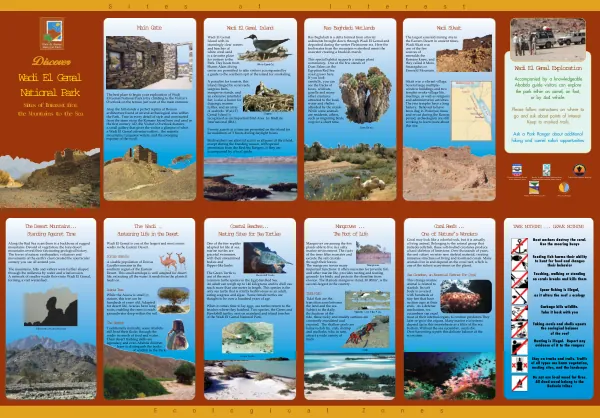
The region's unique geography, with its rugged mountains, wadis, and marine habitats, supports a diverse array of flora and fauna. The mountains, formed from ancient rocks dating back over 550 million years, are dissected by wadis that provide resting, feeding, and roosting places for many small birds. The region's geology is marked by the formation of the Red Sea rift, which occurred during the Oligocene period, resulting in the separation of Africa from the Arabian Peninsula. The newly formed rift was filled with seawater during the Miocene period, creating the present outlines of the Red Sea. The rocks in the region include igneous rocks like granite, formed from molten earth materials, and metamorphic rocks, such as gneiss and schist, formed under tremendous pressure and heat during mountain-building movements. The region's habitats are diverse and include mountain, wadi, marine, and island habitats. Each habitat has distinctive and occasionally overlapping wildlife of flora and fauna. The mountains rise gradually from west to east, with notable peaks such as Gebel Shayib el Banat, Gebel Hamata, and Gebel Elba. The wadis, which are relatively short and steep on the Red Sea side and longer and less steep on the west, provide a unique environment for plant and animal life. The marine habitats, including coral, mangroves, and sea grass ecosystems, are characterized by a diverse array of creatures, including tiny crustaceans, colorful invertebrates, and brilliantly colored fishes. Coral reefs provide habitats for many plants and animals, forming an ecological niche in which creatures can live, feed, and take refuge from predators. The rate at which coral colonies grow depends on the type of coral, location, and amount of sunshine they receive. The mangroves, which are an important component of the coastal flora, provide breeding habitat and protection for several commercially important species of shrimps, crabs, and fishes. The White Mangrove, Avicennia marina, grows in several places on the Red Sea coast and on some of the islands, while the Black Mangrove, Rhizophora mucronata, is found south of latitude 23°N. Sea grass beds occur throughout the Red Sea and contain eleven of the sixteen species known worldwide. The region's unique natural resources are significant to zoologists, with three great zoogeographical zones meeting here and the wildlife showing considerable variety. The diversity of Red Sea marine life has attracted the attention of investigators since early times, and the region's ecosystems offer a combined eco-system structure harboring a variety of flora and fauna that evolved over millions of years.