USAID DEC
The Impacts of Semi-Finished Rattan Export Ban on Land Conversion, Environment, and Farmers’ Prosperity
Sign inUSAID DEC
The Impacts of Semi-Finished Rattan Export Ban on Land Conversion, Environment, and Farmers’ Prosperity
The rattan industry in Indonesia has experienced significant decline since the implementation of the export ban on semi-finished rattan products in 2011.
2016 · 5 pages
Sign in to readA free account is required to download.
Abstract
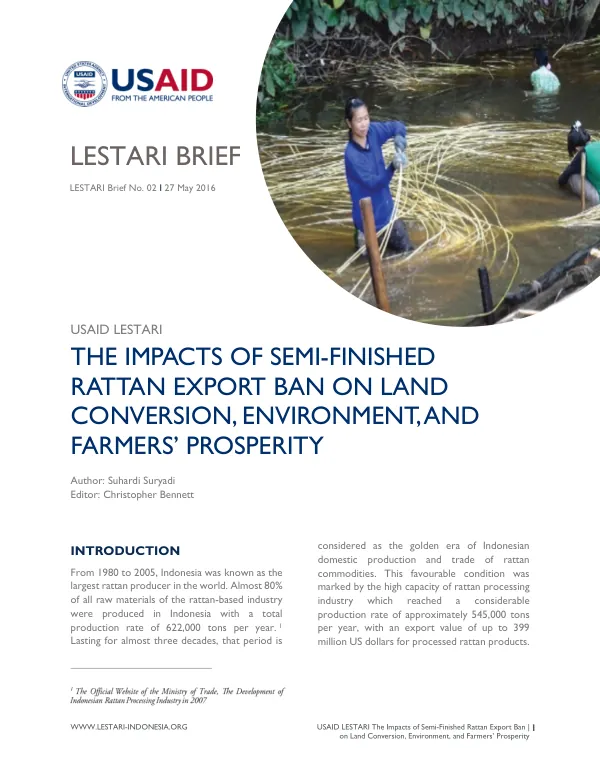
Prior to the ban, Indonesia was the largest rattan producer in the world, accounting for 80% of global production. The country's rattan industry was a significant contributor to the economy, providing employment for 75,000 part-time workers and generating an export value of up to 399 million US dollars per year. The export ban was intended to regulate the trade system for rattan commodities and optimize the economic value of rattan from the upstream level to the downstream level of the industry. However, the policy has had unintended consequences, including a decline in rattan trade at the levels of farmers, raw material harvesters, furniture producers, and craftsmen due to uncompetitive prices. The export value of Indonesian rattan has declined by approximately 6.3% per year since the ban was implemented. The ban has also led to a decline in the number of rattan processing factories, with a 27% decrease in the number of factories since the ban was implemented. This decline is attributed to difficulties in obtaining a sufficient supply of raw materials, uninspired designs, low quality of products, and industrial inefficiency. Business owners have attempted to survive by purchasing cheap raw materials and replacing rattan with other materials, such as bamboo or water hyacinth. The most devastating impact of the ban is the collapse in rattan prices at farm level, which affects rattan farmers, plantation owners, and harvesters. The current average price of raw rattan at farm level is 1,800 rupiahs per kilogram, which is far lower than the price in 2015. This low price is not proportional to the expenses incurred from harvesting the rattan, including workers' pay and transportation fees. As a result, farmers have become reluctant to cultivate, grow, and harvest rattan, leading to a shift towards more profitable commodities such as cocoa and oil palms. The conversion of land from rattan to other commodities has generated a higher rate of carbon emission, especially in peatlands, and increases the risk of forest and land fires. Rattan has a great ecological value, and its industry reserves a great potential for improving farmers' income due to its varied options of production systems. However, the low rattan price has minimized the income of farmers, leading to a decline in the industry's overall performance. The export ban policy has also triggered illegal trade of rattan-based products, with an average of 42 cases of rattan smuggling attempts thwarted by the Indonesian Customs and Police per year, with an estimated value of 20 to 50 billion rupiahs. The ban has failed to strengthen the downstream sector of the rattan industry, which focuses on rattan processing, and has instead led to a decline in the industry's overall performance.