COASTAL RESOURCES CENTER
The Importance of Wild Fisheries For Local Food Security: GHANA
The primary source of animal protein and livelihood for most Ghanaians is fish, particularly those residing along the coast.
2015 · 2 pages
Sign in to readA free account is required to download.
Abstract
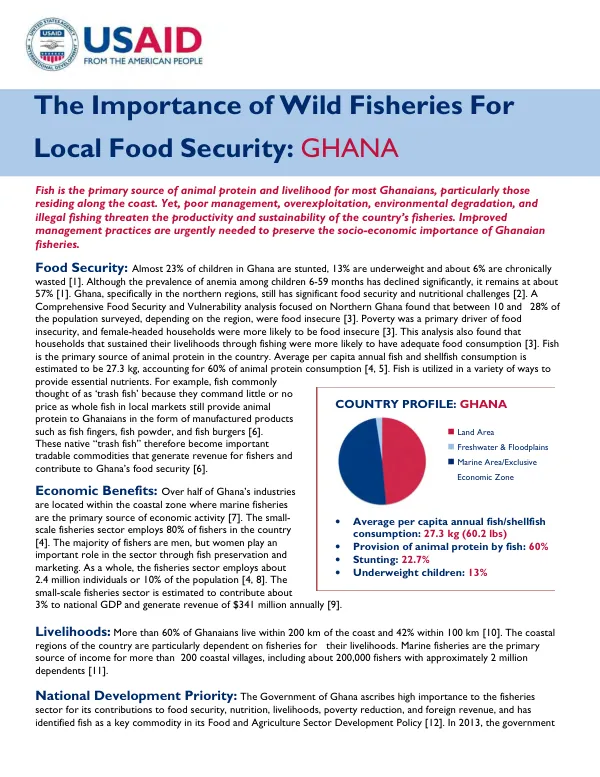
However, poor management, overexploitation, environmental degradation, and illegal fishing threaten the productivity and sustainability of the country's fisheries. Improved management practices are urgently needed to preserve the socio-economic importance of Ghanaian fisheries. Food security is a significant challenge in Ghana, with almost 23% of children stunted, 13% underweight, and about 6% chronically wasted. The prevalence of anemia among children 6-59 months has declined significantly, but remains at about 57%. A Comprehensive Food Security and Vulnerability analysis found that between 10 and 28% of the population surveyed, depending on the region, were food insecure. Poverty was a primary driver of food insecurity, and female-headed households were more likely to be food insecure. Households that sustained their livelihoods through fishing were more likely to have adequate food consumption. Fish is the primary source of animal protein in Ghana, accounting for 60% of animal protein consumption. Average per capita annual fish and shellfish consumption is estimated to be 27.3 kg, with fish being utilized in various ways to provide essential nutrients. Even "trash fish" that command little or no price as whole fish in local markets still provide animal protein to Ghanaians in the form of manufactured products such as fish fingers, fish powder, and fish burgers. The small-scale fisheries sector employs 80% of fishers in Ghana, with the majority being men, but women play an important role in the sector through fish preservation and marketing. The sector contributes about 3% to national GDP and generates revenue of $341 million annually. More than 60% of Ghanaians live within 200 km of the coast, and the coastal regions of the country are particularly dependent on fisheries for their livelihoods. Marine fisheries are the primary source of income for more than 200 coastal villages, including about 200,000 fishers with approximately 2 million dependents. The Government of Ghana ascribes high importance to the fisheries sector for its contributions to food security, nutrition, livelihoods, poverty reduction, and foreign revenue. The Ministry of Fisheries and Aquaculture Development was established in 2013 to promote sustainable management of the fisheries sector through scientific innovations, policy guidelines, and institutional capacity building. Improved management and governance of marine fisheries are also key objectives of USAID's work in Ghana.
Related documents