FLORIDA INTERNATIONAL UNIVERSITY
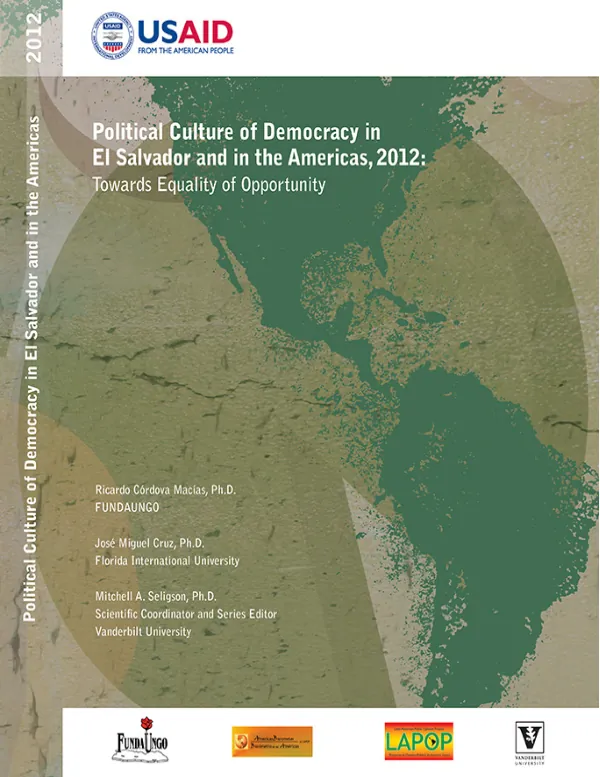
The Political Culture of Democracy in El Salvador and in the Americas, 2012
The study "The Political Culture of Democracy in El Salvador and in the Americas, 2012: Towards Equality of Opportunity" was conducted by a team of researchers led by Ricardo Córdova Macías, José Miguel Cruz, and Mitchell A.
2012 · 350 pages
Sign in to readA free account is required to download.
Abstract
Seligson. The study was supported by the Program in Democracy and Governance of the United States Agency for International Development. The research focused on the political culture of democracy in El Salvador and the Americas, with a particular emphasis on equality of opportunity. The study examined various aspects of democracy, including equality of economic and social opportunities, equality of political participation, and the effect of unequal opportunities and discrimination on political legitimacy and engagement. The study found that there are significant disparities in economic and social opportunities in the Americas, with the Dominican Republic being a case in point. The research revealed that public opinion in the Dominican Republic is divided on issues such as racial and gender inequality, with some individuals supporting affirmative action and others opposing it. In terms of political participation, the study found that turnout in the 2012 elections was relatively low in the Americas, with some countries experiencing higher levels of participation than others. The research also revealed that public opinion towards women's leadership and leadership by marginalized racial/ethnic groups is generally positive, but that there are still significant barriers to participation. The study also examined the impact of unequal opportunities and discrimination on political legitimacy and engagement. The research found that individuals who experience discrimination are more likely to feel disconnected from the political system and to express support for protest participation. The study also found that perceptions of corruption and crime victimization can have a negative impact on support for the political system. In terms of governance, the study found that corruption is a significant problem in the Americas, with many individuals perceiving that corruption is widespread. The research also revealed that perceptions of insecurity and crime victimization can have a negative impact on support for the rule of law. The study also examined the concept of political legitimacy and tolerance, finding that support for the political system varies across countries in the Americas. The research revealed that democratic stability is an important factor in determining support for democracy, and that individuals who experience discrimination are more likely to express support for democracy as a political regime. Overall, the study provides a comprehensive analysis of the political culture of democracy in El Salvador and the Americas, highlighting the importance of addressing disparities in economic and social opportunities and promoting greater equality of opportunity. The research also underscores the need to address corruption, crime, and insecurity in order to promote greater support for the political system and democracy more broadly.
Related documents