USAID DEC
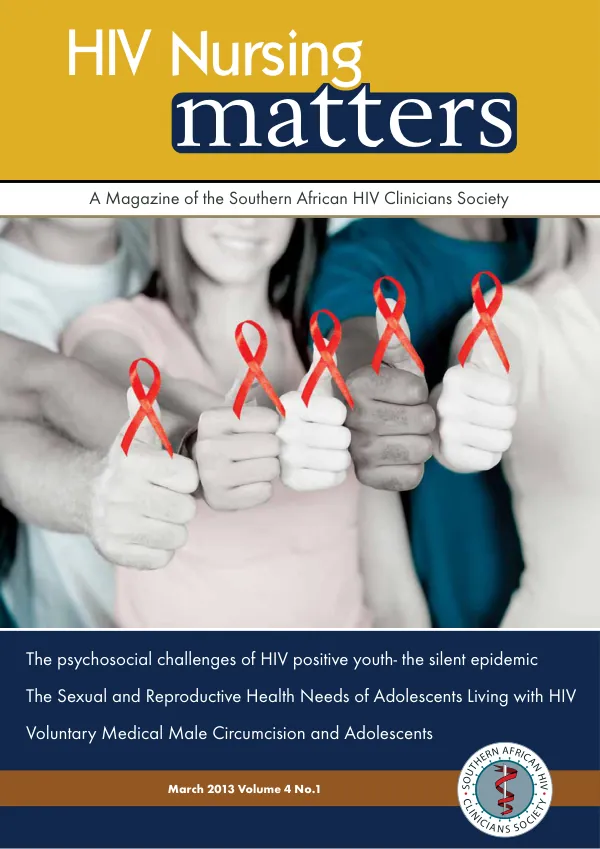
The psychosocial challenges of HIV positive youth: the silent epidemic
The psychosocial challenges of HIV-positive youth are a significant concern in South Africa.
2013 · 56 pages
Sign in to readA free account is required to download.
Abstract
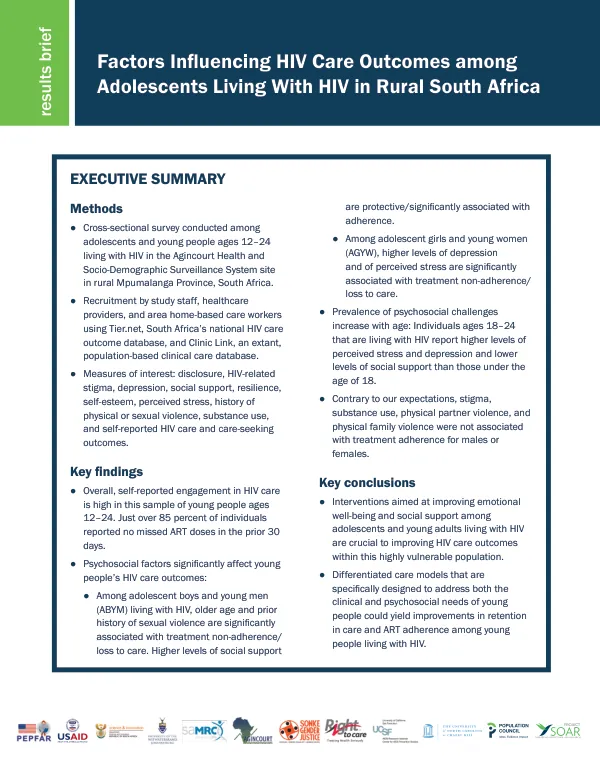
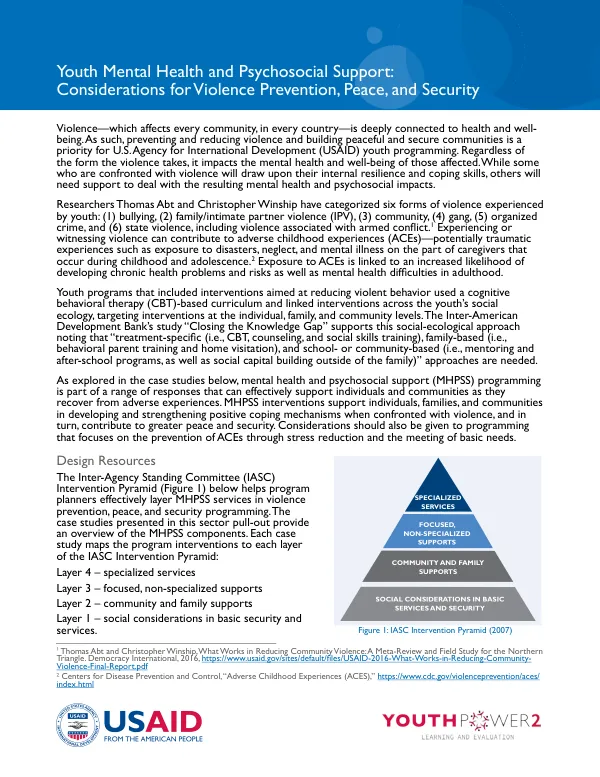
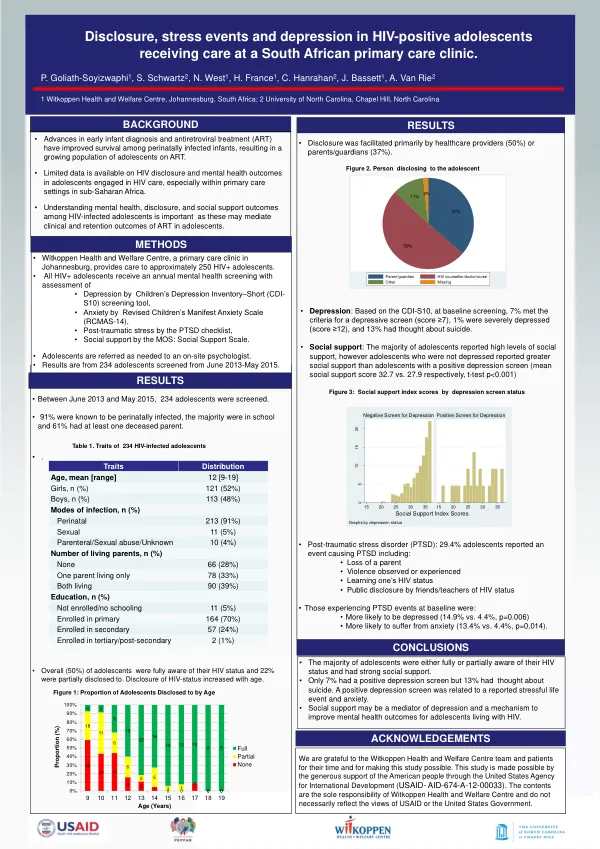
The country has a high prevalence of HIV among adolescents, with an estimated 5.5 cases per 100 women years. This is attributed to the generalized HIV epidemic, unhealthy gender norms, and limited access to adolescent-friendly services. Adolescence is a critical developmental stage during which children transition into adults, taking responsibility for their health and well-being. However, adolescents living with HIV face unique challenges, including complex medical conditions related to long-term HIV and antiretroviral therapy (ART) exposure. Many current perinatally HIV-infected adolescents (PHIA) have delayed commencement of ART, resulting in advanced HIV disease at the time of treatment initiation. PHIA often experience HIV-associated neuro-developmental delay, cognitive deficits, attention disorders, and psychiatric disorders. Mental health issues, such as depression and traumatic life events, have been implicated in adolescent sexual and substance abuse risk behaviors and ability to maintain adherence to medication. In South Africa, nearly a quarter of adolescents reported feelings of sadness or hopelessness in the preceding six months, and 21% had attempted suicide. Access to HIV counseling and testing for adolescents remains challenging, despite clear guidance from the Children's Act (Act 38, 2005) that children 12 years and older with sufficient maturity can independently consent for an HIV test. Anecdotal reports suggest that slow progressors often remain undiagnosed into older childhood and adolescence. Adolescents with PHIA require access to adolescent-friendly services that address their specific needs, including HIV diagnosis, diagnosis and treatment of complex clinical conditions, sexual and reproductive health services, and screening, diagnosis, and treatment for mental health conditions and psychosocial problems. Mental and psychosocial services need to be specifically capacitated to be gender-sensitive and address the psychosocial consequences of gender-based violence. The current edition of HIV Nursing Matters focuses on youth and HIV, highlighting the importance of screening adolescents with PHIA for behavioral, cognitive, and mental health problems. Disclosure of HIV status to older children and adolescents has received considerable attention, but disclosure by adolescents living with HIV to their romantic and sexual partners has received relatively little attention. A 5-step process to support disclosure by adolescents to their partners is proposed. Clinical management of PHIA is often complicated by HIV drug resistance mutations, which can lead to virological failure and the development of drug resistance. A review of outcomes of children on ART in South Africa demonstrated that the three-year probability of virological failure in children is 19.3%. Only 38% of children with confirmed virological failure had been switched to second-line therapy, with a median time from failure to switch of 5.7 months. PHIA face considerable challenges in achieving autonomy due to both psychosocial and physical manifestations of HIV, including high rates of developmental delay, orphaning, recurrent bereavement, and increased vulnerability to violence and abuse. A review of children attending Harriet Shezi Children's Clinic at Chris Hani Baragwanath Hospital in 2010 indicated that more than 50% of children over the age of 5 years had lost at least one parent. Orphaned children are at a significantly higher risk of missing out on schooling, living in households with less food security, taking on significant caretaking responsibilities, suffering from anxiety and depression, and experiencing internal and external stigma and discrimination.
Related documents
Documents in this collection
 2021
2021USAID DEC
USAID SOUTH AFRICA SCHOOL-BASED SEXUALITY AND HIV PREVENTION EDUCATION ACTIVITY DO ADOLESCENT GIRLS FIND CSE USEFUL? A REVIEW OF LEARNER ENGAGEMENT WITH CSE AND CONTEXTUAL FACTORS INFLUENCING BEHAVIOUR REPORT
Open record 2016
2016USAID DEC