USAID DEC
Disclosure, stress events and depression in HIV-positive adolescents receiving care at a South African primary care clinic
Sign inNORTH CAROLINA A&T STATE UNIVERSITY
Disclosure, stress events and depression in HIV-positive adolescents receiving care at a South African primary care clinic
The Witkoppen Health and Welfare Centre in Johannesburg, South Africa, provides care to approximately 250 HIV-positive adolescents.
2015 · 1 pages
Sign in to readA free account is required to download.
Abstract
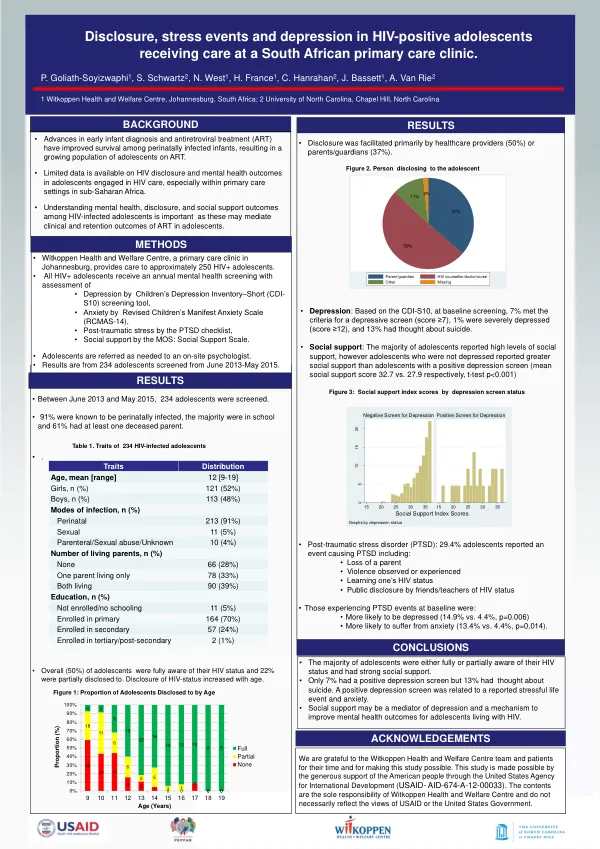
All HIV-positive adolescents receive an annual mental health screening, which includes assessments of depression, anxiety, post-traumatic stress, and social support. The screening tools used are the Children's Depression Inventory–Short (CDI-S10), the Revised Children's Manifest Anxiety Scale (RCMAS-14), the PTSD checklist, and the MOS: Social Support Scale. Between June 2013 and May 2015, 234 adolescents were screened. The majority of adolescents were perinatally infected, with 91% known to be infected at birth. The majority of adolescents were in school, and 61% had at least one deceased parent. Overall, 50% of adolescents were fully aware of their HIV status, and 22% were partially disclosed to. Disclosure of HIV status increased with age. Depression was assessed using the CDI-S10, and 7% of adolescents met the criteria for a depressive screen at baseline. One percent were severely depressed, and 13% had thought about suicide. Social support was reported to be high among the majority of adolescents, but those with a positive depression screen reported lower levels of social support. Post-traumatic stress disorder (PTSD) was reported by 29.4% of adolescents, with events causing PTSD including loss of a parent, violence observed or experienced, learning one's HIV status, and public disclosure by friends/teachers of HIV status. Adolescents experiencing PTSD events at baseline were more likely to be depressed and suffer from anxiety. The majority of adolescents reported high levels of social support, but those not depressed reported greater social support than those with a positive depression screen. Disclosure was facilitated primarily by healthcare providers (50%) or parents/guardians (37%). The study highlights the importance of understanding mental health, disclosure, and social support outcomes among HIV-infected adolescents, as these may mediate clinical and retention outcomes of antiretroviral treatment (ART) in adolescents. The study's findings suggest that social support may be a mediator of depression and a mechanism to improve mental health outcomes for adolescents living with HIV. The study also highlights the need for targeted interventions to address depression, anxiety, and PTSD in HIV-infected adolescents. The results of this study can inform the development of mental health services and support for HIV-infected adolescents in primary care settings in sub-Saharan Africa.