USAID DEC
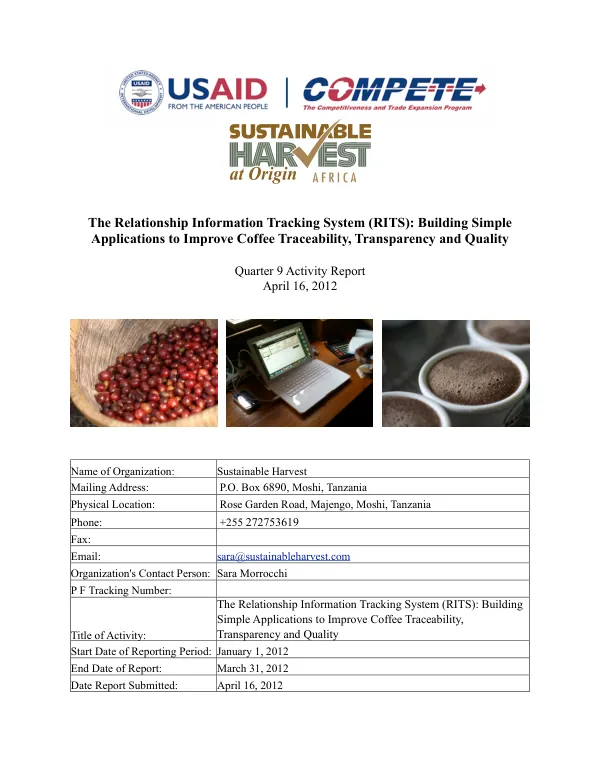
The Relationship Information Tracking System (RITS): Building Simple Applications to Improve Coffee Traceability, Transparency and Quality
Sign inUSAID DEC
The Relationship Information Tracking System (RITS): Building Simple Applications to Improve Coffee Traceability, Transparency and Quality
The Relationship Information Tracking System (RITS) is a technology designed to improve coffee traceability, transparency, and quality.
2012 · 6 pages
Sign in to readA free account is required to download.
Abstract
Implemented by Sustainable Harvest in collaboration with Kilicafe, a coffee cooperative in Tanzania, the system aims to increase efficiency and sustainability in coffee production. During the seventh quarter, Sustainable Harvest focused on monitoring and evaluating the RITS program with Kilicafe, ensuring its sustainability, and expanding the RITS training program to five new groups. With the 2011 coffee harvest coming to an end, efforts shifted to continued monitoring and evaluation, as well as expansion to benefit five more RITS washing stations. The RITS program was evaluated through surveys and focus group discussions with RITS users and Kilicafe leadership. Findings indicated that while the system brought increased efficiency, internet connectivity remained a challenge, particularly in the South, where groups often lost connectivity for several days. To address this issue, Sustainable Harvest and Kilicafe devised an action plan to shift RITS offline onto a spreadsheet-based system. The new offline system, RITS in Excel, enables groups to conduct more detailed searches within their data and complete final farmer payments at the end of the harvest. The system also allows for tracking group membership and farm size to aid with certification compliance. The groups in Mbinga were the first to see the spreadsheet, and feedback was incorporated into the final version. The RITS training program was expanded to five new groups in the North, chosen based on interest in the project and professional approach to operations. Existing RITS users also received training to maintain and extend their computer skills. The Northern RITS group received a second training in using GoogleDocs to track washing station expenses, and the Southern accountant and other groups received training in using spreadsheets. The offline version of RITS in Excel is expected to benefit Kilicafe's business model, given the current infrastructural challenges. The system's sustainability is further ensured by working with the groups to develop a system of optimum use to them. The RITS program has shown positive results, with farmers preferring the RITS-based method of tracking coffee over traditional methods due to quick access to individual farmer data and increased trust in computer tracking. A 2011 growers survey will be conducted to determine whether the RITS program has enabled farmers to increase the quality of their coffee, their price per kilogram, and therefore their livelihoods. The survey will be completed by the end of April, and the data analysis will be compiled into a detailed report to be included in the End of Project report. The RITS program has been successful in improving coffee traceability, transparency, and quality, and its offline version is expected to further enhance its sustainability and efficiency. The program's expansion to new groups and continued training of existing users will ensure its long-term success and benefit to Kilicafe and its members.
Related documents