INTERNATIONAL CHILDREN'S FUND, INC.
Syria - Complex Emergency Fact Sheet #18, Fiscal Year (FY) 2013
The Syria humanitarian crisis has resulted in significant human suffering, with millions of people in need of assistance.
2013 · 9 pages
Sign in to readA free account is required to download.
Abstract
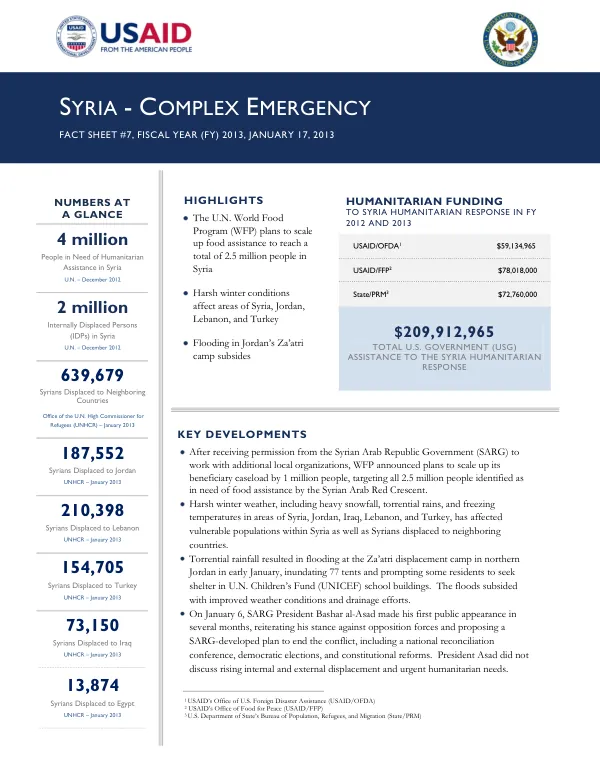
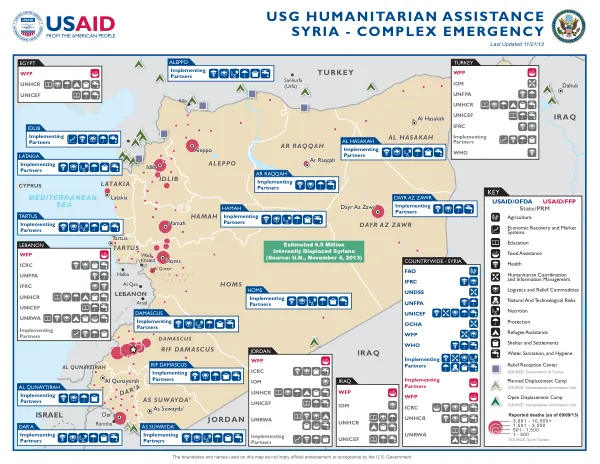
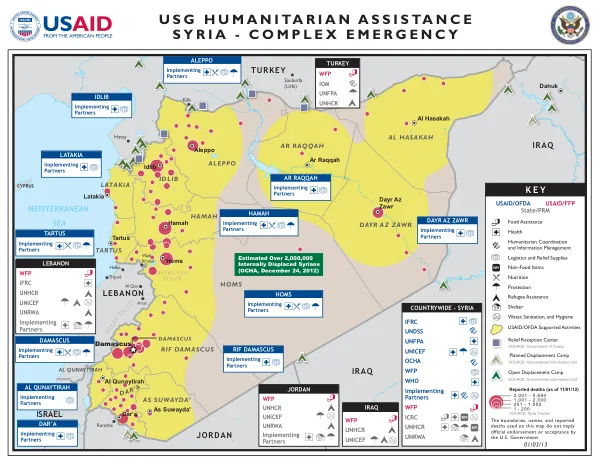
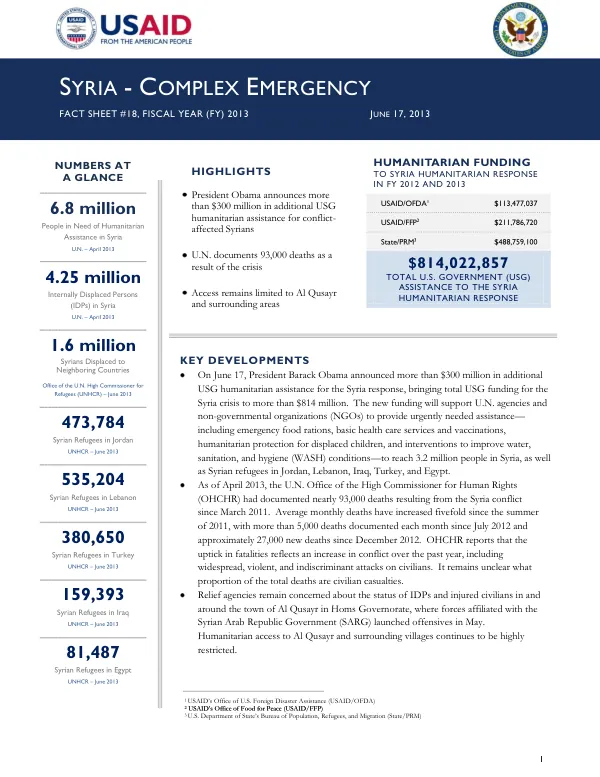
As of April 2013, the U.N. Office of the High Commissioner for Human Rights had documented nearly 93,000 deaths resulting from the conflict since March 2011. Average monthly deaths have increased fivefold since the summer of 2011, with more than 5,000 deaths documented each month since July 2012 and approximately 27,000 new deaths since December 2012. The U.N. reports that the uptick in fatalities reflects an increase in conflict over the past year, including widespread, violent, and indiscriminate attacks on civilians. It remains unclear what proportion of the total deaths are civilian casualties. Relief agencies remain concerned about the status of internally displaced persons (IDPs) and injured civilians in and around the town of Al Qusayr in Homs Governorate, where forces affiliated with the Syrian Arab Republic Government launched offensives in May. Humanitarian access to Al Qusayr and surrounding villages continues to be highly restricted. The U.S. government has provided significant humanitarian assistance to the Syria crisis, with total funding exceeding $814 million. The new funding announced by President Barack Obama on June 17, 2013, will support U.N. agencies and non-governmental organizations (NGOs) to provide urgently needed assistance to reach 3.2 million people in Syria, as well as Syrian refugees in Jordan, Lebanon, Iraq, Turkey, and Egypt. The assistance includes emergency food rations, basic health care services, vaccinations, humanitarian protection for displaced children, and interventions to improve water, sanitation, and hygiene (WASH) conditions. Health needs in Syria continue to rise, with people throughout the country facing both urgent and chronic health conditions in a context of deteriorating health sector capacity. Key health supplies, such as insulin, oxygen, anesthetics, and intravenous fluids, are no longer readily available or are insufficient to meet the need for continuous treatment of chronic conditions. Vaccination coverage has also decreased significantly since the onset of unrest, with approximately 700,000 children under the age of five failing to receive regular measles vaccinations in 2012. The U.N. reports that frequent power outages, fuel shortages, and damage to basic infrastructure have resulted in reduced water availability in many parts of Syria, contributing to an increased risk of communicable disease transmission. The U.S. government has allocated additional support to NGOs treating traumatic injuries and providing technical assistance to relief agencies improving Syria's disease early warning and alert systems. The USG also provided $6 million to UNICEF to increase IDP and host communities' access to WASH services, including improving water treatment plants, power supply systems, water storage and distribution, and household water treatment systems. UNICEF is also distributing hygiene kits and promoting improved hygiene in IDP camps and in host communities.