USAID
Training Guide for Health Workers
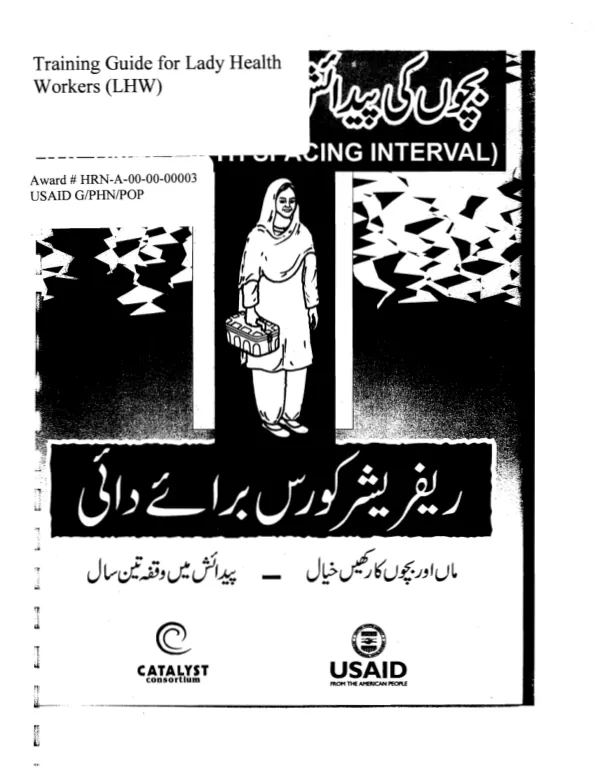
The Lady Health Worker (LHW) Training Guide is a comprehensive guide developed by the CATALYST consortium, in partnership with USAID, to support the training of Lady Health Workers in various aspects of maternal and child health.
30 pages
Sign in to readA free account is required to download.
Abstract
The guide is designed to equip LHWs with the necessary knowledge and skills to provide high-quality health services to rural communities. The training program focuses on key areas, including family planning, maternal and newborn health, and child health. The guide outlines the curriculum and instructional materials required for the training, which includes lectures, demonstrations, and practical exercises. The training is designed to be delivered over a period of 12 weeks, with a total of 120 hours of instruction. The guide emphasizes the importance of community-based health care and the role of LHWs in promoting health and well-being in rural areas. The training program places a strong emphasis on the development of interpersonal communication skills, which are essential for effective health education and counseling. The guide also provides guidance on the use of various health education materials, including visual aids and educational games. The CATALYST consortium, in collaboration with USAID, has developed a range of training materials and resources to support the LHW training program. These resources include a comprehensive training manual, instructional guides, and educational materials. The consortium has also established a network of trainers and facilitators who will deliver the training program in various regions. The Lady Health Worker Training Guide is a critical component of the USAID-funded program, which aims to improve maternal and child health outcomes in rural areas. The guide provides a standardized approach to training LHWs, ensuring that all trainees receive consistent and high-quality instruction. The training program is designed to be flexible and adaptable to the needs of different communities, allowing LHWs to provide targeted health services that address the specific needs of their clients.
Related documents