USAID DEC
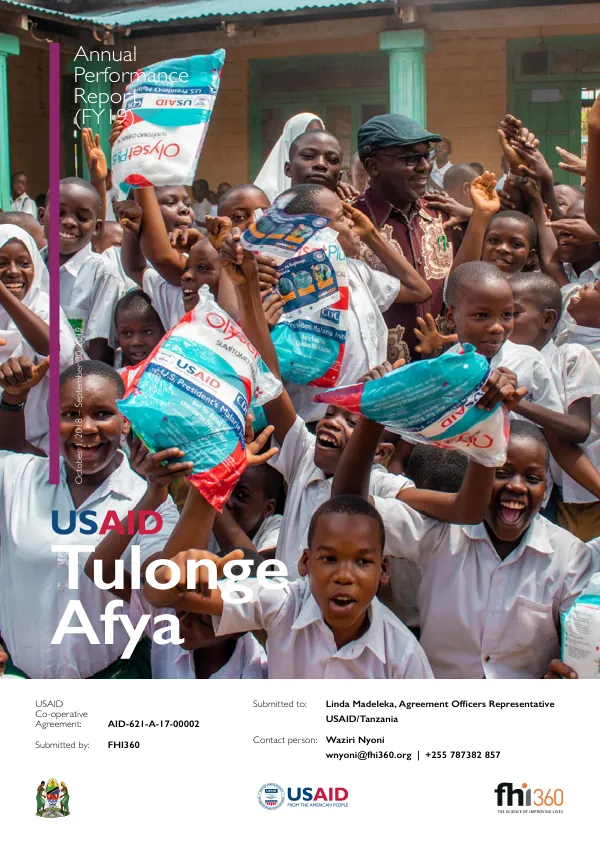
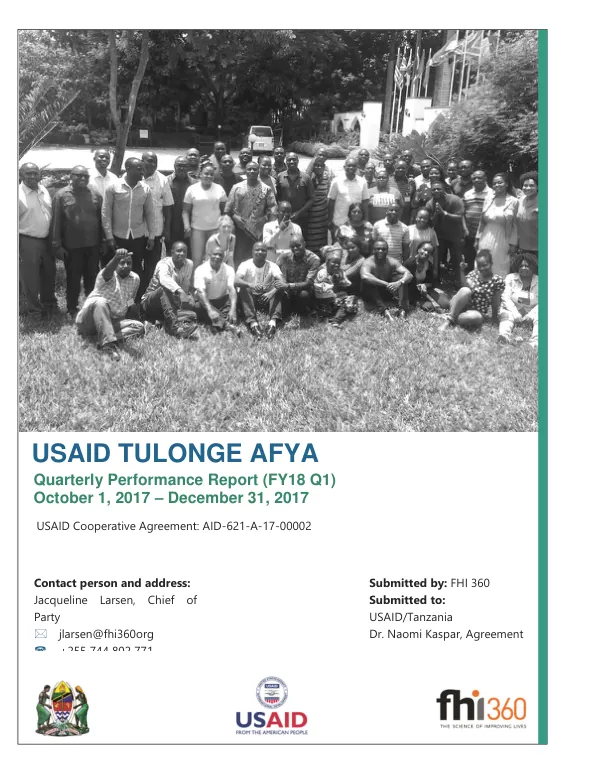
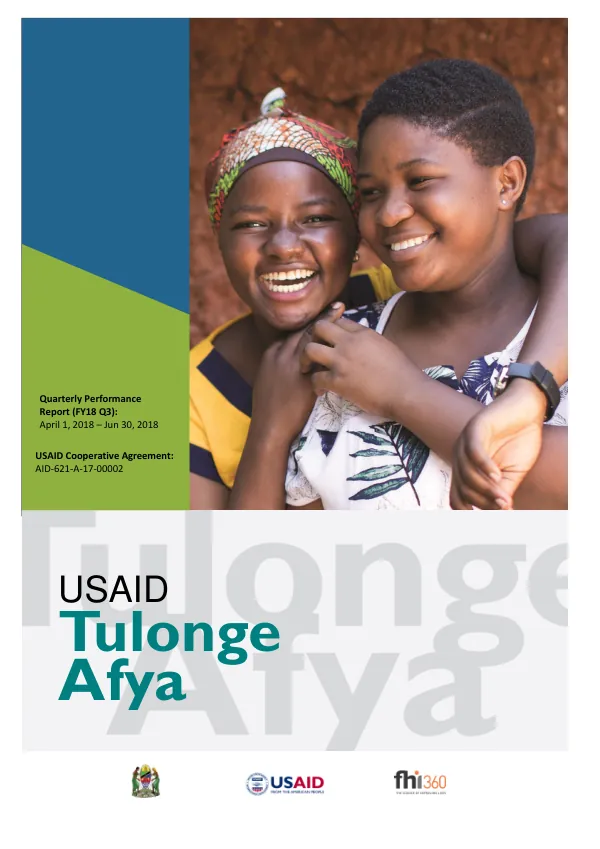
USAID Tulonge Afya Quarterly Performance Report (FY18 Q3): April 1, 2018 – Jun 30, 2018
Sign inFHI 360
USAID Tulonge Afya Quarterly Performance Report (FY18 Q3): April 1, 2018 – Jun 30, 2018
The USAID Tulonge Afya project, a cooperative agreement between USAID and FHI 360, has been working in Tanzania to support the government's efforts to promote healthy behaviors and improve health outcomes.
2018 · 35 pages
Sign in to readA free account is required to download.
Abstract
The project's main purpose is to strengthen community support for healthy behaviors, improve the ability of individuals to practice healthy behaviors, and improve systems for coordination and implementation of social and behavior change communication (SBCC) interventions. In the third quarter of fiscal year 2018, the project made significant progress in achieving its objectives. The Furaha Yangu (Test and Treat All) SBCC campaign was launched nationally, with the Prime Minister and the Honorable Minister for Health in attendance. The campaign aims to promote HIV testing and treatment among the general population. The project also collaborated with the Ministry of Health, Community Development, Gender, Elderly, and Children (MOHCDGEC) to develop a youth strategy, which has been accepted by the Ministry. The project provided SBCC technical assistance to the government, including the JIONGEZE maternal and child health campaign and implementing partners. Capacity assessments were completed at the national and regional levels, and a capacity strengthening framework is being drafted. The project also produced a core package of integrated materials for use in communities by facility staff, community health workers, and civil society organization volunteers and youth peer educators. The project's mass media activities have shown positive results across all health areas, with audience insights in family planning, maternal and child health, and tuberculosis completed and reported on this quarter. The baseline analysis is complete and will be disseminated in the fourth quarter. The project is working closely with the government and sister projects to ensure continued collaboration and coordination. The project's activities are focused on three main results: Improved ability of individuals to practice healthy behaviors, Strengthened community support for healthy behaviors, and Improved systems for coordination and implementation of SBCC interventions. The project is working with various stakeholders, including the government, civil society organizations, and implementing partners, to achieve these results. The project's geographic focus is Tanzania, with a specific emphasis on the youth and adult strategy development process. The project is working closely with the Ministry of Health, Community Development, Gender, Elderly, and Children (MOHCDGEC) and other stakeholders to support the government's efforts to promote healthy behaviors and improve health outcomes. The project's timeframes are focused on the third quarter of fiscal year 2018, with a focus on achieving the project's objectives and making progress towards the project's goals. The project is working closely with the government and sister projects to ensure continued collaboration and coordination. The project's recommendations are focused on continuing to support the government's efforts to promote healthy behaviors and improve health outcomes. The project recommends continued collaboration and coordination with the government and sister projects, as well as continued support for the development of the youth and adult strategy. The project also recommends continued capacity strengthening at the national, regional, and district levels. The project's implementation details are focused on working closely with the government and sister projects to ensure continued collaboration and coordination. The project is working with various stakeholders, including the government, civil society organizations, and implementing partners, to achieve the project's objectives. The project's activities are focused on providing SBCC technical assistance, capacity strengthening, and support for the development of the youth and adult strategy.