USAID
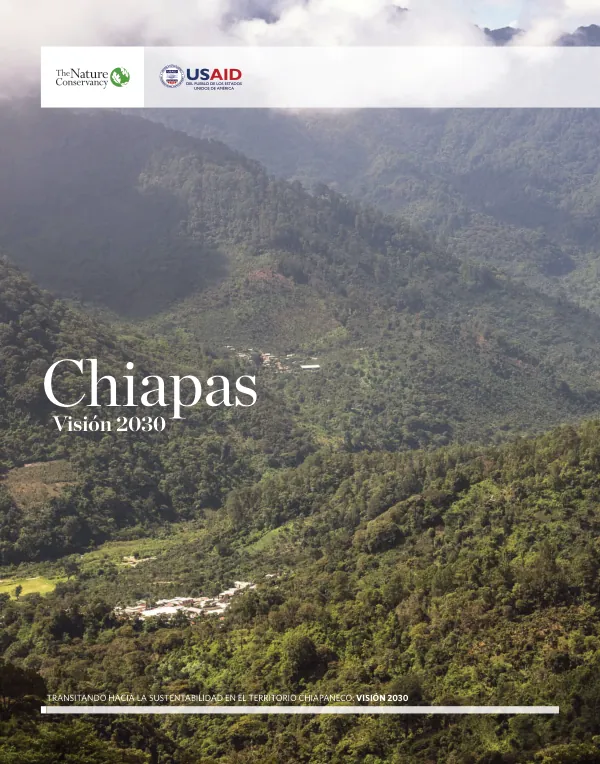
Transitando hacia la sustentabilidad en el territorio chiapaneco: Visión 2030
Chiapas is one of the 32 states in Mexico, with a total area of 7.5 million hectares.
2018 · 12 pages
Sign in to readA free account is required to download.
Abstract
The state is considered megadiverse, with an estimated 10-12% of the world's species inhabiting its territory. Chiapas is the second state in Mexico with the highest biodiversity, accounting for 17 types of vegetation, including tropical rainforests, cloud forests, and mangroves. The state is home to over 4,000 species of vascular plants, 700 species of birds, and more than 200 species of mammals. Chiapas is also a significant source of freshwater, accounting for over 30% of Mexico's water resources. The state's water resources are vital for human consumption, agriculture, and hydroelectric power generation, which accounts for 40% of Mexico's electricity. Despite its rich natural resources, Chiapas is facing significant environmental challenges, including deforestation, soil degradation, and loss of biodiversity. The state's deforestation rate is one of the highest in Mexico, with over 470,000 hectares of forest lost between 2001 and 2016. The main causes of deforestation in Chiapas are livestock and agriculture, with the state being the third-largest producer of livestock in Mexico. The livestock industry occupies nearly 3 million hectares of land, or 33% of the state's surface area, and is a significant contributor to deforestation, soil degradation, and loss of biodiversity. The state's agricultural sector is also facing challenges, with the majority of the land dedicated to subsistence crops such as maize and beans, and commercial crops like coffee. The low productivity of these crops has resulted in low incomes for farmers, with 77% of the population living in poverty in 2016. The state's water scarcity has also impacted the tourism industry, which is a significant contributor to the state's economy. To address these challenges, the state has set a vision for 2030, which aims to make Chiapas a resilient state with sustainable landscapes and communities. The vision includes increasing the productivity of agricultural and livestock systems, restoring and reforestation of degraded lands, and conserving existing forests. The state aims to achieve this vision by implementing several strategies, including increasing the productivity of agricultural and livestock systems, restoring and reforestation of degraded lands, and conserving existing forests. The state has set several goals for 2030, including increasing the area of protected natural areas to 1.77 million hectares, conserving 2.53 million hectares of forests, and increasing the productivity of agricultural and livestock systems. The state also aims to reduce greenhouse gas emissions by 1.4 million tons of CO2 equivalent per year. To achieve these goals, the state will need to implement several strategies, including restoring and reforestation of degraded lands, conserving existing forests, and increasing the productivity of agricultural and livestock systems. The state will also need to establish a good governance framework to ensure the implementation and sustainability of these strategies. This will involve the participation of various actors, including landowners, producers, government institutions, academic institutions, and civil society organizations. The state will also need to establish a system of incentives to encourage the conservation of forests and the sustainable use of natural resources. Overall, Chiapas is facing significant environmental challenges, but the state has set a vision for 2030 that aims to make it a resilient state with sustainable landscapes and communities. The state will need to implement several strategies to achieve this vision, including increasing the productivity of agricultural and livestock systems, restoring and reforestation of degraded lands, and conserving existing forests.
Related documents
Documents in this collection
 2015
2015USAID DEC
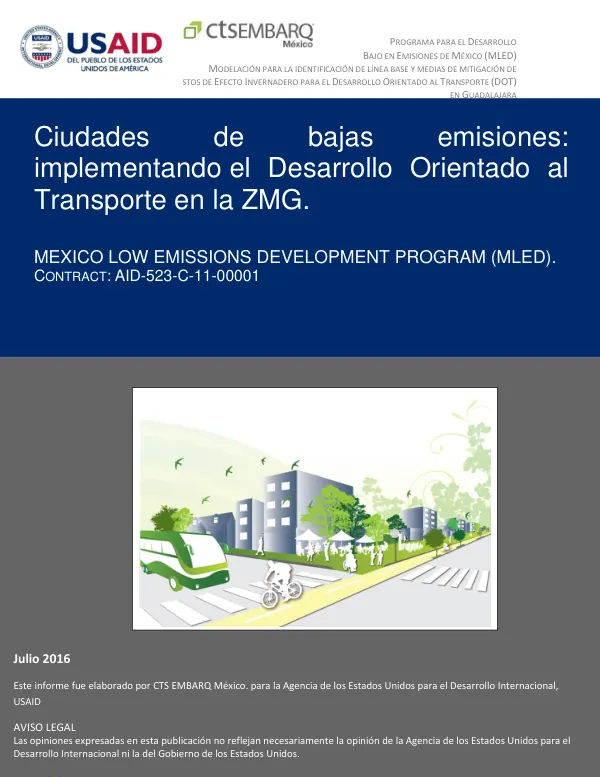
Modelación para la identificación de línea base y medias de mitigación de Emisiones de Compuestos de Efecto Invernadero para el Desarrollo Orientado al Transporte (DOT) en Guadalajara
Open record 2019
2019USAID DEC