ABT ASSOCIATES
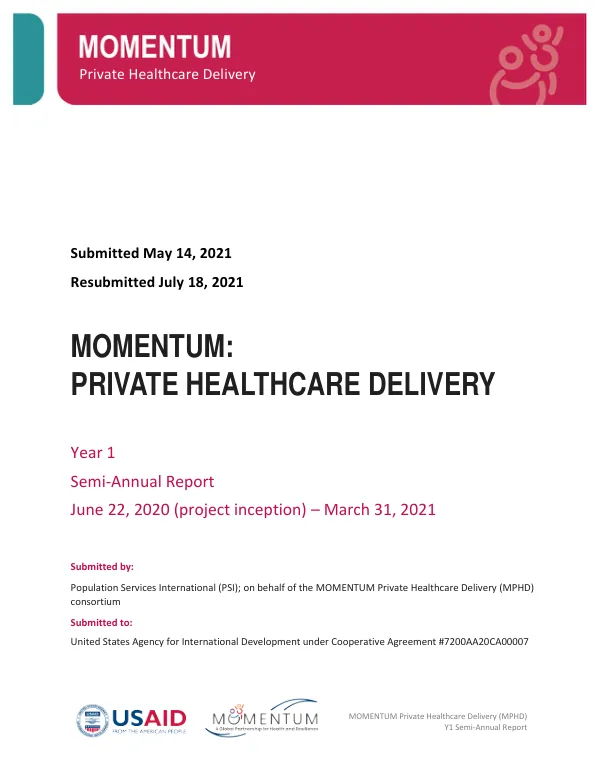
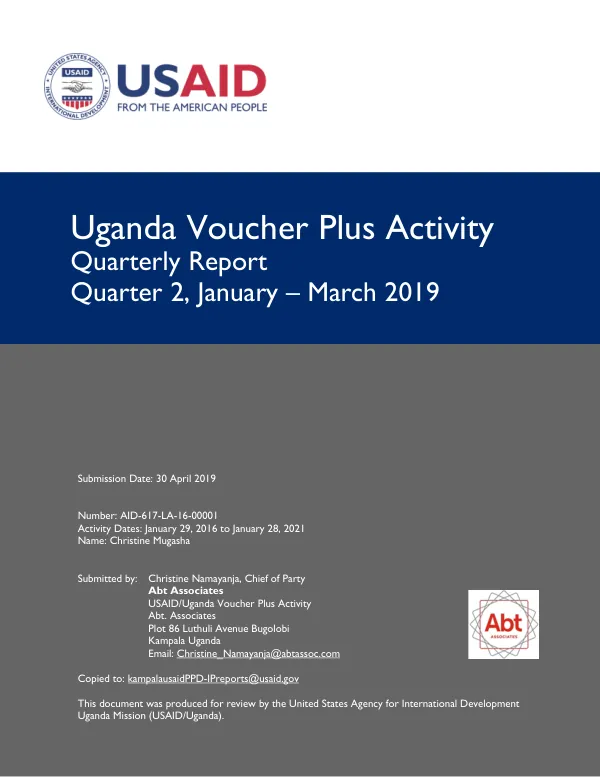
Uganda Voucher Plus Activity Quarterly Report Quarter 2, January – March 2019
The Uganda Voucher Plus Activity is a five-year project of USAID that aims to increase use of health services for pregnant women by promoting safe, facility-based deliveries among poor women to reduce maternal and neonatal morbidity and mortality in Eastern and Northern Uganda.
2019 · 56 pages
Sign in to readA free account is required to download.
Abstract
The Activity is led by Abt Associates and provides quality obstetric, newborn, and postpartum family planning services to very poor Ugandan women in 35 districts. The Activity identifies and accredits private providers to deliver a package of services, for which the providers are reimbursed by the Activity. Simultaneously, the Activity works with community volunteers, including village health teams (VHTs), who sell vouchers at 4,000 Ugandan shillings (UGX) to women who qualify, while also providing safe motherhood information to target populations. The voucher service package includes four antenatal care (ANC) visits; elimination of mother-to-child transmission of HIV services; delivery with a skilled birth attendant and referral for complications if needed, postnatal care, and postpartum family planning. Implementation of the Activity is ongoing, with a focus on increasing access to health services for poor women in the target districts. The Activity has established partnerships with various organizations, including the Ministry of Health, District Health Management Teams, World Bank, Marie Stopes Uganda, Regional Health Integration to Enhance Services, implementing partners, and Communication for Healthy Communities. The Activity has also engaged with community-based health insurance schemes and voucher management agencies to facilitate access to health services. As of the reporting period, January 1, 2019 to March 31, 2019, the Activity has made significant progress in implementing its interventions. The Activity has accredited over 100 private providers to deliver the voucher service package, and community volunteers have sold over 10,000 vouchers to eligible women. The Activity has also conducted training sessions for community volunteers and private providers on safe motherhood and voucher management. The Activity has also made progress in improving health equity by ensuring that the poor in the target districts have access to information and services to support healthy pregnancies and deliveries. The Activity has established a voucher management information system to track voucher sales and redemption, and has also established a system for monitoring and evaluating the impact of the Activity. The Activity has also engaged with stakeholders, including district health management teams, community leaders, and private providers, to ensure that the interventions are tailored to the needs of the target population. The Activity has also conducted regular monitoring and evaluation to assess the impact of the interventions and make adjustments as needed. The Activity has also made significant progress in improving the health outcomes of the target population. The Activity has reported a significant increase in the number of women accessing antenatal care services, and a decrease in the number of maternal and neonatal deaths in the target districts. The Activity has also reported an increase in the number of women accessing postpartum family planning services, and a decrease in the number of unintended pregnancies in the target districts. The Activity has also made significant progress in improving the capacity of private providers to deliver quality obstetric, newborn, and postpartum family planning services. The Activity has provided training and technical assistance to private providers on safe motherhood and voucher management, and has also established a system for monitoring and evaluating the quality of services provided by private providers. The Activity has also made significant progress in improving the capacity of community volunteers to sell vouchers and provide safe motherhood information to target populations. The Activity has provided training and technical assistance to community volunteers on voucher management and safe motherhood, and has also established a system for monitoring and evaluating the impact of community volunteers.