USAID DEC
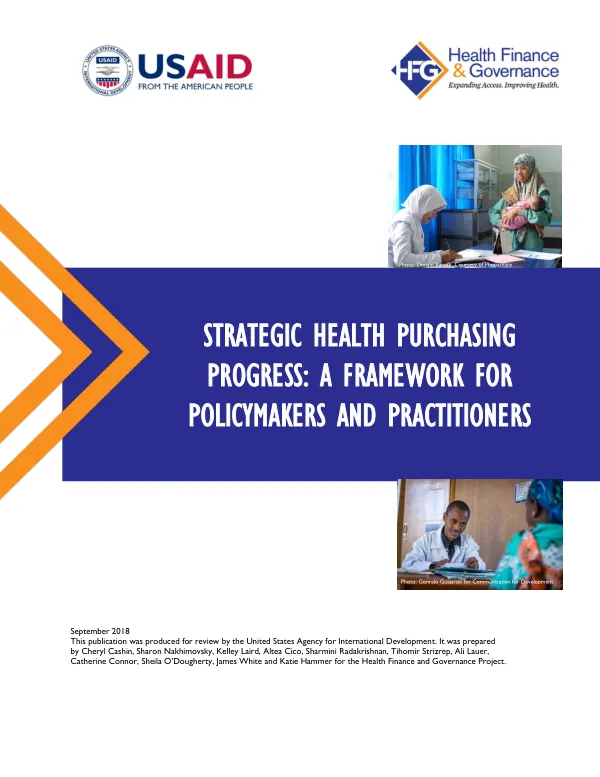
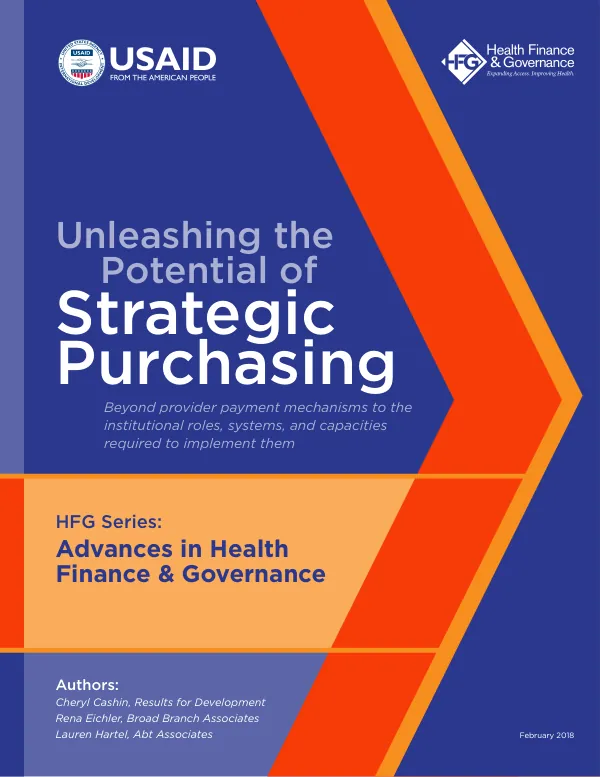
Unleashing the Potential of Strategic Purchasing: Beyond Provider Payment Mechanisms
Sign inABT ASSOCIATES
Unleashing the Potential of Strategic Purchasing: Beyond Provider Payment Mechanisms
Strategic purchasing is a critical component of health system management, enabling countries to make the best use of available resources to serve the needs of their populations and improve health outcomes.
2018 · 16 pages
Sign in to readA free account is required to download.
Abstract
This concept involves the government's purchasing power being used to shape the health care market and service delivery system, with the public purchaser strategically purchasing services from both public and private health providers. Countries that have been successful in expanding access to services and improving health outcomes given limited funds have used strategic purchasing to direct funds to priority populations, interventions, and services. This approach requires attention to and investment in four overlapping areas: institutional structures, roles, and responsibilities; operational systems; technical capacities; and the enabling environment. Institutional structures, roles, and responsibilities refer to the specific roles assigned to the institutions responsible for each purchasing function. Operational systems, including provider payment systems, information systems, and data flows, are also critical for facilitating strategic purchasing. Technical capacities, such as knowledge, information, and technical capability to carry out purchasing functions, are essential for effective implementation. The enabling environment, which includes policies and regulations outside the health sector that affect the implementation of health purchasing policies, is also crucial. This environment can influence provider autonomy and how funds can be allocated and used in the health sector. Health sector technicians often focus on the design of specific purchasing instruments without ensuring that these foundational elements are in place and external factors are considered. The Health Finance and Governance (HFG) project has supported strategic purchasing reforms in more than 10 countries, including Cambodia, Ethiopia, Ghana, Indonesia, Kyrgyz Republic, Malawi, Mozambique, Myanmar, and others. Through its experience, HFG has learned that failure to fully consider these foundational elements impedes the effectiveness of strategic purchasing. In Cambodia, HFG conducted a rapid assessment of TB payment and public financial management systems to help the country better target its health budget and national health insurance funds toward priority TB services and the poor population. In Ethiopia, HFG developed medical audits, designed financial management models at the district level, and provided training for district staff to facilitate growth of purchasing programs. In Ghana, HFG assisted the country in planning the scale-up of the capitation payment system for primary health care. In Indonesia, HFG supported implementation research that assessed how capitation plus performance-based payment for primary care is being operationalized. The project also identified challenges with roles between the national Ministry of Health and new purchasing agency in Indonesia's national health insurance system, as well as between national and district levels. In the Kyrgyz Republic, HFG supported the design of a diagnosis-related group (DRG) payment model for TB, and the transition from input-based hospital TB care to DRGs for hospital and ambulatory care. In Malawi, HFG conducted a rapid assessment of TB payment and public financial management systems to help the country better target its health budget and national health insurance funds toward priority TB services and the poor. In Mozambique, HFG reviewed the progress of a results-based financing program in the Central Medical Store. In Myanmar, HFG supported implementation research of a strategic purchasing pilot that informs scale-up of a model in which local governments or other semi-autonomous entities purchase health services from public and private providers. Overall, strategic purchasing is a critical component of health system management, and its effective implementation requires attention to and investment in four overlapping areas: institutional structures, roles, and responsibilities; operational systems; technical capacities; and the enabling environment.