USAID DEC
Urban Development & Humanitarian Shelter in Kabul, Afghanistan: Current Issues & Next Steps
Sign inMASSACHUSETTS INSTITUTE OF TECHNOLOGY D-LAB
Urban Development & Humanitarian Shelter in Kabul, Afghanistan: Current Issues & Next Steps
Urban development and humanitarian shelter in Kabul, Afghanistan, are critical issues that require immediate attention.
2009 · 2 pages
Sign in to readA free account is required to download.
Abstract
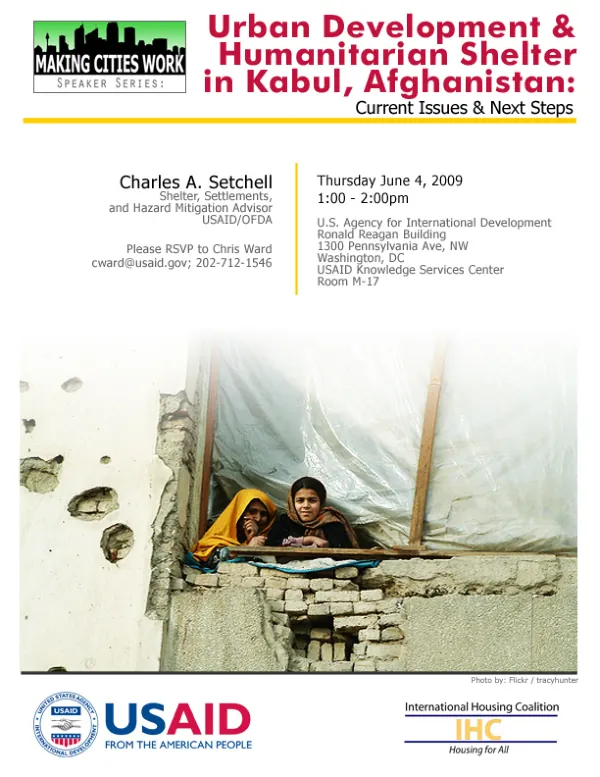
The city's rapid growth has led to a shortage of housing, with many residents living in informal settlements. These areas are often prone to natural disasters, such as earthquakes and floods, which can exacerbate the existing humanitarian crisis. Charles A. Setchell, Shelter, Settlements and Hazard Mitigation Advisor for USAID/OFDA, has extensive experience in managing physical, social, and economic change. His background in urban and environmental planning, as well as his doctoral studies in urban planning at MIT, have equipped him with a deep understanding of the complexities involved in addressing urban development and humanitarian shelter issues. Setchell's professional experience spans nearly three decades, with notable examples including the design and construction of a new city in Indonesia and the assessment of Bangkok's slum housing market. Setchell's work at USAID/OFDA since 1998 has focused on designing and implementing shelter and settlements projects that benefit millions of displaced people in various countries. He has also worked on relief and hazard mitigation projects, promoting disaster risk reduction through the integration of relief and development activities. Setchell regularly makes presentations at training courses, meetings, and conferences, and has published on a wide range of topics related to urban development and humanitarian shelter. The current situation in Kabul requires a comprehensive approach to address the shortage of housing, improve living conditions, and reduce the risk of natural disasters. This involves not only providing shelter and settlements but also promoting sustainable urban development, improving infrastructure, and enhancing disaster preparedness and response. Setchell's expertise and experience make him an ideal advisor to address these complex issues and develop effective solutions. In addressing the humanitarian shelter crisis in Kabul, it is essential to consider the needs of vulnerable populations, including women, children, and the elderly. The city's rapid growth has led to increased competition for resources, making it challenging for these groups to access basic services, including shelter, healthcare, and education. Setchell's work at USAID/OFDA has highlighted the importance of integrating relief and development activities to promote disaster risk reduction and improve living conditions for affected populations.