USAID
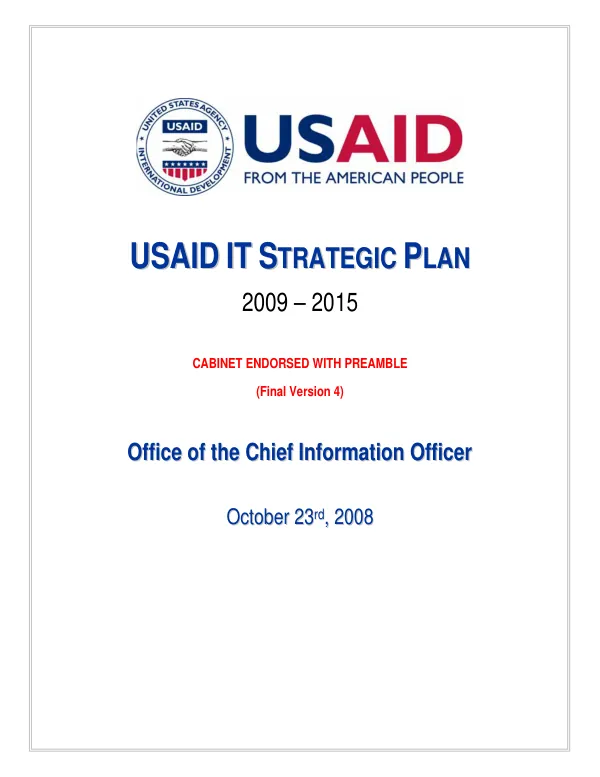
USAID 2015 IT Strategic Plan
The USAID IT Strategic Plan 2009-2015 outlines the Agency's vision for revitalized development leadership, emphasizing the critical role of information technology in achieving this goal.
2009 · 38 pages
Sign in to readA free account is required to download.
Abstract
The plan is built on the 2012 vision for USAID, which envisions the Agency as a high-performing organization that increasingly relies on information technology to support its operations and programs. The 2012 vision contemplates new ways of doing business, including leading a "whole of government" effort with other US agencies involved in foreign assistance, operating from regional platforms, and building more open and collaborative relationships with diverse partners. To support this vision, the IT Strategic Plan identifies key priorities, including business process standardization, predictable workflows, and the development of knowledge management systems. The plan emphasizes the importance of integrating IT with other operational aspects of the 2012 vision, including the Development Leadership Initiative (DLI) and regionalization. It also highlights the need for predictable workflows to train new-generation DLI staff and deploy them where needed. Furthermore, the plan stresses the importance of information technology in facilitating the exchange of information and knowledge between partners, and in supporting the continuous and real-time exchange of information within the Global Development Commons. The IT Strategic Plan is built on a field-driven approach, which involves working closely with USAID staff and partners to identify and address IT needs and challenges. The plan also emphasizes the importance of IT governance, planning, and management in ensuring the effective implementation of the IT Strategic Plan. The current situation at USAID is characterized by a range of IT challenges, including outdated infrastructure, stove-piped business systems, and inadequate knowledge management capabilities. The plan identifies key areas for improvement, including the development of a more integrated and standardized IT infrastructure, the implementation of business process standardization, and the development of knowledge management systems that can deliver state-of-the-art knowledge to development officers. The IT Vision, Goals, and Objectives outlined in the plan are designed to support the 2012 vision for USAID. The Enterprise System Vision emphasizes the need for a more integrated and standardized IT infrastructure, while the Knowledge Management and Global Development Commons Vision highlights the importance of developing knowledge management systems that can facilitate the exchange of information and knowledge between partners. The Business Systems Pillar focuses on the need for business process standardization and predictable workflows to support the implementation of the 2012 vision. Overall, the USAID IT Strategic Plan 2009-2015 provides a comprehensive framework for revitalizing the Agency's IT capabilities and supporting its 2012 vision for development leadership. The plan emphasizes the critical role of information technology in facilitating the exchange of information and knowledge between partners, and in supporting the continuous and real-time exchange of information within the Global Development Commons.
Related documents