JSI RESEARCH & TRAINING INSTITUTE, INC
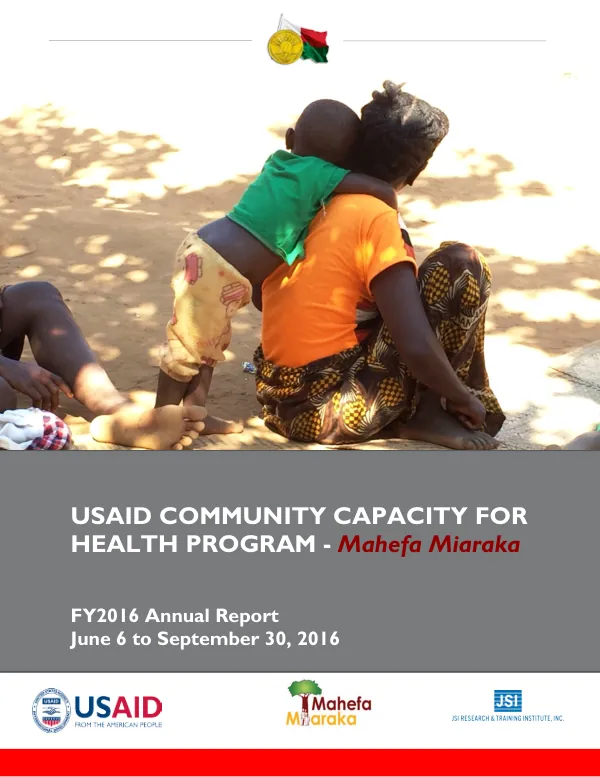
USAID Community Capacity for Health Program - Mahefa Miaraka FY2016 Annual Report
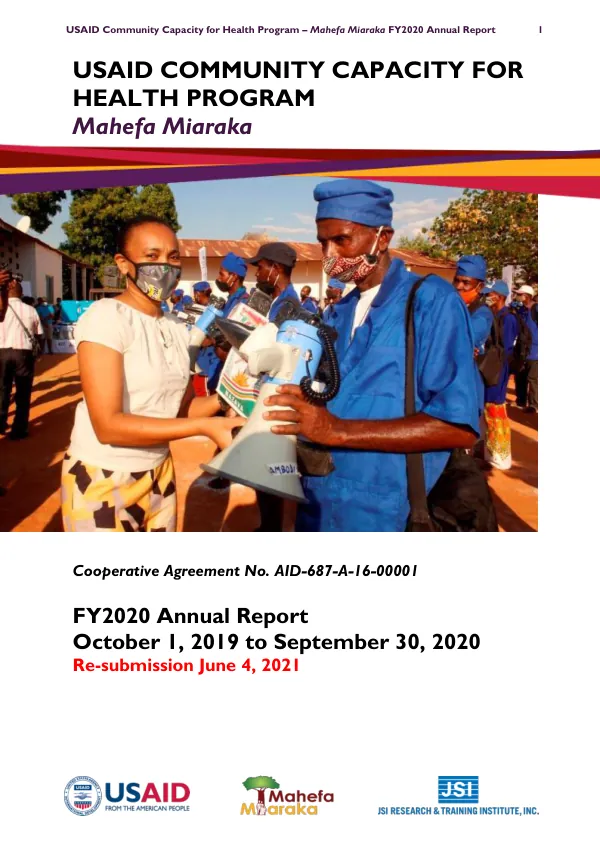
The USAID Community Capacity for Health program, also known as Mahefa Miaraka, was established in 2016 to support community health development in Madagascar.
2016 · 33 pages
Sign in to readA free account is required to download.
Abstract
The program's primary objective is to strengthen community capacity for health, with a focus on improving health outcomes, particularly for maternal, newborn, and child health. The program's intervention areas include community engagement and ownership of health services, behavior change and health promotion, and health service planning, management, and governance. Key activities under these intervention areas include increasing the skills and competencies of community health volunteers, promoting universal health care access and coverage, and strengthening community structures. In FY2016, the program focused on commencing field activities at all levels, including revising technical approaches and providing orientation to program staff and government stakeholders. Eight program offices were established, each partially equipped and staffed. The program also conducted a rapid start-up, which included the establishment of a program management unit, a finance unit, and a logistics unit. The program's achievements during this reporting period include the establishment of a program management unit, a finance unit, and a logistics unit. The program also conducted a rapid start-up, which included the establishment of eight program offices, each partially equipped and staffed. Additionally, the program provided orientation to program staff and government stakeholders at the regional and district levels. The program's technical staff orientation was conducted in Antananarivo in July 2016, and regional launches were held in Sofia, Menabe, and Boeny. The program also conducted a series of training sessions for community health volunteers, which included training on community-led total sanitation, community-based integrated management of childhood illnesses, and chlorhexidine use. The program's monitoring and evaluation framework includes the use of health management information systems, community score cards, and data quality assessments. The program also conducts regular monitoring and evaluation activities, including monthly activity reports and quarterly progress reports. The program's budget for FY2016 was approximately $1.5 million, which was used to support program activities, including staff salaries, training, and logistics. The program's cumulative expenses as of September 30, 2016, were approximately $1.2 million. The program's achievements during this reporting period demonstrate its commitment to strengthening community capacity for health in Madagascar. The program's focus on community engagement, behavior change, and health service planning and management has the potential to improve health outcomes, particularly for maternal, newborn, and child health.