JSI RESEARCH & TRAINING INSTITUTE, INC
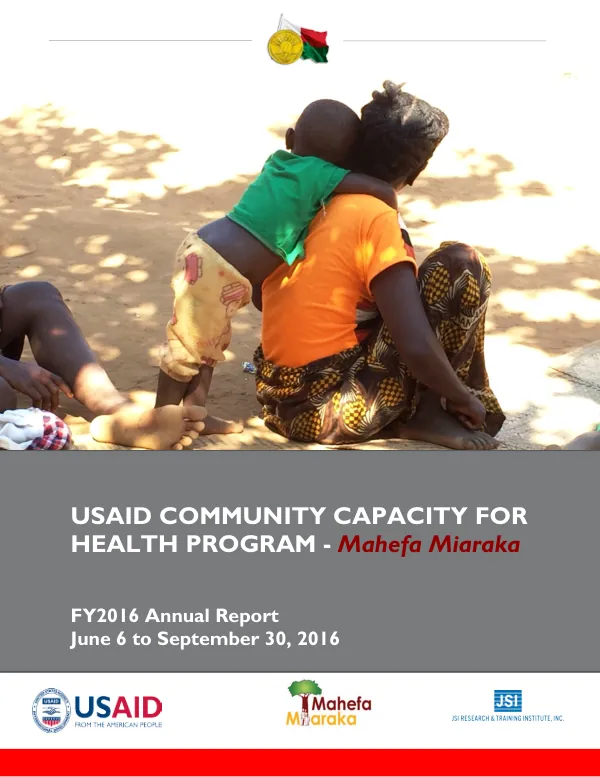
USAID Community Capacity for Health Program – Mahefa Miaraka FY2018 Annual Report
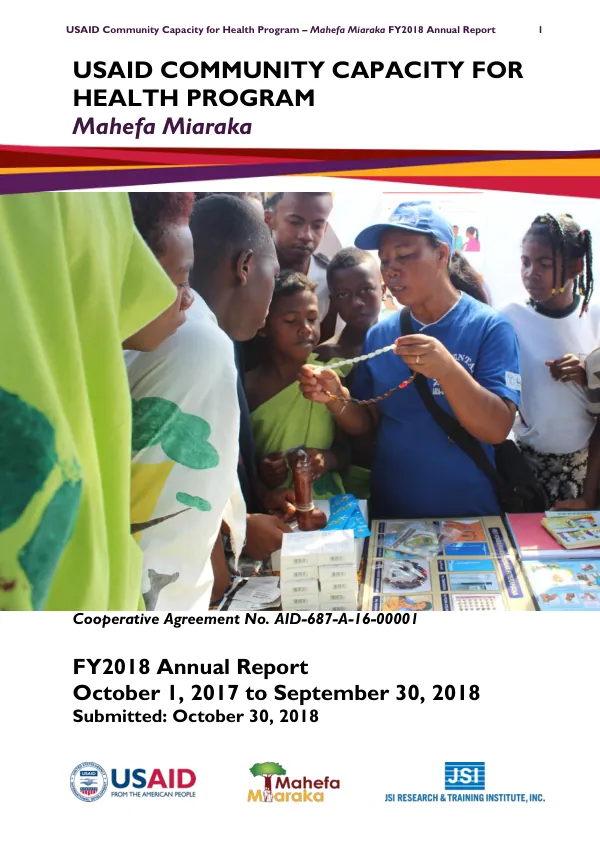
The Community Capacity for Health Program – Mahefa Miaraka was implemented in Madagascar from October 1, 2017, to September 30, 2018.
2018 · 170 pages
Sign in to readA free account is required to download.
Abstract
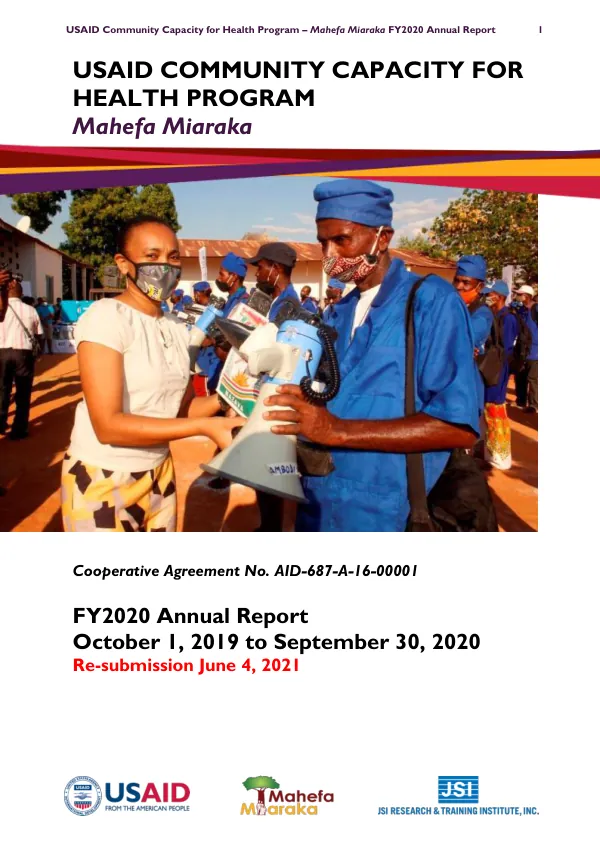
The program aimed to strengthen community health systems and improve access to health services. The program was implemented in six regions of Madagascar, including Menabe, Boeny, Bongolava, Itasy, Vakinankaratra, and Alaotra-Mangoro. Community Health Volunteers (CHVs) played a crucial role in the program, with over 2,500 CHVs trained in community health and family planning services. CHVs conducted monthly meetings with community members, provided health education, and referred patients to basic health centers (CSBs). The program also focused on improving maternal and child health, with CHVs conducting growth monitoring activities and providing antenatal care services. The program achieved significant results in family planning, with over 20,000 women using family planning services provided by CHVs. The program also reported a 27% increase in the use of modern family planning methods among women aged 15-24. In addition, the program reported a 60% increase in the number of children under 5 receiving growth monitoring services. The program also made significant progress in malaria control, with CHVs providing malaria services to over 100,000 people. The program also reported a 30% reduction in malaria cases among children under 5. The program's success was attributed to the strong partnership between the program implementers, the Ministry of Health, and local communities. The program also received support from the American people through the United States Agency for International Development (USAID). The program's achievements were also reflected in the improved health outcomes of the target communities. The program reported a 25% reduction in child mortality rates and a 20% reduction in maternal mortality rates. The program also reported a 15% increase in the number of people with access to improved sanitation facilities. The program's success was also attributed to the effective use of data and monitoring systems. The program used a program monitoring, evaluation, and performance system to track progress and identify areas for improvement. The program also conducted regular supportive supervision to ensure that CHVs were providing high-quality services. The program's achievements were also recognized by the Government of Madagascar, which acknowledged the program's contributions to improving health outcomes in the country. The program's success also served as a model for other community health programs in Madagascar and beyond. The program's impact was also felt beyond the target communities, with the program's achievements contributing to the country's overall health development goals. The program's success also highlighted the importance of community-led health initiatives in improving health outcomes in resource-poor settings.