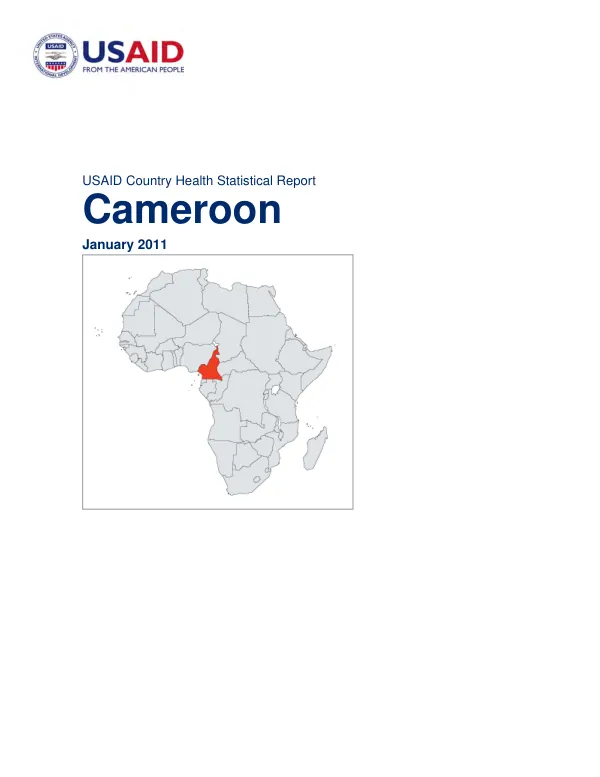
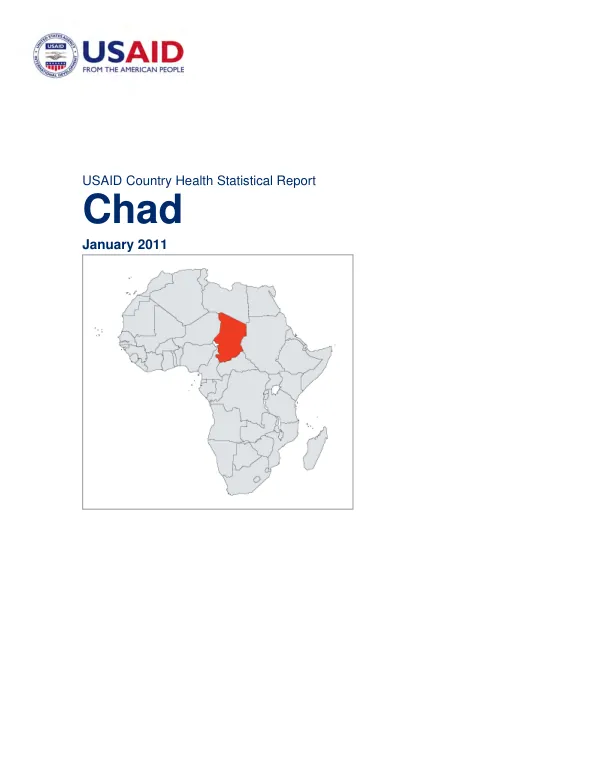
ANALYSIS, INFORMATION MANAGEMENT AND COMMUNICATION ACTIVITY PROJECT
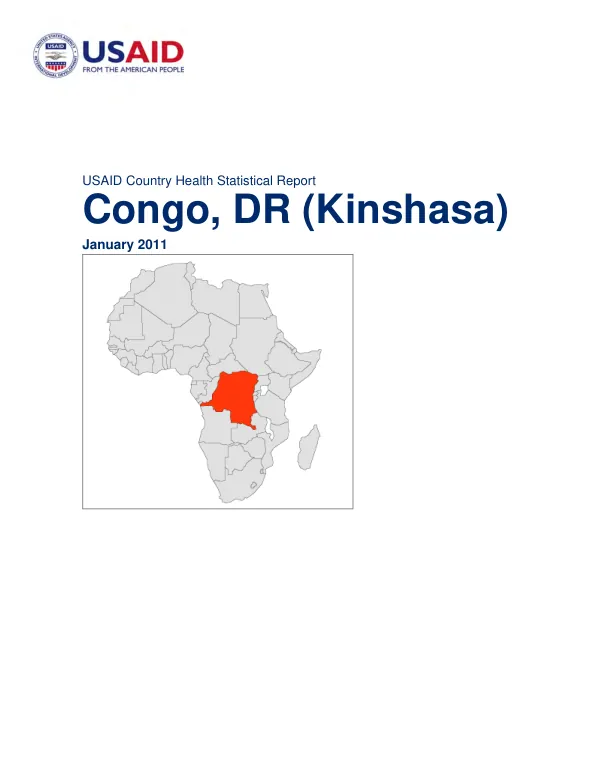
USAID Country Health Statistical Report Congo, DR (Kinshasa)
The population of the Democratic Republic of Congo is approximately 70,916,439 as of 2010.
2011 · 21 pages
Sign in to readA free account is required to download.
Abstract
The country's population growth rate is 3.2% per annum, with 32% of the population residing in urban areas. The total fertility rate is 6.1 children per woman, with a contraceptive prevalence rate of 6.7% among all women and 5.8% among married women. The country's socioeconomic indicators reveal a significant gap in health expenditure as a percentage of GDP, with only 4% allocated to health services. The adult literacy rate is 67.2%, with a significant disparity between male and female literacy rates, at 80% and 52% respectively. The country's access to improved water sources is 29% in rural areas and 83% in urban areas. Maternal health indicators show a high maternal mortality ratio of 1,100 per 100,000 live births, with 83.5% of women receiving antenatal care and 74% receiving assisted delivery by a health professional. The country's child survival indicators reveal a high infant mortality rate of 79.4 per 1,000 live births, with 41.9% of children under 5 receiving care for acute respiratory infections and 44.9% receiving oral rehydration therapy. The country's HIV/AIDS prevention indicators show a high HIV prevalence proportion of 3.2% among adults aged 15-49, with an estimated 1,000,000 people living with HIV. The country's vaccination coverage is low, with 45% of children receiving the DPT3 vaccine and 62.9% receiving the measles vaccine. The country's nutrition indicators reveal a high prevalence of stunting, with 45.5% of children under 5 being stunted, and a high prevalence of underweight children, with 25.1% of children under 5 being underweight. The country's access to improved sanitation facilities is low, with 23% of rural households and 43% of urban households having access to improved sanitation facilities. The country's infant mortality rate is 79.4 per 1,000 live births, with 41.9% of children under 5 receiving care for acute respiratory infections and 44.9% receiving oral rehydration therapy. The country's HIV prevalence proportion is 3.2% among adults aged 15-49, with an estimated 1,000,000 people living with HIV. The country's vaccination coverage is low, with 45% of children receiving the DPT3 vaccine and 62.9% receiving the measles vaccine. The country's health system faces significant challenges, including a shortage of healthcare workers, inadequate infrastructure, and limited access to healthcare services. The country's health expenditure as a percentage of GDP is low, with only 4% allocated to health services. The country's adult literacy rate is 67.2%, with a significant disparity between male and female literacy rates, at 80% and 52% respectively. The country's access to improved water sources is 29% in rural areas and 83% in urban areas. The country's infant mortality rate is 79.4 per 1,000 live births, with 41.9% of children under 5 receiving care for acute respiratory infections and 44.9% receiving oral rehydration therapy. The country's HIV prevalence proportion is 3.2% among adults aged 15-49, with an estimated 1,000,000 people living with HIV.
Related documents