ANALYSIS, INFORMATION MANAGEMENT AND COMMUNICATION ACTIVITY PROJECT
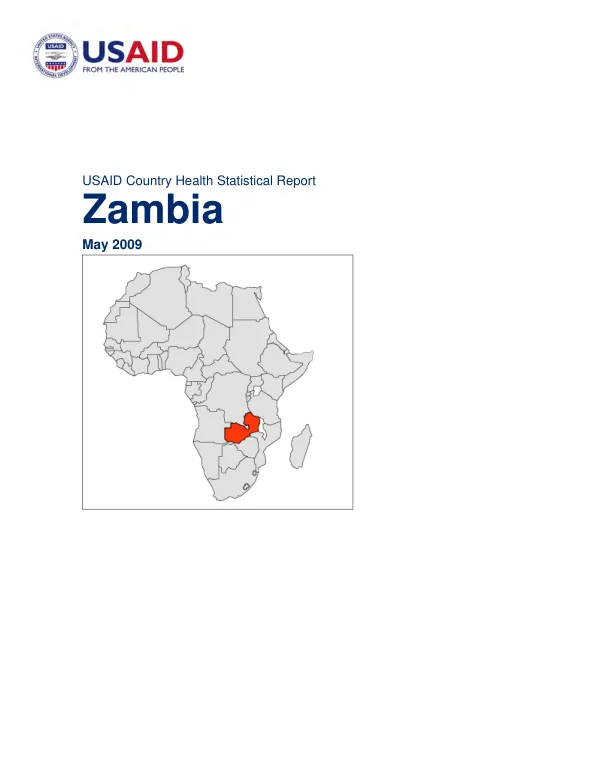
USAID Country Health Statistical Report for Zambia
The total population of Zambia in 2009 was 11,862,740.
2009 · 21 pages
Sign in to readA free account is required to download.
Abstract
The population growth rate was 1.6% in 2009, and 36% of the population resided in urban areas. The total fertility rate was 5.2 children per woman, and the contraceptive prevalence rate among married women was 32.7%. The maternal mortality ratio was 729 deaths per 100,000 live births in 2001, and the infant mortality rate was 101.2 deaths per 1,000 live births in 2009. The country's socioeconomic indicators showed a GNI per capita of $950 in 2005 and a health expenditure as a percentage of GDP of 5.4% in 2003. The adult literacy rate was 68% in 2004, and the gross enrollment ratio for primary school was 116.9% in 2006. The population living below $1 a day was 63.8% in 1990-2005, and the human development index was 0.43 in 2005. In terms of family planning indicators, the total fertility rate was 6.2 children per woman in 2007, and the contraceptive prevalence rate among all women was 17.2%. The median age of sexual debut among women aged 25-49 was 16.8 years in 2001, and the mean ideal family size was 4.7 children in 2001. The unmet need for family planning was 28.2% in rural areas and 25.5% in urban areas in 2007. The maternal health indicators showed that 93.7% of women received antenatal care in 2007, and 91.4% received four or more antenatal care visits in 2001. The assisted delivery rate by a health professional was 46.5% in 2007, and the anemia prevalence among women of reproductive age was not available. The child survival indicators showed that 67.7% of children under 5 received care for acute respiratory infection in 2007, and 66.8% received oral rehydration therapy. The infant mortality rate was 101.2 deaths per 1,000 live births in 2009, and the under-5 mortality rate was 181 deaths per 1,000 live births in 2006. The exclusive breastfeeding rate was 75.3% in 2007, and the stunting rate was 45.4% in 2007. The vaccination coverage indicators showed that the DPT3 vaccination rate was 20.6% in 2007, and the measles vaccination rate was 84.9% in 2007. The polio vaccination rate was 77% in 2007, and the tetanus toxoid vaccination rate was 80.1% in 2007. The HIV/AIDS prevention indicators showed that the HIV prevalence proportion among adults aged 15-49 was 15.2% in 2007, and the estimated number of people living with HIV was 1,100,000 in 2007.
Related documents