USAID
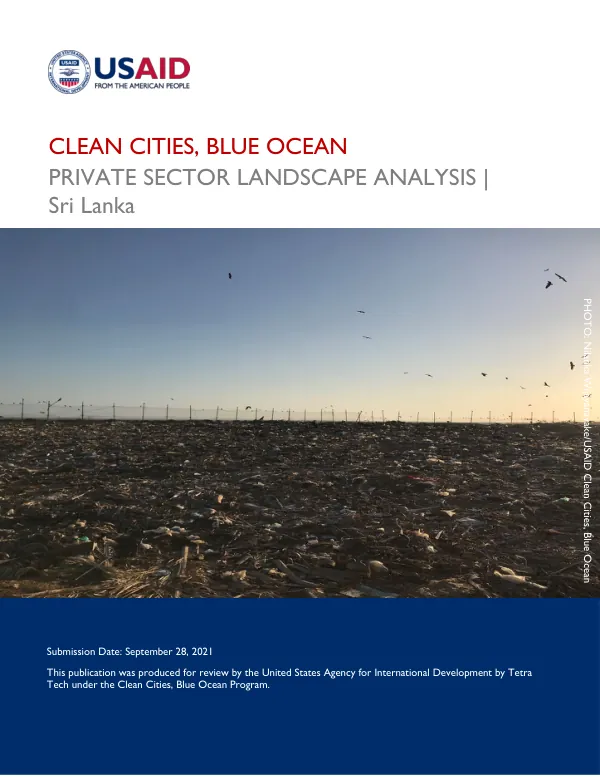
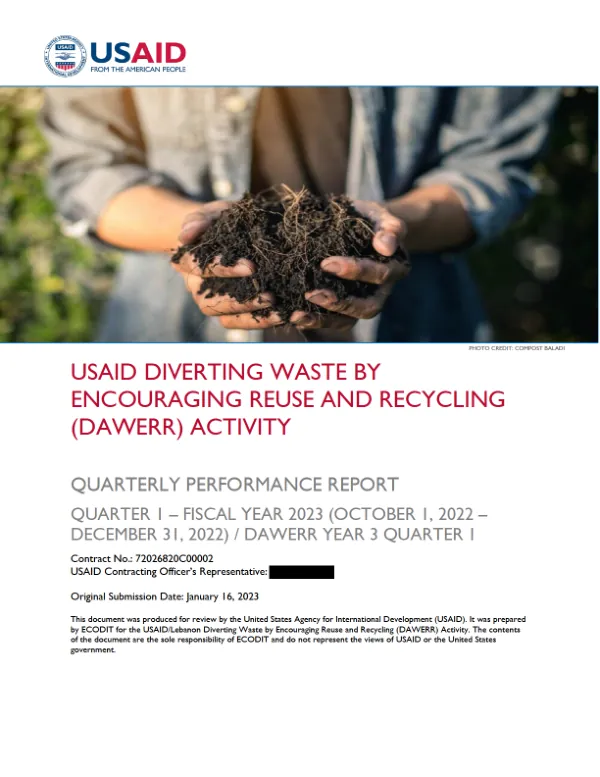
USAID DAWERR: Q1 FY2023/ Y3 Q1 – QUARTERLY PERFORMANCE REPORT
The USAID DAWERR program is a municipal solid waste management initiative in Sri Lanka, focusing on improving waste collection and recycling services.
2023 · 78 pages
Sign in to readA free account is required to download.
Abstract
The program began in 2018 and is implemented over a three-year period. The overall approach involves building the capacity and commitment of municipalities to provide improved waste management services, empowering communities to sort at the source and participate actively in recycling value chains, and developing successful business models that create green economic opportunities. In Year 3, the program is focused on implementing pilots in selected communities to establish improved waste management systems. Task 1.2 involves supporting pilot municipalities in establishing improved waste management systems, designing and building composting stations, implementing community-based composting, providing technical support for operation and maintenance, and reporting on the initial pilots. The program has made significant progress in this area, with composting stations designed and built in several municipalities, and community-based composting implemented in select areas. The program is also working to replicate the pilots in additional municipalities, with Task 1.3 focusing on supporting replicating municipalities in establishing improved waste management systems, establishing steering committees, designing and building composting stations, and selecting additional replicating municipalities. The program has identified several municipalities for replication and has established steering committees to oversee the process. In addition to the waste management initiatives, the program is also working to empower communities to sort at the source and participate actively in recycling value chains. Task 2.1 involves engaging communities in waste management planning to build confidence and buy-in, involving communities in designing and implementing waste management solutions, mobilizing communities to sort at the source, and working with Nadeera to establish a monitoring and reward system. The program has made significant progress in this area, with communities actively involved in waste management planning and sorting at the source. The program is also focused on developing successful business models that create green economic opportunities and generate net incomes along the value chains. Task 3.1 involves providing incentives and making a business case for source separation and recycling, establishing incentivization schemes for different stakeholders, and developing business models. The program has made significant progress in this area, with business models developed and incentivization schemes established. The program is also working on several cross-cutting activities, including collaborating, learning, and adapting, monitoring, evaluation, and learning, gender, youth, and social inclusion, institutional capacity building and coordination with ministries, science, technology, and innovation, and environmental compliance. The program has made significant progress in these areas, with several deliverables submitted and significant events and performance challenges addressed. In terms of administration, contracts, and finance, the program has made significant progress, with administration, contracts, and finance managed effectively. The program has also made significant progress in terms of planned activities for the next quarter, with several activities planned and underway. Overall, the USAID DAWERR program is making significant progress in improving waste management services in Sri Lanka, empowering communities to sort at the source and participate actively in recycling value chains, and developing successful business models that create green economic opportunities.