ACTED
USAID-DCHA Chad Complex Emergency Situation Report #4
The complex emergency in Chad has been ongoing since the end of 2005, fueled by inter-ethnic conflict, fighting between the Government of Chad (GoC) forces and armed opposition groups, and cross-border raids from Sudanese militias based in neighboring Darfur.
2009 · 5 pages
Sign in to readA free account is required to download.
Abstract
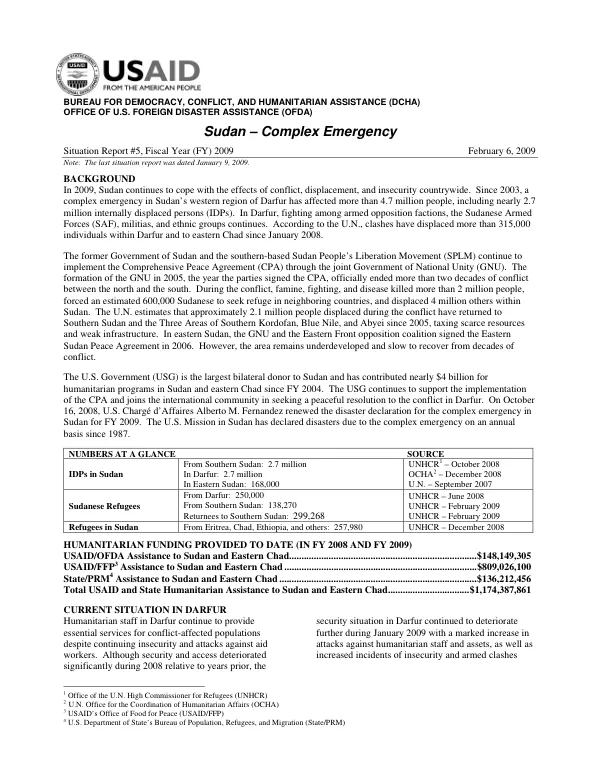
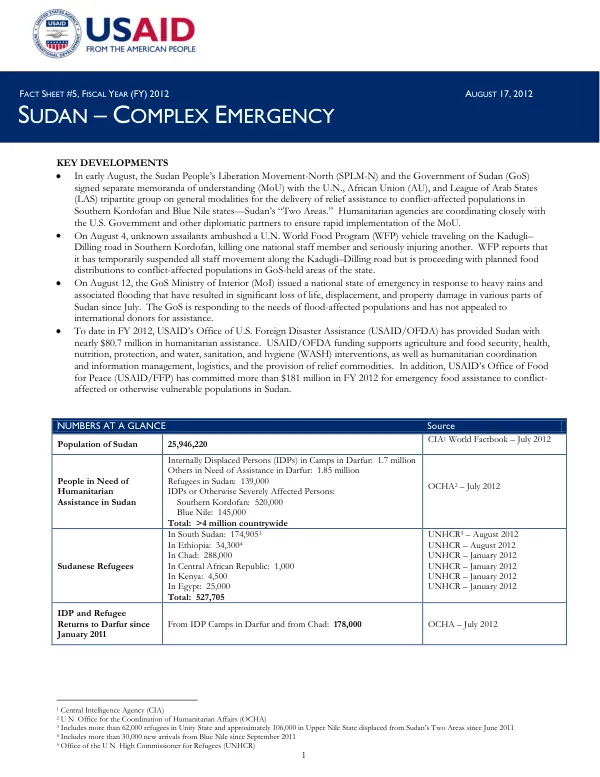
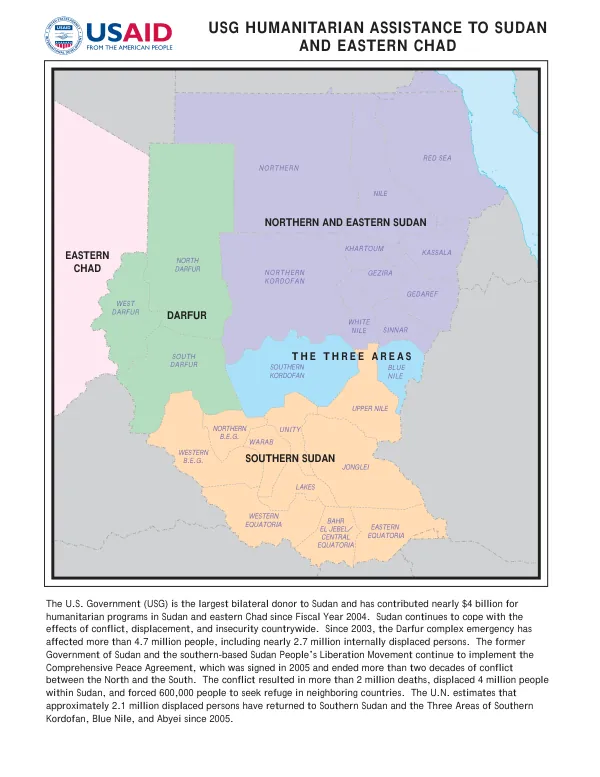
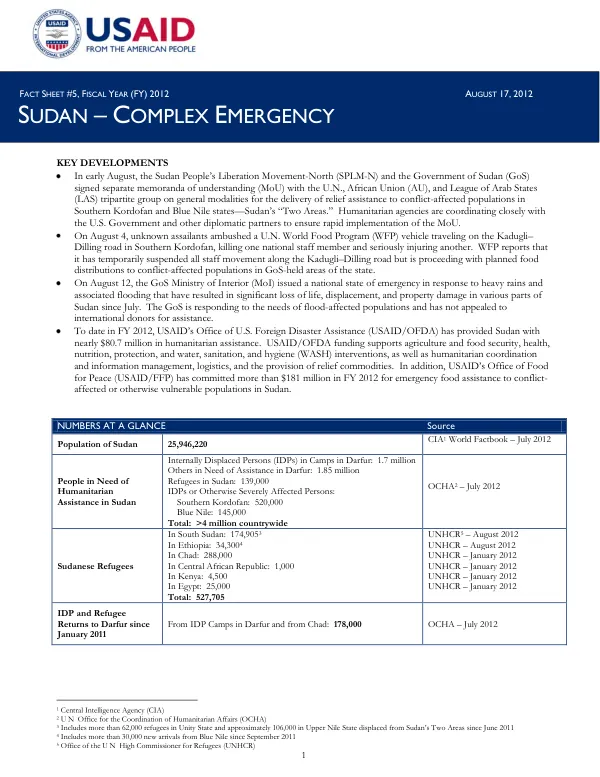
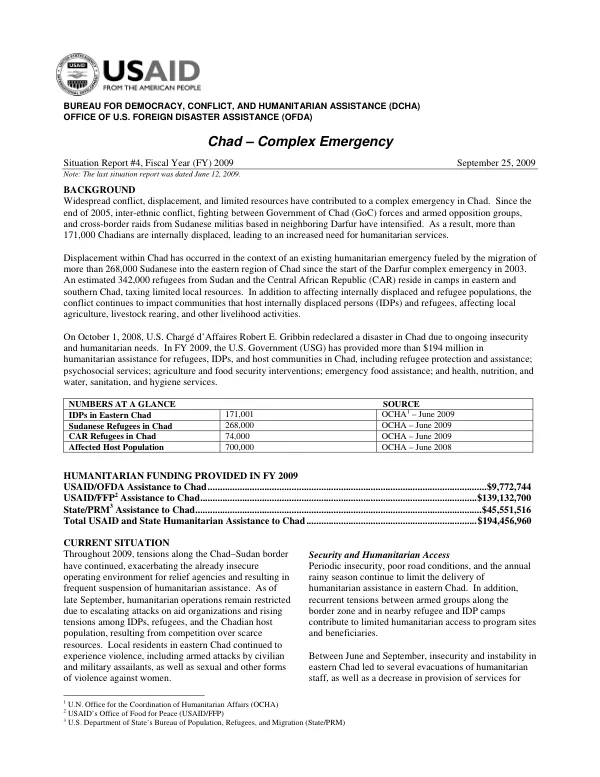
As a result, more than 171,000 Chadians are internally displaced, leading to an increased need for humanitarian services. Displacement within Chad has occurred in the context of an existing humanitarian emergency fueled by the migration of more than 268,000 Sudanese into the eastern region of Chad since the start of the Darfur complex emergency in 2003. An estimated 342,000 refugees from Sudan and the Central African Republic (CAR) reside in camps in eastern and southern Chad, taxing limited local resources. The conflict continues to impact communities that host internally displaced persons (IDPs) and refugees, affecting local agriculture, livestock rearing, and other livelihood activities. On October 1, 2008, U.S. Chargé d’Affaires Robert E. Gribbin redeclared a disaster in Chad due to ongoing insecurity and humanitarian needs. The U.S. Government (USG) has provided more than $194 million in humanitarian assistance for refugees, IDPs, and host communities in Chad in FY 2009. This assistance includes refugee protection and assistance, psychosocial services, agriculture and food security interventions, emergency food assistance, and health, nutrition, and water, sanitation, and hygiene services. Humanitarian funding provided in FY 2009 includes $9,772,744 from USAID/OFDA, $139,132,700 from USAID/FFP, and $45,551,516 from State/PRM. Throughout 2009, tensions along the Chad-Sudan border have continued, exacerbating the already insecure operating environment for relief agencies and resulting in frequent suspension of humanitarian assistance. As of late September, humanitarian operations remain restricted due to escalating attacks on aid organizations and rising tensions among IDPs, refugees, and the Chadian host population, resulting from competition over scarce resources. Local residents in eastern Chad continued to experience violence, including armed attacks by civilian and military assailants, as well as sexual and other forms of violence against women. Security and humanitarian access continue to be major concerns in eastern Chad. Periodic insecurity, poor road conditions, and the annual rainy season limit the delivery of humanitarian assistance. Recurrent tensions between armed groups along the border zone and in nearby refugee and IDP camps contribute to limited humanitarian access to program sites and beneficiaries. In response to these challenges, humanitarian organizations have restricted programs and relocated staff due to security concerns.
Related documents