USAID DEC
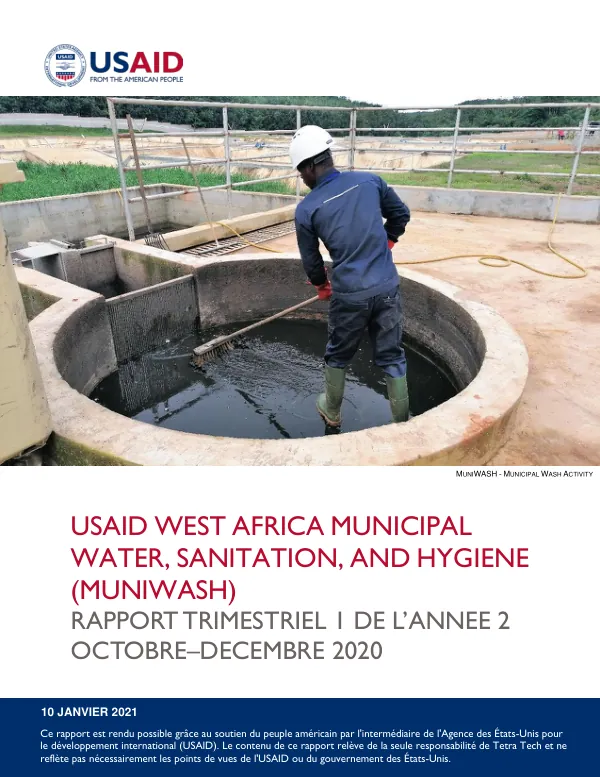
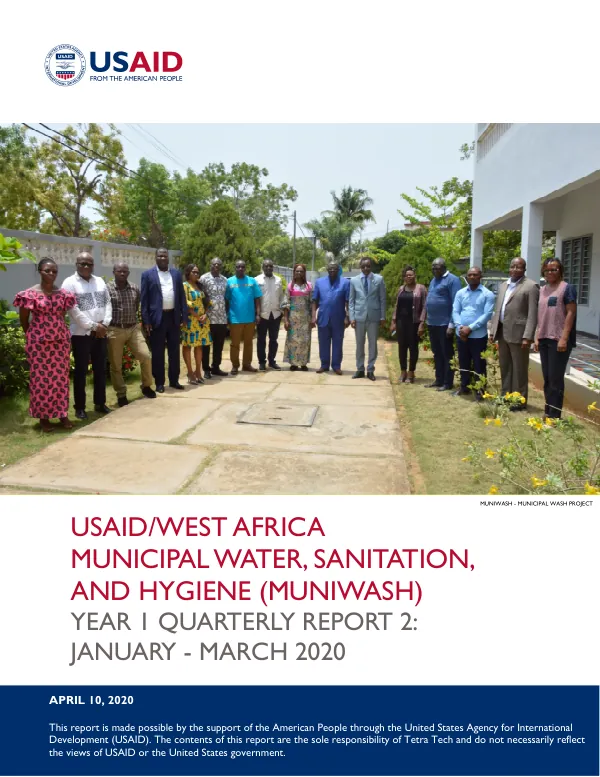
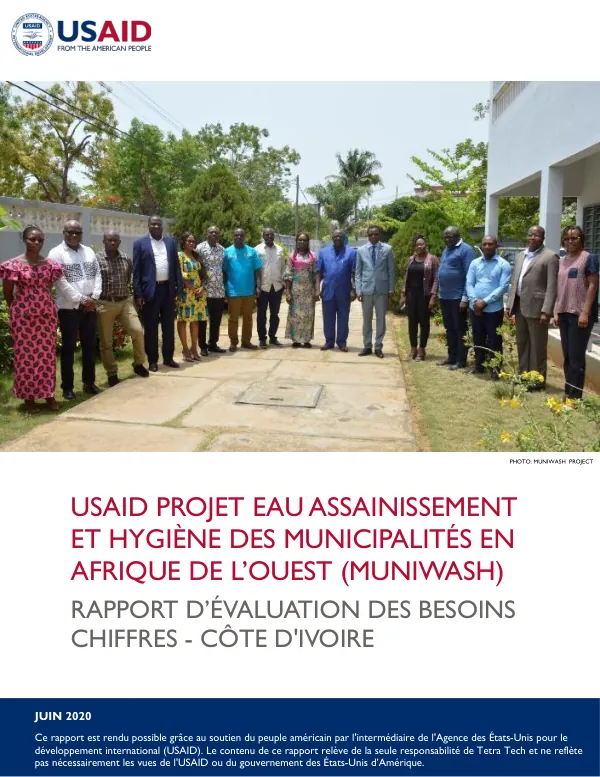
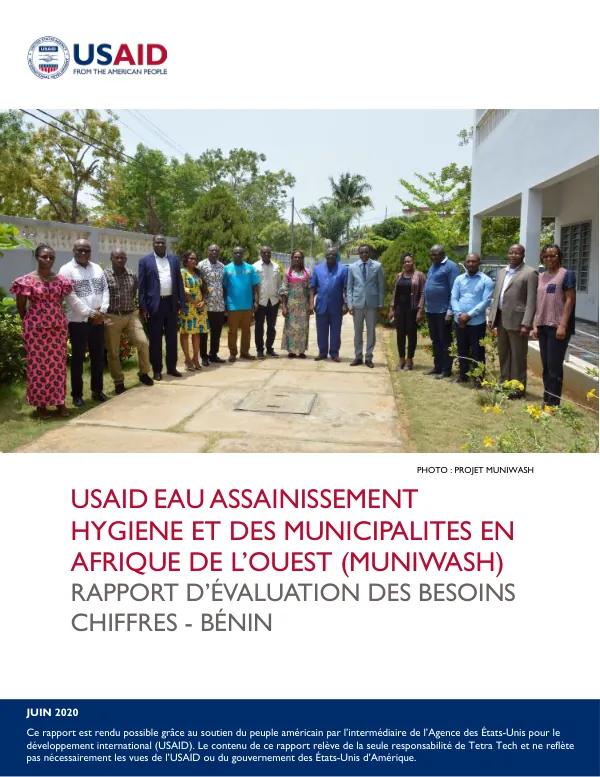
USAID Eau assainissement hygiene et des municipalites en Afrique del'ouest (MuniWASH): Rapport d'évaluation des besoins chiffres -- Bénin
Sign inTETRA TECH
USAID Eau assainissement hygiene et des municipalites en Afrique del'ouest (MuniWASH): Rapport d'évaluation des besoins chiffres -- Bénin
The USAID West Africa Municipal Water, Sanitation, and Hygiene (MUNIWASH) project aims to improve water, sanitation, and hygiene (WASH) services in municipalities across West Africa.
2020 · 65 pages
Sign in to readA free account is required to download.
Abstract
The project focuses on Benin, with a specific emphasis on the provision of safe drinking water and sanitation facilities. The project's objectives are aligned with the Benin government's national strategy to improve water and sanitation services. The strategy aims to increase access to safe drinking water and sanitation facilities, particularly in rural areas. The project's implementation is divided into several components, including the provision of water and sanitation infrastructure, capacity building for local authorities, and community engagement and participation. The project's geographic focus is on several municipalities in Benin, including Cotonou, Porto-Novo, Seme-Podji, Abomey-Calavi, Bohicon, Avrankou, Allada, Aplahoue, Sakete, Ouidah, and Sô-Ava. Each municipality has its unique challenges and opportunities, and the project's interventions are tailored to address these specific needs. The project's methodology involves a combination of technical assistance, capacity building, and community engagement. The project team works closely with local authorities, community leaders, and other stakeholders to identify priority areas for intervention and develop tailored solutions. The project also conducts regular monitoring and evaluation to assess progress and identify areas for improvement. The project's implementation is expected to have a significant impact on the lives of Beninese citizens, particularly in rural areas where access to safe drinking water and sanitation facilities is limited. The project's success will depend on the effective collaboration between local authorities, community leaders, and other stakeholders, as well as the project team's ability to adapt to changing circumstances and priorities. The project's timeframe is not explicitly stated in the document, but it is likely to be several years. The project's budget and funding sources are also not explicitly stated, but it is likely that the project is funded by USAID and other international donors. The project's expected outcomes include improved access to safe drinking water and sanitation facilities, reduced rates of waterborne diseases, and increased community engagement and participation in WASH services. The project's success will be measured through regular monitoring and evaluation, including the collection of data on water quality, sanitation coverage, and community satisfaction with WASH services. The project's implementation is expected to have a positive impact on the environment, public health, and the economy. Improved access to safe drinking water and sanitation facilities will reduce the burden on healthcare systems, increase productivity, and improve overall quality of life. The project's success will also contribute to the achievement of the Sustainable Development Goals (SDGs), particularly Goal 6 (Clean Water and Sanitation) and Goal 11 (Sustainable Cities and Communities).
Related documents