USAID DEC
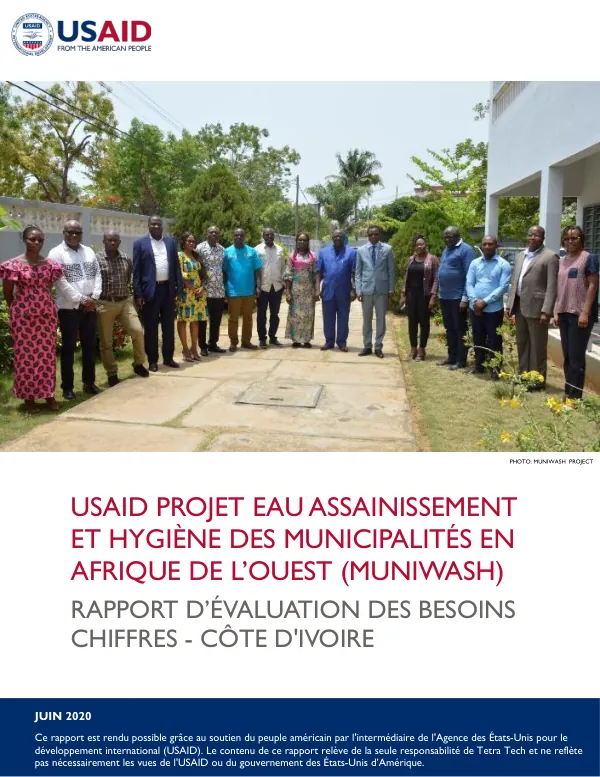
USAID Projet eau assainissement et hygiène des municipalités en Afrique de l'ouest (MuniWASH): Rapport d'évaluation des besoins chiffres - Côte d'Ivoire
Sign inTETRA TECH
USAID Projet eau assainissement et hygiène des municipalités en Afrique de l'ouest (MuniWASH): Rapport d'évaluation des besoins chiffres - Côte d'Ivoire
The USAID West Africa Municipal Water, Sanitation, and Hygiene (MUNIWASH) project is a comprehensive initiative aimed at improving water, sanitation, and hygiene services in municipalities across West Africa.
2020 · 52 pages
Sign in to readA free account is required to download.
Abstract
The project focuses on enhancing the capacity of local governments to provide sustainable and equitable access to these essential services. The project's evaluation of needs in Côte d'Ivoire reveals a significant gap in the provision of water, sanitation, and hygiene services in the country's municipalities. The evaluation highlights the importance of addressing these gaps to improve public health, reduce poverty, and promote economic development. The Côte d'Ivoire profile, as part of the MUNIWASH project, provides an overview of the country's institutional and organizational framework for water, sanitation, and hygiene services. The profile highlights the roles and responsibilities of local governments in providing these services, as well as the objectives of the sector. The project's geographic focus is on the municipalities of Bouaké, Yamoussoukro, Gagnoa, Korhogo, Abobo, Yopougon, Duékoué, San-Pédro, and Abengourou. These municipalities were selected based on their high population density, limited access to water, sanitation, and hygiene services, and their potential for economic growth. The evaluation of needs in these municipalities reveals significant gaps in the provision of water, sanitation, and hygiene services. For example, in Bouaké, the municipality's sanitation system is inadequate, with only 30% of households connected to a sewage network. In contrast, the municipality of Yamoussoukro has made significant progress in providing access to water, with 80% of households connected to a piped water network. The project's implementation plan for each municipality outlines specific actions to address the identified gaps in water, sanitation, and hygiene services. These actions include the construction of new water treatment plants, the expansion of sanitation networks, and the implementation of hygiene promotion programs. The evaluation of needs in Côte d'Ivoire highlights the importance of strengthening the capacity of local governments to provide sustainable and equitable access to water, sanitation, and hygiene services. The project's implementation plan provides a roadmap for addressing the identified gaps and improving the lives of millions of people in Côte d'Ivoire. The project's geographic focus on the municipalities of Bouaké, Yamoussoukro, Gagnoa, Korhogo, Abobo, Yopougon, Duékoué, San-Pédro, and Abengourou is critical to achieving the project's objectives. By addressing the gaps in water, sanitation, and hygiene services in these municipalities, the project can improve public health, reduce poverty, and promote economic development. The project's implementation plan is based on a comprehensive assessment of the needs of each municipality. The plan outlines specific actions to address the identified gaps in water, sanitation, and hygiene services, including the construction of new water treatment plants, the expansion of sanitation networks, and the implementation of hygiene promotion programs. The project's evaluation of needs in Côte d'Ivoire highlights the importance of addressing the gaps in water, sanitation, and hygiene services in the country's municipalities. By strengthening the capacity of local governments to provide sustainable and equitable access to these essential services, the project can improve the lives of millions of people in Côte d'Ivoire.
Related documents
Documents in this collection
 2020
2020USAID DEC
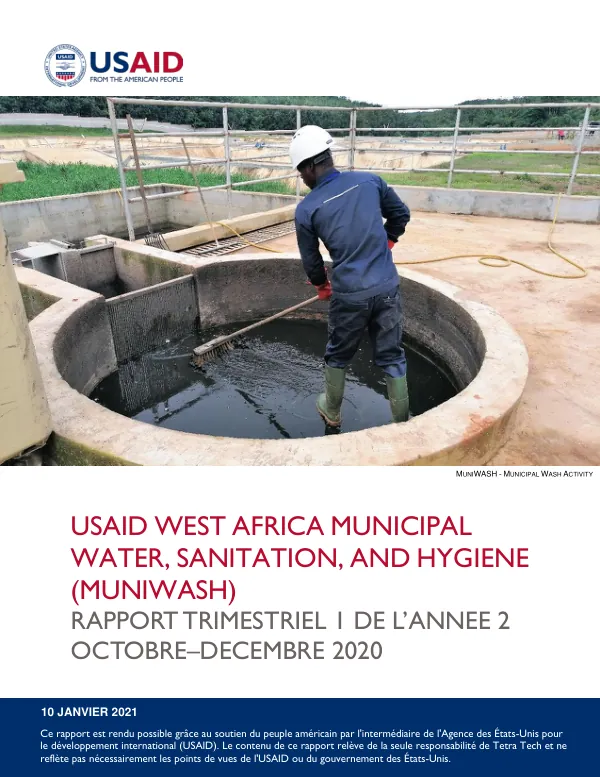
USAID WEST AFRICA MUNICIPAL WATER, SANITATION, AND HYGIENE (MUNIWASH) RAPPORT TRIMESTRIEL 1 DE L'ANNEE 2 OCTOBRE–DECEMBRE 2020
Open record 2020
2020USAID DEC