LINCOLN UNIVERSITY
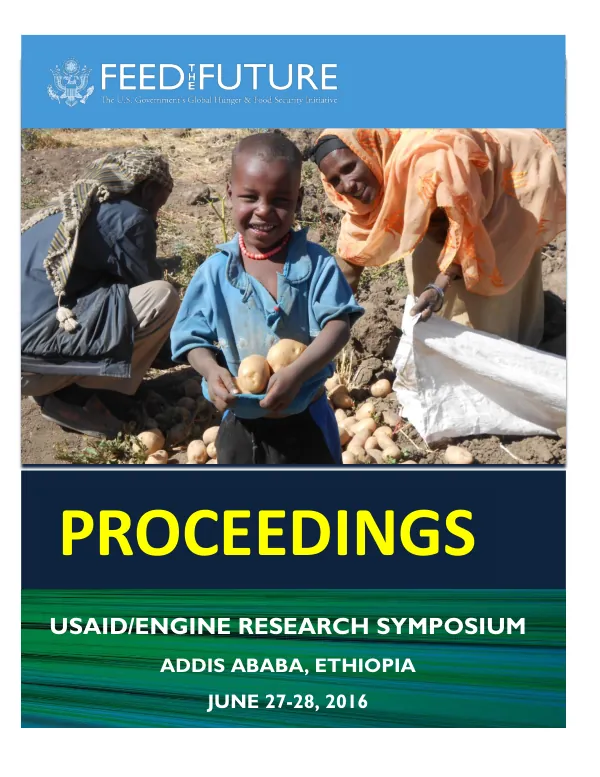
USAID/ENGINE Research Symposium Proceedings
The USAID/ENGINE Research Symposium was held in Addis Ababa, Ethiopia, from June 27-28, 2016.
2016 · 33 pages
Sign in to readA free account is required to download.
Abstract
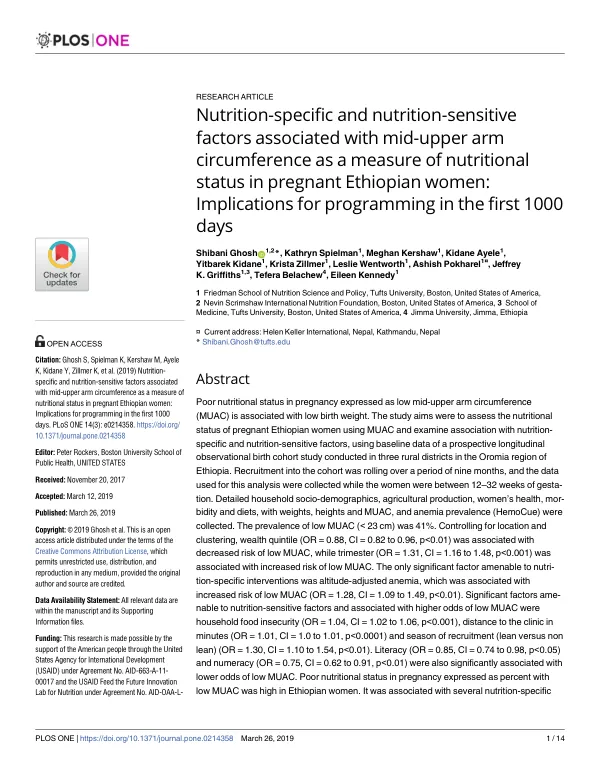
The symposium aimed to disseminate key findings from USAID/ENGINE's research and learning agenda, which focuses on the linkages and relationships between agriculture and nutrition. The agenda is led by the Friedman School of Nutrition Science and Policy at Tufts University and involves researchers and students from Tufts University, Jimma University, Hawassa University, and EPHI. The research and learning agenda has several objectives, including increasing capacity in nutrition policy and programming research. Eight Ethiopian PhD students are utilizing data generated from the learning agenda for their dissertations. The symposium provided an opportunity for the exchange of ideas related to key findings emerging from USAID/ENGINE's research and learning agenda. The symposium was organized around four subthemes: maternal nutrition in Ethiopia, acute malnutrition in Ethiopia, factors affecting maternal nutrition and birth outcomes in Ethiopia, and multi-sectoral, nutrition-specific, and nutrition-sensitive interventions and nutritional status in Ethiopia. Oral and poster presentations were used to communicate research topics to the audience, with each session moderated by distinguished professionals. Day one of the symposium featured presentations on maternal nutrition in Ethiopia, including factors associated with low mid-upper arm circumference in pregnant women, service provision around health and nutrition in select woredas of Oromiya Region, and prevalence and predictors of anemia in women of reproductive age. Session two focused on acute malnutrition in Ethiopia, with presentations on nutritional and health-related outcomes of children treated for severe acute malnutrition and children with moderate acute malnutrition with no access to supplementary feeding programs. Day two of the symposium featured presentations on factors affecting maternal nutrition and birth outcomes in Ethiopia, including factors associated with anemia in pregnant women, birth weight and length, and concordance of child feeding and caring practices. Session five focused on dietary patterns, diets, and food security, with presentations on the implications of khat production and consumption practices, predictors of intra-household food and nutrient allocation inequity, and predictors of "diet diversity smoothing" during the lean season. The symposium also featured poster presentations on various topics, including comparability of LNMP and ultrasound in estimating gestational age, determinants of multiple anthropometric deficits, and validation of the Patient Health Questionnaire (PHQ-9) as a screening tool for depression in pregnant women. The symposium provided a platform for researchers and stakeholders to share knowledge and experiences on nutrition-related research and policy in Ethiopia.
Related documents