CARE
USAID FACT SHEET – WATER, JULY 2016
The agricultural sector in Ethiopia is heavily reliant on rainfed systems, with the majority of farmers relying on these systems for crop production.
2016 · 2 pages
Sign in to readA free account is required to download.
Abstract
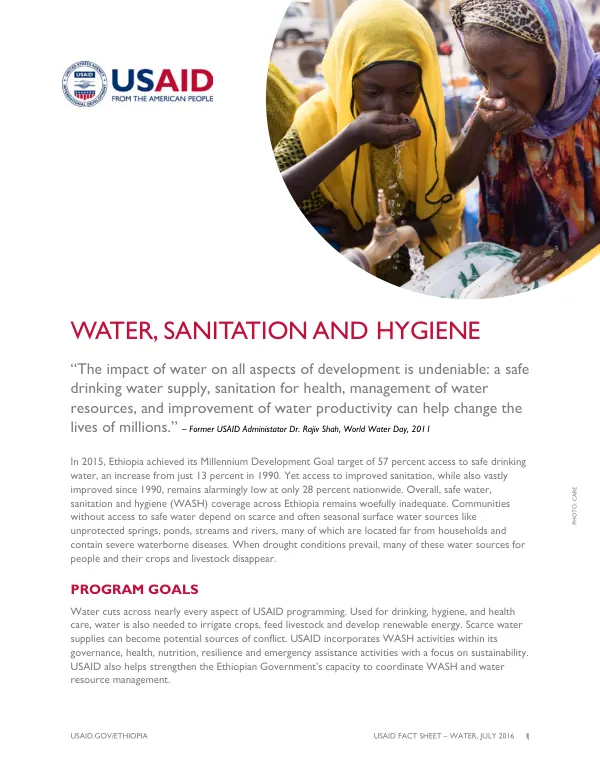
However, the country's agricultural sector faces significant challenges, including limited access to safe drinking water, inadequate sanitation facilities, and poor hygiene practices. These challenges are exacerbated by climate change, which is increasing the severity of dry season conditions in pastoral, livestock-rearing areas. To address these challenges, USAID is working to increase access to sustainable water supply services, improve sanitation facilities, and promote key hygiene behaviors. USAID is helping local governments to enhance their capacity to contract with and oversee service providers, conduct full lifecycle cost analysis on water systems, and set equitable tariffs. This includes supporting the establishment of representative water committees that can responsibly collect water tariffs and manage funding for routine operations and maintenance. In addition to improving water supply services, USAID is also working to increase access to improved sanitation products and services. This includes creating widespread demand for sanitation products and services through a community-led total sanitation and hygiene approach, as well as piloting additional participatory approaches to spark demand for improved sanitation in pastoral communities. USAID is also supporting small sanitation businesses to respond to increased consumer demand through targeted training on product development, marketing, and procurement. To promote key hygiene behaviors, USAID is working with a broad range of hygiene products and services providers to provide household water treatment, water and food storage technologies, and other products to facilitate optimal hygiene behaviors. This includes promoting the four hygiene practices with the greatest demonstrated impact on health: hand washing with soap at critical times, safe disposal and management of excreta, proper food hygiene, and safe household water storage, handling, and treatment. The sustainability of food production from rainfed and irrigated agricultural systems is also a key focus area for USAID. Through the U.S. Government's Feed the Future initiative, investments are being made to increase agricultural production, including efforts to introduce or improve small-scale irrigation. USAID is helping to introduce supplemental irrigation measures in traditionally rainfed systems to better harness water when it is available, and is building the capacity of communities to manage these systems sustainably and equitably. This includes the establishment of functioning and inclusive water resources management committees to ensure that water resources are managed in a way that benefits all stakeholders.
Related documents