USAID DEC
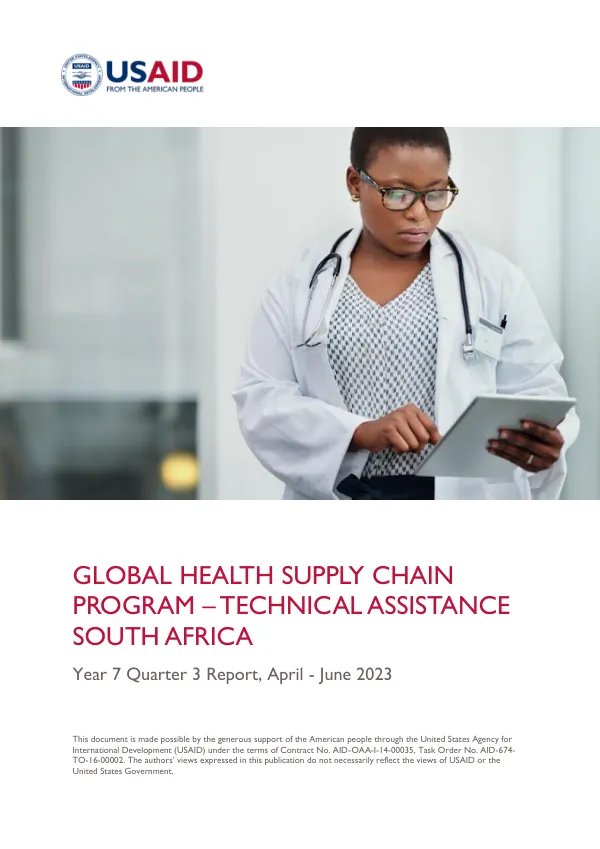
USAID GLOBAL HEALTH SUPPLY CHAIN PROGRAM – TECHNICAL ASSISTANCE Year 7 Quarter 3 Report, April - June 2023
Sign inCLINTON HEALTHCARE ACCESS INITIATIVE
USAID GLOBAL HEALTH SUPPLY CHAIN PROGRAM – TECHNICAL ASSISTANCE Year 7 Quarter 3 Report, April - June 2023
The Global Health Supply Chain Program – Technical Assistance in South Africa is a USAID-funded initiative aimed at improving the country's health supply chain.
2023 · 66 pages
Sign in to readA free account is required to download.
Abstract
The program's primary objectives include improving the selection and use of medicines, supporting the optimization of the supply chain, strengthening governance, improving workforce management, and enhancing information systems and financial management. In Year 7, Quarter 3, the program achieved significant milestones in these areas. The overall percentage of medicine availability increased, with 85% of medicines available in the country. This improvement was attributed to the implementation of the Three Multi-Month Dispensing (3MMD) approach, which enabled the distribution of medicines to health facilities for a longer period. The program also made progress in strengthening medicine selection and use. The number of medicine selection decisions made utilizing health technology assessment processes increased by 25%, and the percentage of assisted Pharmaceutical and Therapeutics Committees with improved operational capacity rose to 90%. These improvements were achieved through the provision of training and technical assistance to healthcare professionals. In addition, the program supported the optimization of the supply chain by implementing demand planning, transitioning to the Tender Linked Delivery (TLD) system, and introducing multi-month dispensing. The percentage of antiretroviral units delivered by suppliers within contractual lead-time increased to 95%, and the supplier performance reliability – perfect order fulfillment for orders placed on suppliers (on-time and in-full) improved to 92%. The program also strengthened governance by supporting the development of the National Essential Medicines List (NEMLC) and the implementation of the Master Health Product List (MHPL). The number of health establishments with access to the Medicine Master Data System (MMDS) increased to 80%, and the percentage of users utilizing the National Surveillance Center (NSC) to review medicine availability trends and reports rose to 85%. Furthermore, the program improved workforce management by providing training and technical assistance to healthcare professionals. The number of health establishments using core supply chain information systems to order and/or receive stock increased to 70%, and the reporting compliance – number of health establishments reporting stock availability to the NSC improved to 90%. The program also supported the Government of South Africa in its response to COVID-19 by providing technical assistance and training to healthcare professionals. The lessons learned from the program's activities and achievements were documented and shared with stakeholders. In terms of financial management, the program's obligation by year increased, and the total expenditures to date were reported. The budget vs. actual and projected line of effort (LOE) were also provided, indicating a satisfactory progress towards the program's objectives. Overall, the Global Health Supply Chain Program – Technical Assistance in South Africa made significant progress in improving the country's health supply chain in Year 7, Quarter 3. The program's achievements in medicine availability, supply chain optimization, governance, workforce management, and information systems and financial management demonstrate its effectiveness in supporting the Government of South Africa's efforts to improve healthcare outcomes.
Related documents
Documents in this collection
 2023
2023USAID DEC
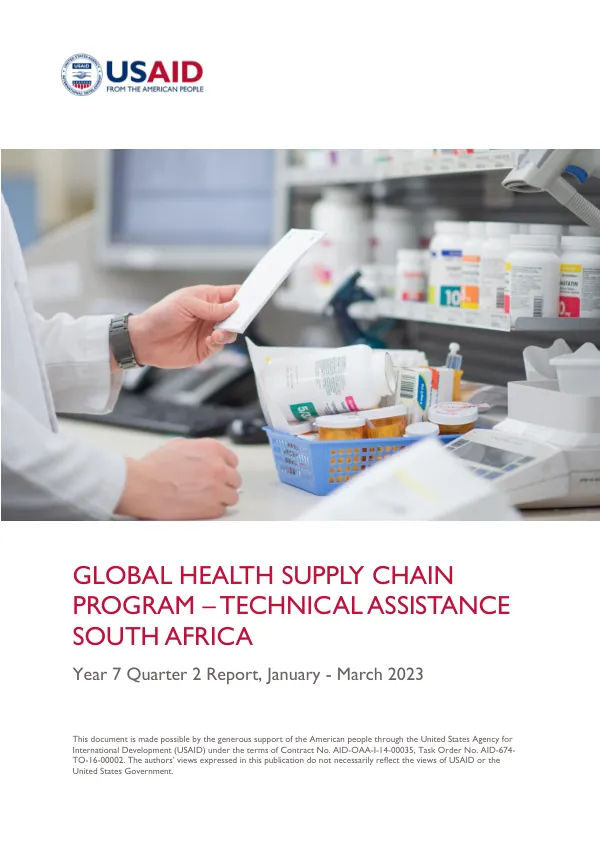
USAID GLOBAL HEALTH SUPPLY CHAIN PROGRAM – TECHNICAL ASSISTANCE SOUTH AFRICA Year 7 Quarter 2 Report, January - March 2023
Open record 2018
2018USAID DEC