USAID DEC
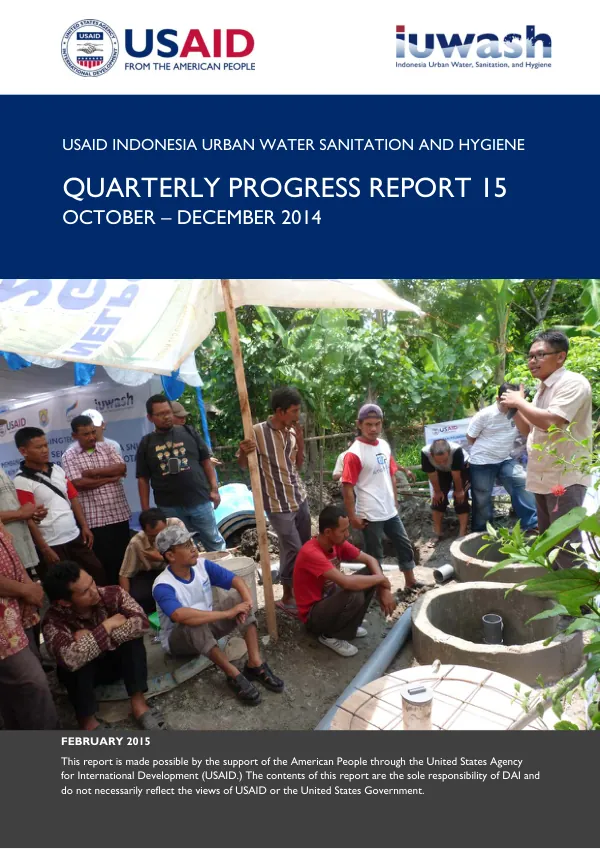
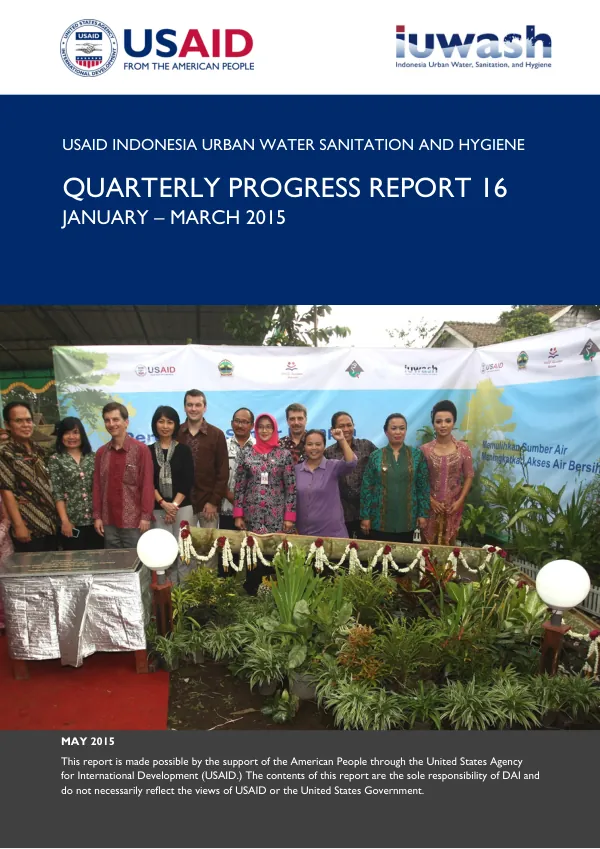
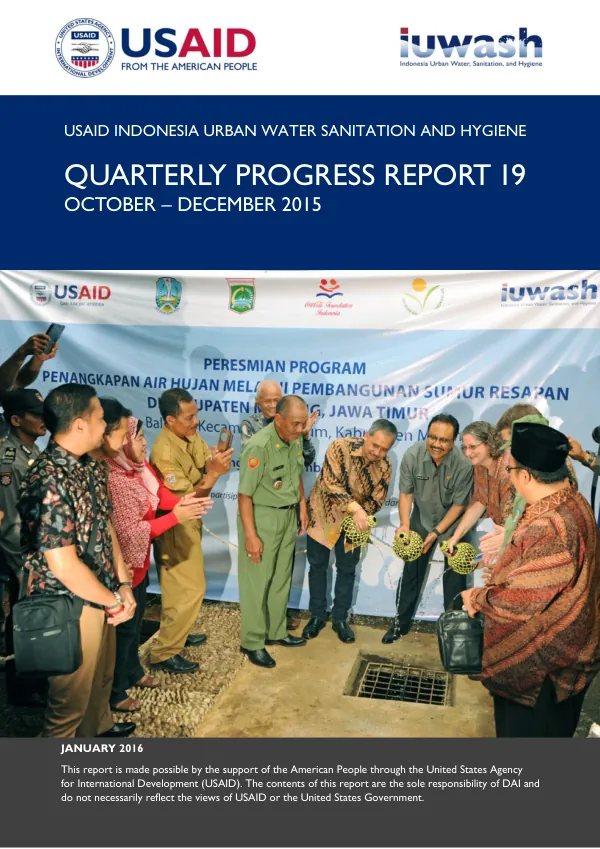
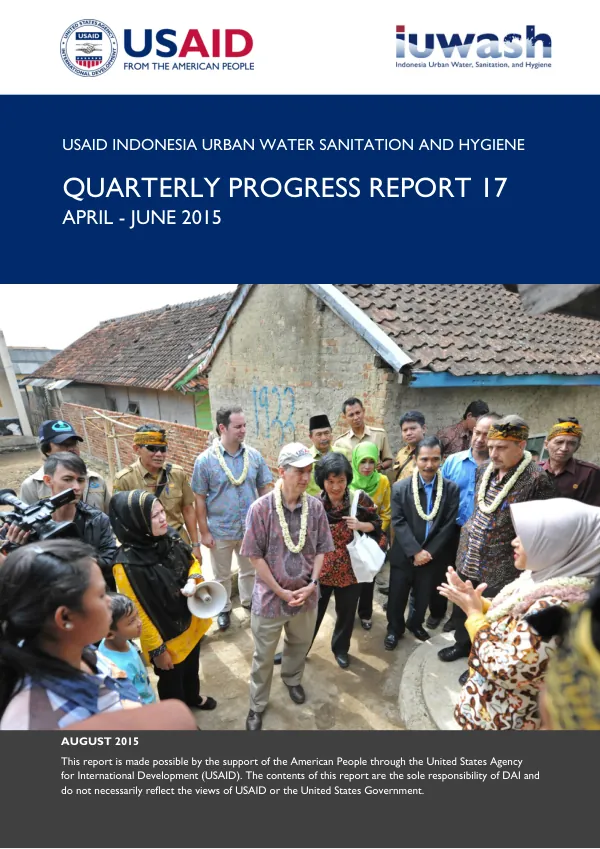
USAID Indonesia Urban Water Sanitation and Hygiene Quarterly Progress Report 17 April - June 2015
Sign inDAI
USAID Indonesia Urban Water Sanitation and Hygiene Quarterly Progress Report 17 April - June 2015
The USAID Indonesia Urban Water Sanitation and Hygiene (IUWASH) program is a collaborative effort between the government of Indonesia and the United States Agency for International Development (USAID).
2015 · 149 pages
Sign in to readA free account is required to download.
Abstract
The program aims to improve access to improved sanitation facilities and increase the use of safe water in urban areas. In the April-June 2015 quarter, the program made significant progress in various sectors. In the water supply sector, the program focused on improving the technical, financial, and customer aspects of public drinking water companies (PDAMs). Program WS-1 aimed to improve PDAM technical aspects, including the development of a water supply master plan and the implementation of a water loss reduction program. Program WS-2 focused on improving PDAM financial aspects, including the development of a financial management system and the implementation of a cost recovery program. Program WS-3 aimed to improve PDAM customer aspects, including the establishment of a customer service center and the implementation of a billing system. In the sanitation sector, the program focused on increasing access to improved sanitation facilities through individual household systems, communal systems, and off-site sanitation. Program SAN-1 aimed to increase access to improved sanitation through individual household systems, including the provision of sanitation facilities and the promotion of good hygiene practices. Program SAN-2 focused on increasing access to improved sanitation through communal systems, including the establishment of communal toilets and the promotion of shared sanitation practices. The program also implemented cross-cutting sector activities, including the development of local government policies, the increase of local government budget, and the improvement of citizen engagement. Program CC-1 aimed to increase the number of local government policies related to water and sanitation, including the development of a water and sanitation policy and the implementation of a policy monitoring system. Program CC-2 focused on increasing the local government budget for water and sanitation, including the allocation of funds for water and sanitation projects and the implementation of a budget monitoring system. The program also implemented a grants program, which provided funding for local government initiatives and community-based projects. The grants program aimed to support the development of local government capacity and the implementation of community-based projects that promote access to improved sanitation facilities and safe water. The program's progress was monitored and evaluated through a project monitoring and evaluation system, which tracked the achievement of project outcomes and the implementation of project activities. The system provided a framework for monitoring and evaluating the program's progress and identifying areas for improvement. The program's success stories include the establishment of a water supply master plan in the city of Bandung, which aimed to improve the city's water supply system and reduce water losses. The program also implemented a sanitation program in the city of Jakarta, which aimed to increase access to improved sanitation facilities and promote good hygiene practices. The program's high-level results include a 27% increase in the number of households with access to improved sanitation facilities and a 25% increase in the number of households with access to safe water. The program also achieved a 30% increase in the number of local government policies related to water and sanitation and a 25% increase in the local government budget for water and sanitation. Overall, the IUWASH program made significant progress in the April-June 2015 quarter, achieving its objectives and making a positive impact on the lives of millions of people in Indonesia.