FHI 360
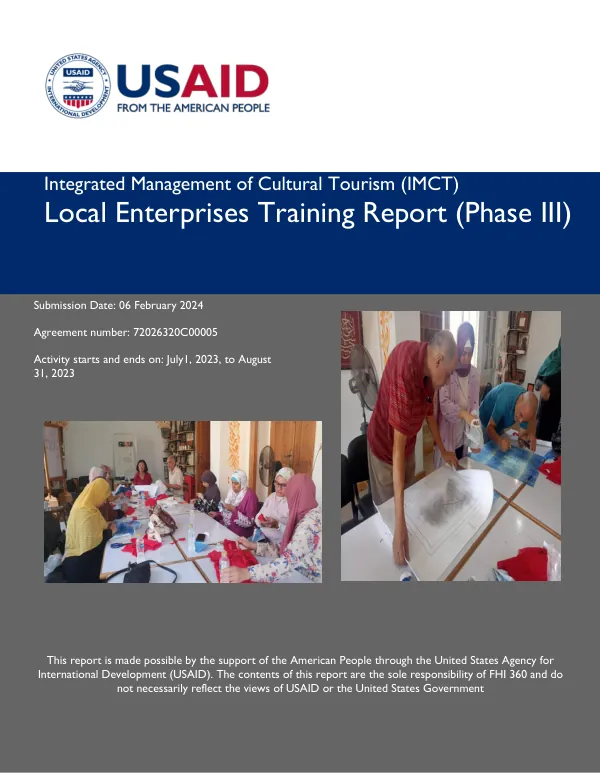
USAID - INTEGRATED MANAGEMENT OF CULTURAL TOURISM (IMCT)
The Integrated Management of Cultural Tourism (IMCT) initiative in Egypt aims to develop refined policy recommendations based on the legal framework governing the cultural tourism sector.
2020 · 14 pages
Sign in to readA free account is required to download.
Abstract
The report at hand assesses and provides feedback on the IMCT policy recommendations, resulting in final six policy recommendations of highest priority. The report concludes with a view of the next steps to be taken to advocate for the adoption of these recommendations. Raising awareness about the benefits of cultural tourism is a commendable objective, as it can lead to increased cooperation among stakeholders and enhanced understanding of the sector's potential. However, prioritizing this recommendation solely might not be the most effective strategy for Egypt at the current moment. The country faces pressing challenges in other domains that could have a more direct and immediate impact on the cultural tourism industry. For instance, working on investment schemes, addressing environmental concerns, and ensuring the preservation and maintenance of cultural heritage sites are critical issues that could yield more tangible outcomes. Issuing a Prime Minister's Decree to bring cultural sites under the Ministry of Tourism and Antiquities (MOTA) jurisdiction is well-founded. This move would signal the government's commitment to preserving and promoting cultural heritage sites, enhancing their appeal to both domestic and international tourists. The integration of cultural heritage sites into MOTA's promotional plans would ensure a comprehensive, well-coordinated approach to marketing and developing these attractions. By consolidating oversight and promotional efforts under a single government entity, Egypt can optimize resource allocation and streamline decision-making processes. The merger of the General Authority for Tourism and General Authority for Tourism Development into a single body under the leadership of the Minister of Tourism is also recommended. This would enable the government to streamline decision-making processes, optimize resource allocation, and enhance the overall efficiency of the tourism sector. The merged entity would be responsible for developing and implementing policies, strategies, and programs aimed at promoting cultural tourism in Egypt. Aligning the roles of various funds is another key recommendation. This would involve streamlining the allocation of resources, eliminating duplication of efforts, and ensuring that funds are utilized effectively to support the development of cultural tourism in Egypt. The proposed investment schemes and incentives would also be crucial in attracting private sector investment and promoting sustainable tourism practices. Establishing joint financial mechanisms between the state and private sector is also recommended. This would enable the government to leverage private sector expertise and resources, while ensuring that the state's interests are protected. The private sector would be incentivized to invest in cultural tourism projects, while the state would provide the necessary regulatory framework and support to ensure the success of these initiatives. Leaving SME tourism sector activities for the private sector under state supervision is another key recommendation. This would enable the private sector to take the lead in developing and managing small and medium-sized enterprises (SMEs) in the tourism sector, while the state would provide the necessary regulatory framework and support to ensure the success of these initiatives. The selected six policy recommendations are aimed at promoting sustainable development of cultural tourism in Egypt. These recommendations are based on a thorough analysis of the current challenges facing the cultural tourism sector in Egypt and are designed to address these challenges in a comprehensive and effective manner. The recommendations are also aligned with the World Tourism Organization's definition of cultural tourism and are designed to promote sustainable tourism practices in Egypt.