DAI GLOBAL, LLC
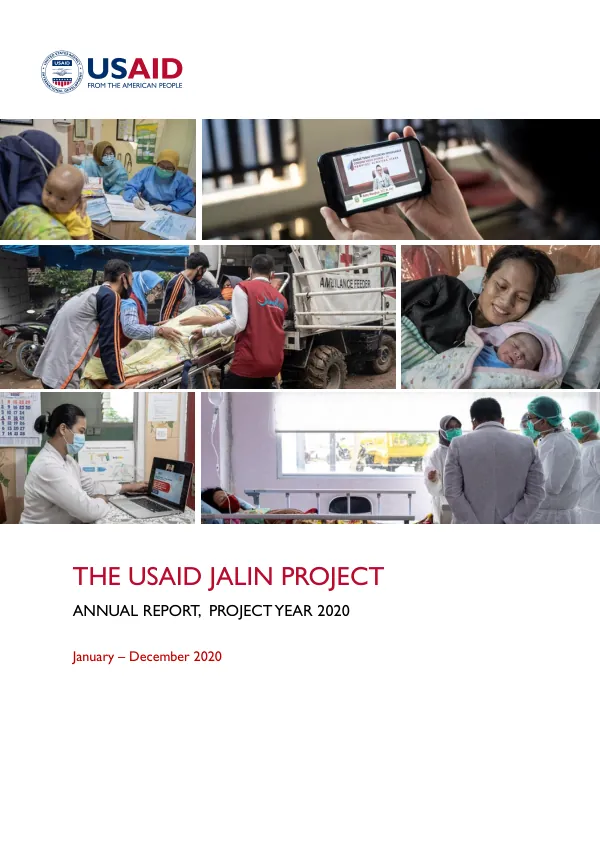
USAID JALIN PROJECT ANNUAL REPORT – JAN-DEC 2020
The USAID Jalin Project is a maternal and newborn health initiative implemented in Indonesia from January to December 2020.
2021 · 145 pages
Sign in to readA free account is required to download.
Abstract
The project aimed to improve maternal and newborn health outcomes by strengthening the quality of care provided by clinical hospital teams, private midwives, and referral networks. The project was implemented by DAI Global, LLC, under the sponsorship of the USAID/Indonesia office. The project's technical approach focused on improving the practice of clinical hospital teams in treating obstetric and newborn complications, as well as strengthening stakeholder strategies to address the main causes of maternal and neonatal deaths. The project also aimed to improve the quality of care provided by private midwives and to scale up an integrated ICT referral platform. One of the key achievements of the project was the sustained improvements in practice by clinical hospital teams in treating obstetric and newborn complications. The project provided clinical and managerial mentoring to clinical teams in public and private hospitals, which resulted in improved quality of care and reduced maternal and newborn mortality rates. The project also made significant progress in strengthening stakeholder strategies to address the main causes of maternal and neonatal deaths. The project supported the strengthening of the Maternal and Newborn Death Surveillance and Response (MPDSR) system, which enabled the monitoring and reporting of maternal and newborn deaths at the national level. The project also facilitated regular reviews of maternal and newborn deaths at the national level and recommended improvements to address human and institutional capacities. In addition, the project made significant progress in improving the quality of care provided by private midwives. The project revived and strengthened the Bidan Delima network, which provided training and certification to private midwives. The project also incentivized the empanelment of private midwives with the JKN health insurance program and facilitated access to credit for private midwives to improve standards of care. The project also scaled up an integrated ICT referral platform, which enabled the strengthening of the maternal and newborn referral system approach in Jalin provinces. The project developed and piloted an integrated and interoperable system using ICT, which improved the referral process and reduced delays in accessing emergency care. The project also made significant progress in improving referral networks, which enabled the strengthening of emergency referral networks and improving transport to referral facilities for emergency cases. The project facilitated formal agreements between facilities in networks in the Jalin provinces and improved access to funding for available transport in the Jalin provinces. The project also addressed cross-cutting issues, including gender and gender-based violence integration, addressing women as health care beneficiaries, strengthening women's businesses, and addressing gender-based violence. The project also implemented a Monitoring, Evaluation, Learning, Adaptation, and Strategic Communication (MELA) plan, which enabled the tracking of project performance and the identification of areas for improvement. The project was managed by a team of personnel, who were responsible for operations, COVID-19 response, standardization of MOU and partnership agreement process, procurement and grant management, project closeout, and cost control. The project also encountered several problems, including the COVID-19 pandemic, which required the project team to adapt and respond to the changing situation.
Related documents