DAI GLOBAL, LLC
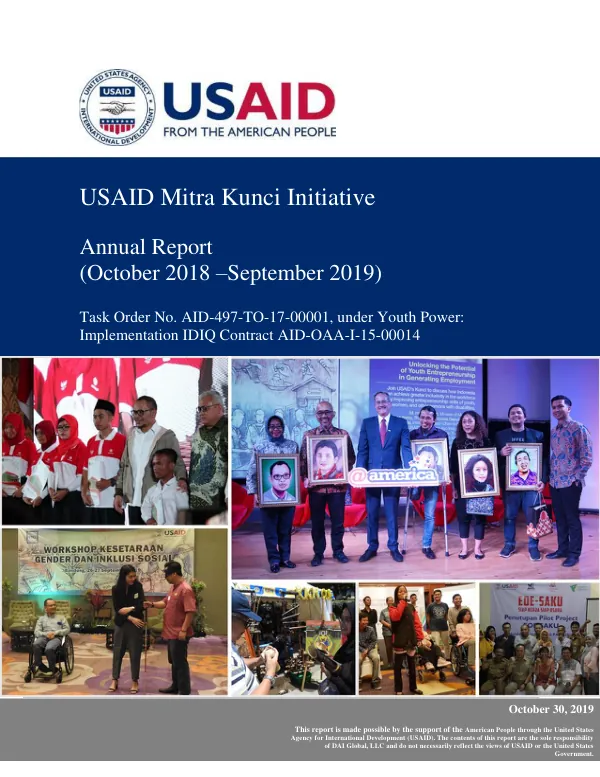
USAID Mitra Kunci Initiative Annual Report (October 2018 –September 2019)
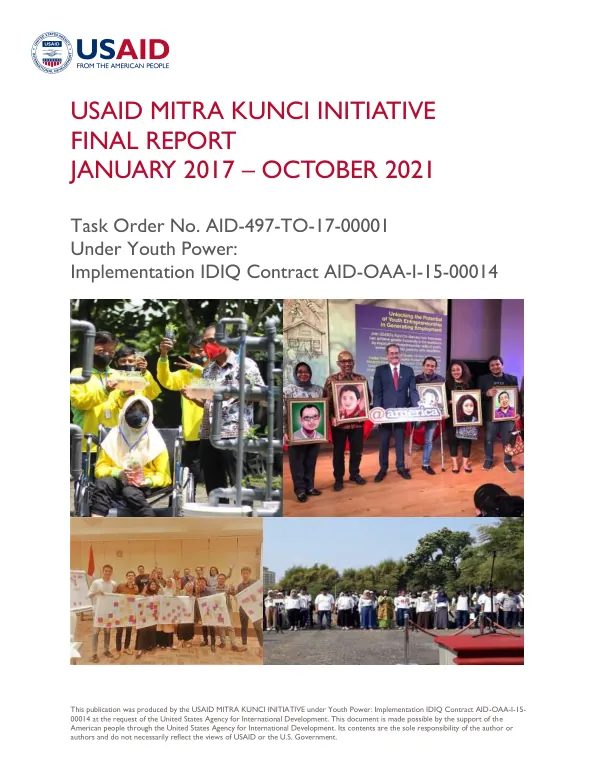
The USAID Mitra Kunci Initiative is a project aimed at improving workforce development and employment opportunities for poor and vulnerable youth in Indonesia.
2019 · 93 pages
Sign in to readA free account is required to download.
Abstract
The initiative is part of the Youth Power: Implementation IDIQ Contract AID-OAA-I-15-00014, with Task Order No. AID-497-TO-17-00001. The project is implemented by DAI Global, LLC, with the support of the American People through the United States Agency for International Development (USAID). The initiative focuses on several key areas, including technical assistance and capacity development to project implementers, positive youth development, gender equity and social inclusion, communicating, collaborating, learning, and adapting, and strengthening university work experience and entrepreneurship programs. The project also engages the private sector to improve gender equity and inclusive employment. The project has achieved several results, including the provision of technical assistance and capacity development to project implementers, the implementation of positive youth development programs, and the promotion of gender equity and social inclusion. The project has also strengthened university work experience and entrepreneurship programs, and engaged the private sector to improve inclusive employment. One of the key project implementers is SINERGI, which has implemented several programs aimed at improving workforce development and employment opportunities for poor and vulnerable youth. SINERGI has also implemented programs aimed at promoting gender equity and social inclusion, and has engaged the private sector to improve inclusive employment. Another key project implementer is Ayo Inklusif!, which has implemented programs aimed at promoting inclusive employment and improving the skills and employability of poor and vulnerable youth. Ayo Inklusif! has also implemented programs aimed at promoting gender equity and social inclusion. The project has also implemented the Equal Opportunity for Empowerment (EOE) program, which aims to improve the skills and employability of poor and vulnerable youth, particularly women and people with disabilities. The EOE program has been implemented in several locations, including Sukabumi, West Java. The project has faced several challenges, including the need to improve the capacity of project implementers and the need to engage the private sector more effectively. However, the project has also learned several lessons, including the importance of building strong partnerships with project implementers and the need to tailor programs to the specific needs of poor and vulnerable youth. The project has also achieved several success stories, including the improvement of workforce development and employment opportunities for poor and vulnerable youth, and the promotion of gender equity and social inclusion. The project has also strengthened university work experience and entrepreneurship programs, and engaged the private sector to improve inclusive employment. The project has been monitored and evaluated through several mechanisms, including the Activity Monitoring and Evaluation Plan (AMEP) and the Performance Indicator Reference Sheets (PIRS). The project has also been tracked through several performance indicator performance tracking tables, including the MITRA KUNCI and PI Performance Indicator Performance Tracking Tables. The project has been implemented in several locations, including Central Java, East Java, and West Java. The project has also been implemented in several sectors, including education, employment, and entrepreneurship. The project has been supported by several partners, including the Government of Indonesia, the private sector, and civil society organizations. The project has also been supported by several donors, including USAID and the Department for International Development (DFID). The project has been implemented over a period of three years, from October 2018 to September 2019. The project has been led by a team of experts, including the Chief of Party, the Deputy Chief of Party, and several program managers. The project has also been supported by several staff members, including technical assistants, administrative assistants, and finance and accounting managers. The project has been implemented in accordance with several agreements, including the Cooperative Agreement (CoAg) and the Memorandum of Understanding (MOU). The project has also been implemented in accordance with several regulations, including the Indonesian Labor Law and the Indonesian Employment Law. The project has been implemented over a period of three years, from October 2018 to September 2019