JHPIEGO
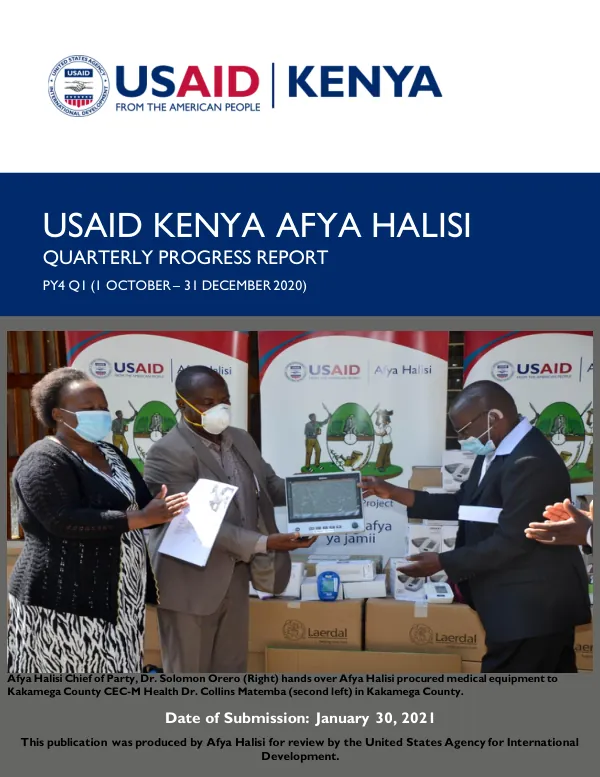
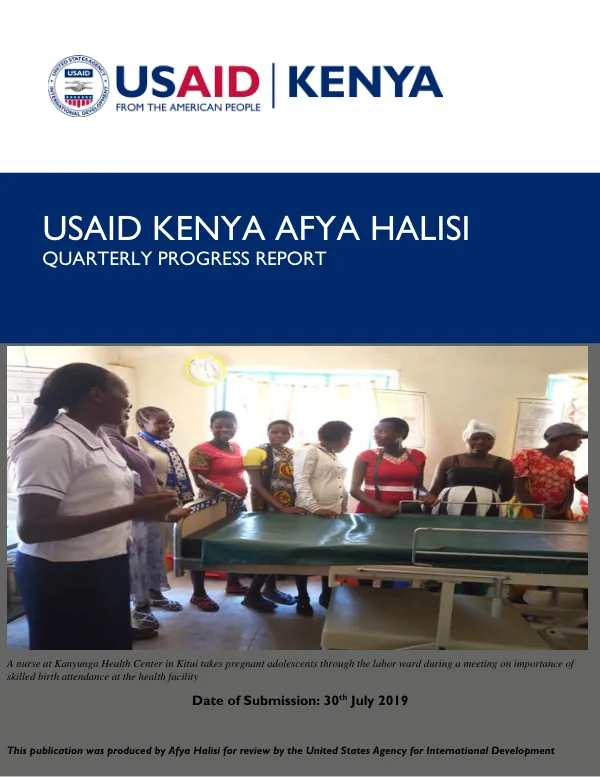
USAID/KENYA & EAST AFRICA AFYA HALISI PROGRESS REPORT FOR Q4 FY 2018
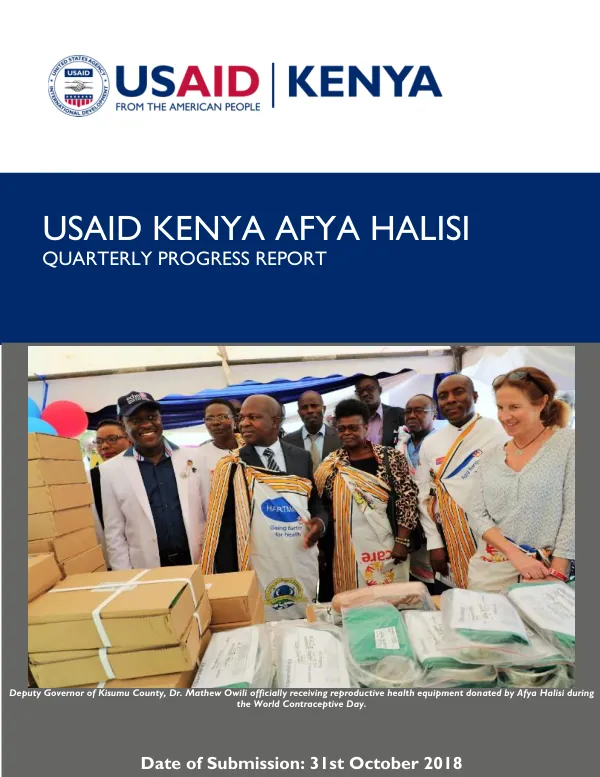
The Afya Halisi project, funded by the United States Agency for International Development (USAID), aims to improve reproductive health services in Kenya.
2018 · 100 pages
Sign in to readA free account is required to download.
Abstract
The project focuses on increasing access to family planning, maternal and newborn health, and adolescent and youth sexual and reproductive health services. Afya Halisi operates in Migori, Kisumu, and Kakamega counties, with a goal of reaching 1.2 million people by the end of the project. Afya Halisi has made significant progress in improving reproductive health services. The project has established 15 comprehensive care centers, which provide a range of services including antenatal care, delivery services, and postnatal care. The centers have also been equipped with essential medical equipment and supplies. In addition, Afya Halisi has trained over 1,000 health care workers in basic emergency obstetric and newborn care, and has established a network of community health volunteers who provide health education and referrals to pregnant women and new mothers. The project has also made progress in increasing access to family planning services. Afya Halisi has established a network of family planning clinics, which provide a range of family planning methods, including long-acting and reversible contraceptives. The project has also conducted outreach activities to promote family planning services and has provided training to health care workers on family planning counseling. Afya Halisi has also made progress in improving maternal and newborn health. The project has established a system for monitoring maternal and perinatal deaths, and has implemented a program to reduce maternal mortality. The project has also established a network of community-based referral mechanisms, which provide referrals to pregnant women and new mothers who require higher-level care. In addition to its health services, Afya Halisi has also made progress in improving the capacity of health facilities. The project has provided training to health care workers on quality improvement and has established a system for monitoring and evaluating health services. The project has also provided support to health facilities to improve their infrastructure and equipment. Afya Halisi has also made progress in promoting adolescent and youth sexual and reproductive health. The project has established a network of adolescent and youth-friendly health services, which provide a range of services including family planning, HIV testing, and counseling. The project has also conducted outreach activities to promote adolescent and youth sexual and reproductive health services and has provided training to health care workers on adolescent and youth-friendly health services. The project has also made progress in promoting gender equality and reducing gender-based violence. Afya Halisi has established a network of community-based groups that provide support to women and girls who have experienced gender-based violence. The project has also conducted outreach activities to promote gender equality and has provided training to health care workers on gender-based violence. Afya Halisi has also made progress in promoting environmental sustainability. The project has established a system for monitoring and reducing healthcare waste, and has implemented a program to promote the use of clean energy in health facilities. The project has also established a network of community-based groups that promote environmental sustainability. The project has also made progress in promoting links to other USAID programs. Afya Halisi has established partnerships with other USAID programs, including the Kenya Expanded Program for Immunization and the Kenya Quality Model for Health. The project has also conducted outreach activities to promote links to other USAID programs and has provided training to health care workers on USAID programs. Afya Halisi has also made progress in promoting sustainability and exit strategy. The project has established a system for monitoring and evaluating sustainability, and has implemented a program to promote the transfer of skills and knowledge to local health authorities. The project has also established a network of community-based groups that promote sustainability and exit strategy. The project has also made progress in promoting global development alliance. Afya Halisi has established partnerships with other global development partners, including the Clinton Health Access Initiative and the Kenya AIDS NGOs Consortium. The project has also conducted outreach activities to promote global development alliance and has provided training to health care workers on global development alliance. Afya Halisi has also made progress in promoting financial information. The project has established a system for monitoring and evaluating financial information, and has implemented a program to promote transparency and accountability. The project has also established a network of community-based groups that promote financial information. The project has also made progress in promoting activity administration. Afya Halisi has established a system for monitoring and evaluating activity administration, and has implemented a program to promote efficiency and effectiveness. The project has also established a network of community-based groups that promote activity administration. Afya Halisi has also made progress in promoting GPS information. The project has established a system for monitoring and evaluating GPS information, and has implemented a program to promote the use of GPS technology in health facilities. The project has also established a network of community-based groups that promote GPS information. Afya Halisi has also made progress in promoting success stories. The project has established a system for monitoring and evaluating success stories, and has implemented a program to promote the sharing of success stories among health facilities. The project has also established a network of community-based groups that promote success stories. The project
Related documents