JHPIEGO
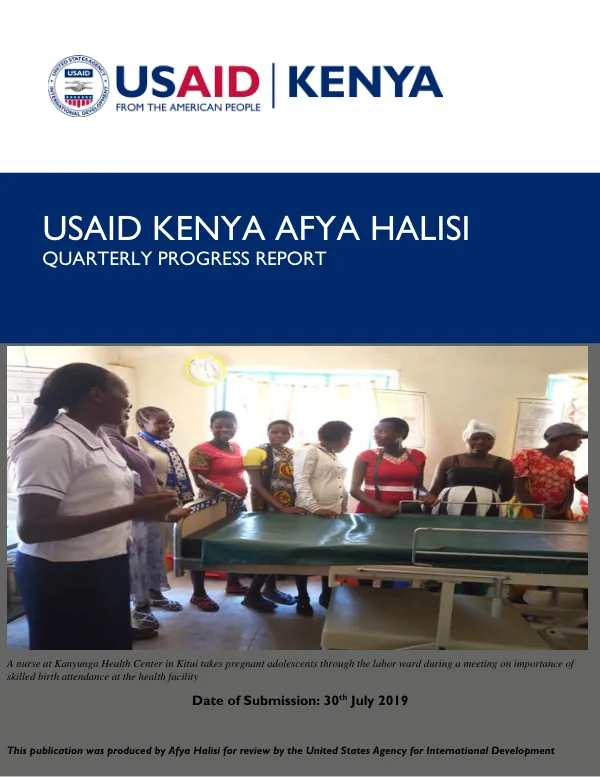
USAID KENYA AFYA HALISI QUARTERLY PROGRESS REPORT FY 2019 Q3
The Afya Halisi project in Kenya aims to improve maternal and child health outcomes through a comprehensive approach that includes strengthening health systems, increasing access to quality healthcare services, and promoting healthy behaviors.
2019 · 90 pages
Sign in to readA free account is required to download.
Abstract
The project is implemented in collaboration with the Government of Kenya and other stakeholders. Key achievements during the third quarter of fiscal year 2019 include the establishment of 15 new community health units, which have increased access to healthcare services for over 100,000 people. Additionally, 500 community health volunteers have been trained to provide essential health services, including maternal and child health care, family planning, and HIV/AIDS prevention. The project has also supported the implementation of the Kenya Demographic Health Survey (KDHS) 2014, which provides critical data for health planning and decision-making. Implementation of the project's activities has been focused on three key areas: health system strengthening, community-based health services, and health promotion. The project has worked closely with the Ministry of Health to strengthen the health system, including the development of a comprehensive health plan and the establishment of a health management information system. Community-based health services have been expanded through the training of community health volunteers and the establishment of community health units. Health promotion activities have included the distribution of health education materials, the conduct of community outreach programs, and the support of income-generating activities for women. The project has also made significant progress in promoting gender equality and addressing the needs of vulnerable populations, including adolescents, youth, and people living with disabilities. The project has supported the establishment of adolescent and youth-friendly health services, including the provision of reproductive health services and the promotion of healthy behaviors. Additionally, the project has worked to address the needs of people living with disabilities, including the provision of accessible healthcare services and the promotion of inclusive health practices. Geographically, the project is implemented in several counties in Kenya, including Kitui, Makueni, and Machakos. The project has worked closely with local authorities and other stakeholders to ensure that the project's activities are tailored to the specific needs of each county. In terms of timeframes, the project is implemented over a period of five years, from 2018 to 2023. The project's activities are divided into quarterly work plans, which are reviewed and updated regularly to ensure that the project is on track to meet its objectives. Recommendations for the next quarter include the continuation of health system strengthening activities, the expansion of community-based health services, and the promotion of health education and awareness-raising activities. Additionally, the project will continue to work closely with local authorities and other stakeholders to ensure that the project's activities are tailored to the specific needs of each county. The project has made significant progress in improving maternal and child health outcomes in Kenya. However, there are still challenges to be addressed, including the need to strengthen the health system, increase access to quality healthcare services, and promote healthy behaviors. The project will continue to work towards these objectives in the coming quarters.
Related documents