USAID DEC
USAID/Nigeria Activities and Opportunities: Findings from an Election Management Bodies Assessment
Sign inTHE CLOUDBURST GROUP
USAID/Nigeria Activities and Opportunities: Findings from an Election Management Bodies Assessment
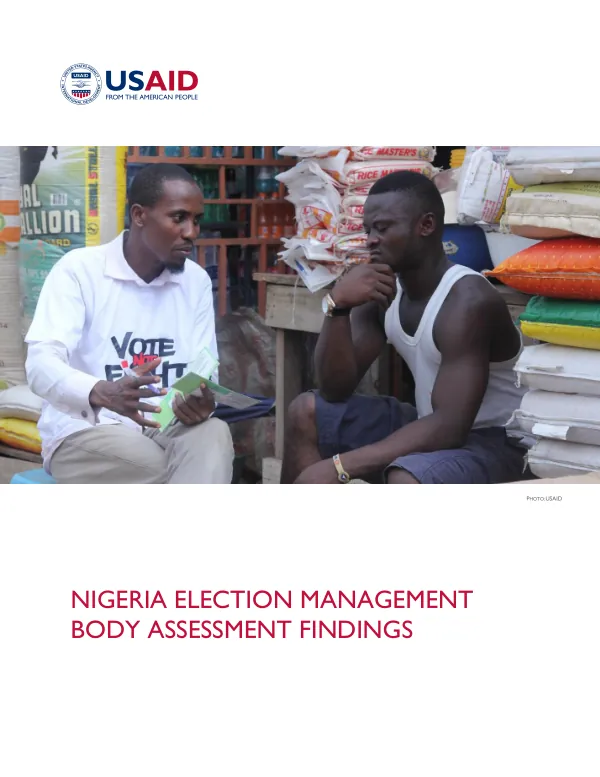
Election Management Bodies Assessment in Nigeria The assessment focused on the period corresponding to USAID's Support for Electoral Reforms Project, spanning from 2007 to 2019.
2021 · 2 pages
Sign in to readA free account is required to download.
Abstract
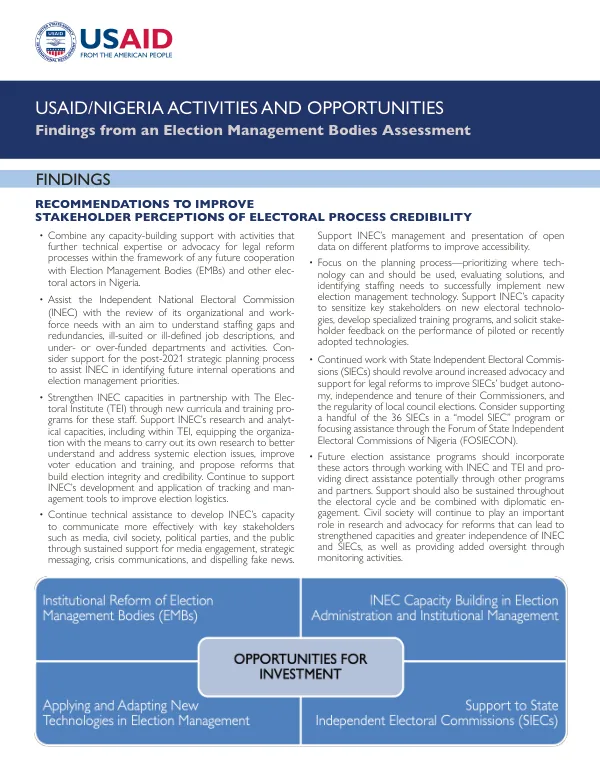
Stakeholder perceptions of the electoral process in Nigeria underwent significant changes during this period. Initial assessments conducted in 2007 revealed concerns regarding the electoral process, including perceptions of bias and lack of transparency. Capacity-building support for Election Management Bodies (EMBs) in Nigeria was deemed essential to improve electoral process credibility. Recommendations emphasized the need to combine capacity-building support with activities that further technical expertise or advocacy for legal reform processes. This approach aimed to enhance the effectiveness of EMBs in managing elections. The Independent National Electoral Commission (INEC) and State Independent Electoral Commissions (SIECs) were identified as key stakeholders in the electoral process. INEC's organizational and workforce needs were assessed, highlighting staffing gaps and redundancies. Recommendations included reviewing INEC's organizational structure and workforce needs to identify areas for improvement. Technical assistance was provided to develop INEC's capacity to communicate effectively with key stakeholders, including media, civil society, and the public. This involved sustained support for media engagement, strategic messaging, crisis communications, and dispelling fake news. INEC's management and presentation of open data on different platforms were also supported to improve accessibility. The assessment highlighted the importance of planning and prioritizing the use of technology in election management. Recommendations included focusing on the planning process, evaluating solutions, and identifying staffing needs to successfully implement new election management technology. Support was also provided to sensitize key stakeholders on new electoral technologies and develop specialized training programs. State Independent Electoral Commissions (SIECs) were identified as critical actors in the electoral process. Recommendations emphasized the need for increased advocacy and support for legal reforms to improve SIECs' budget autonomy, independence, and tenure of their Commissioners. Consideration was given to supporting a handful of SIECs in a "model SIEC" program or focusing assistance through the Forum of State Independent Electoral Commissions of Nigeria (FOSIECON). The assessment methodology involved a thorough desk review and remote field research, including interviews with key informants, surveys of national- and state-level elections experts, and analysis of existing International Foundation for Electoral Systems (IFES) public opinion survey data. The assessment aimed to provide a comprehensive understanding of the performance of Election Management Bodies in Nigeria over the past decade.
Related documents