USAID/OFDA
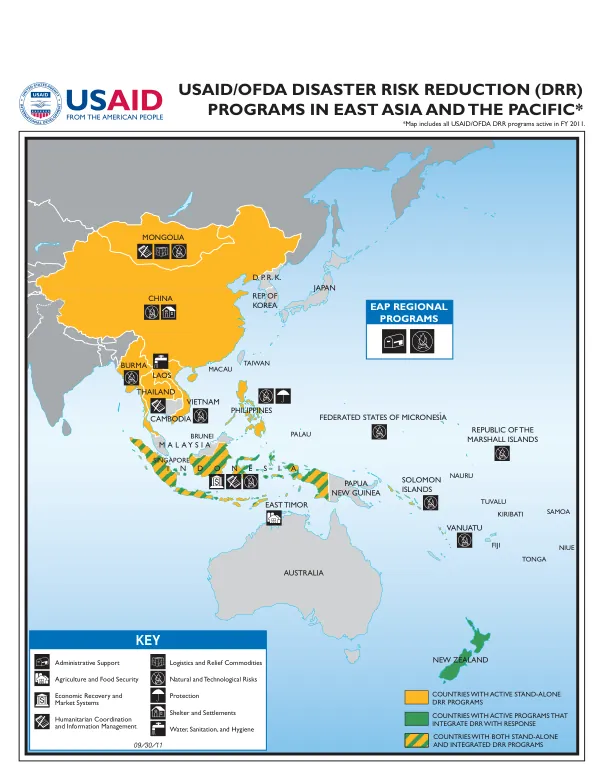
USAID/OFDA Disaster Risk Reduction (DRR) Programs in East Asia and the Pacific
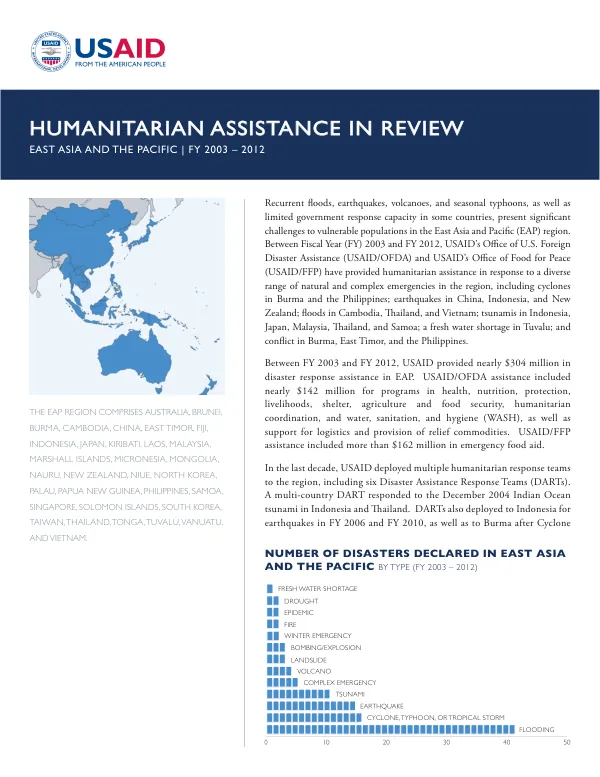
Disaster Risk Reduction (DRR) programs in East Asia and the Pacific are a key focus of USAID/OFDA's efforts in the region.
2012 · 1 pages
Sign in to readA free account is required to download.
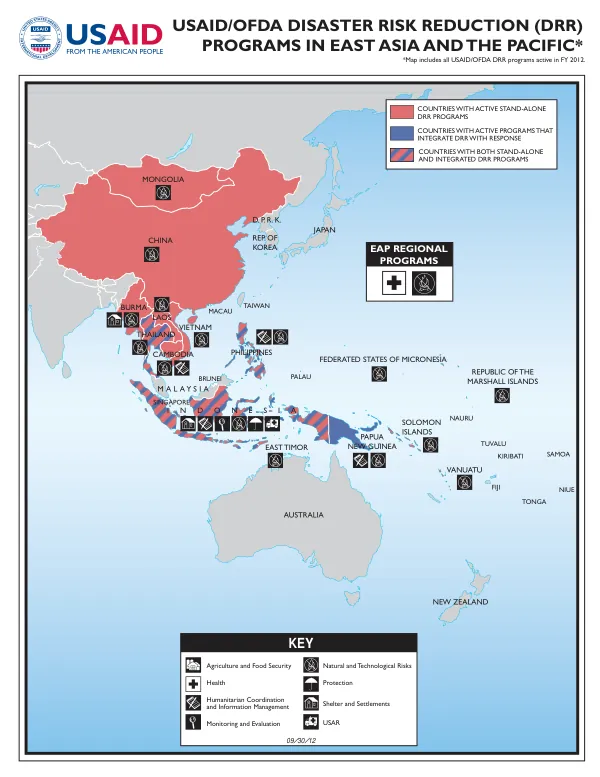
Abstract
The EAP Regional Programs map highlights countries with active stand-alone DRR programs, countries with integrated DRR programs, and countries with both stand-alone and integrated DRR programs. China, Mongolia, and Burma have active stand-alone DRR programs, indicating a strong focus on disaster risk reduction in these countries. Japan, Taiwan, and the Republic of Korea also have active stand-alone DRR programs, reflecting their commitment to disaster risk reduction and management. Brunei, Malaysia, and Singapore have both stand-alone and integrated DRR programs, demonstrating a comprehensive approach to disaster risk reduction. Cambodia, Laos, and Vietnam have active programs that integrate DRR with response efforts, highlighting the importance of disaster risk reduction in these countries. The Philippines, Thailand, and Papua New Guinea also have integrated DRR programs, emphasizing the need for a coordinated approach to disaster risk reduction and response. Indonesia, the Federated States of Micronesia, and the Republic of the Marshall Islands have both stand-alone and integrated DRR programs, reflecting their commitment to disaster risk reduction and management. The map also highlights countries with active DRR programs in FY 2012, including China, Japan, the Republic of Korea, and the Philippines. These countries have demonstrated a strong commitment to disaster risk reduction and management, and their programs are likely to continue in FY 2013 and beyond. The EAP Regional Programs map provides a comprehensive overview of DRR programs in the region, highlighting the countries with active programs and the types of programs they have in place. This information can be used to inform USAID/OFDA's DRR efforts in the region and to identify opportunities for collaboration and coordination with partner countries.