USAID/OFDA
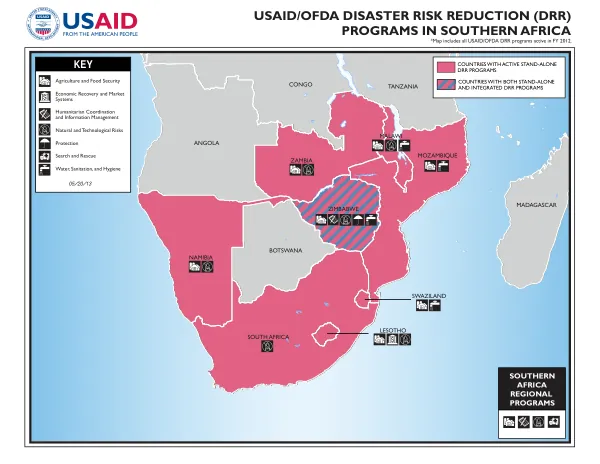
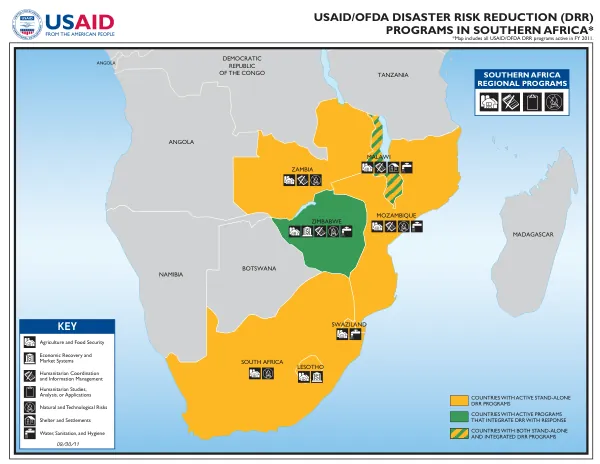
USAID/OFDA DISASTER RISK REDUCTION (DRR) PROGRAMS IN SOUTHERN AFRICA
The USAID/OFDA Disaster Risk Reduction (DRR) program in Southern Africa focuses on mitigating the impact of natural and technological disasters in the region.
2011 · 1 pages
Sign in to readA free account is required to download.
Abstract
The program is active in nine countries, including Madagascar, Mozambique, Malawi, Zambia, the Democratic Republic of the Congo, Tanzania, Zimbabwe, Swaziland, and South Africa. These countries are categorized based on the level of integration of DRR with response programs. Countries with both stand-alone and integrated DRR programs include Mozambique, Malawi, Zambia, the Democratic Republic of the Congo, and Tanzania. These countries have active programs that integrate DRR with response efforts, indicating a comprehensive approach to disaster management. In contrast, countries with active stand-alone DRR programs include Zimbabwe, Swaziland, and South Africa. These countries have dedicated programs focused on disaster risk reduction, but may not necessarily integrate DRR with response efforts. The program's geographic focus is on Southern Africa, with a specific emphasis on countries vulnerable to natural disasters such as floods, droughts, and cyclones. The region's diverse geography, including mountains, coastlines, and river basins, makes it prone to various types of disasters. The USAID/OFDA DRR program aims to address these risks through a range of interventions, including capacity building, infrastructure development, and emergency preparedness. The program's implementation is guided by a clear understanding of the region's disaster risk profile. The USAID/OFDA DRR program works closely with local governments, NGOs, and other stakeholders to identify areas of high risk and develop targeted interventions. The program's focus on capacity building and infrastructure development aims to enhance the resilience of communities and reduce the impact of disasters. The program's timeframes are flexible, with a focus on long-term sustainability and impact. The program's objectives are aligned with the USAID/OFDA's broader goals of reducing disaster risk and promoting economic recovery and market systems development in the region. The program's success will be measured through a range of indicators, including the reduction of disaster-related losses and the improvement of community resilience.