CARE
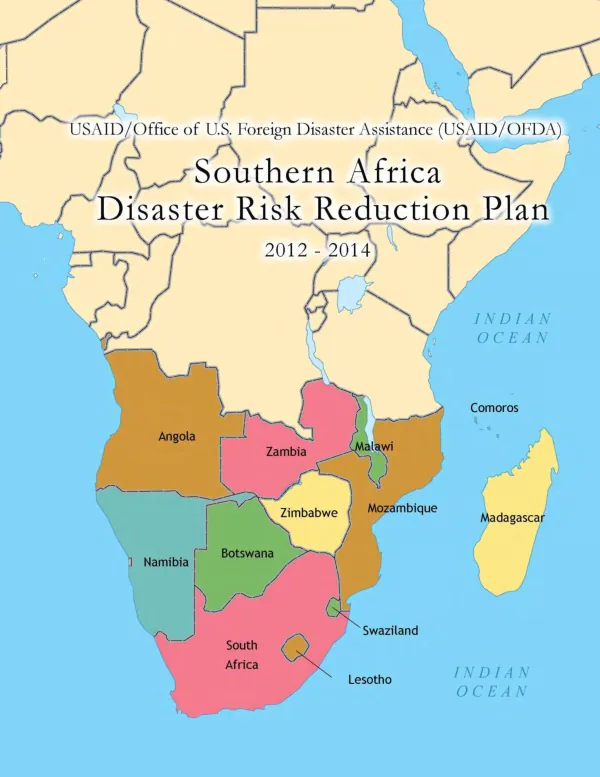
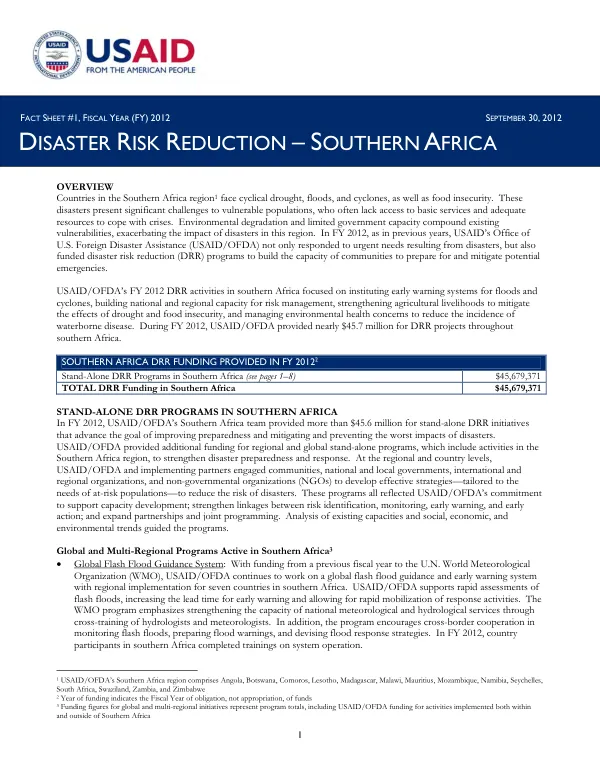
Disaster Risk Reduction – Southern Africa
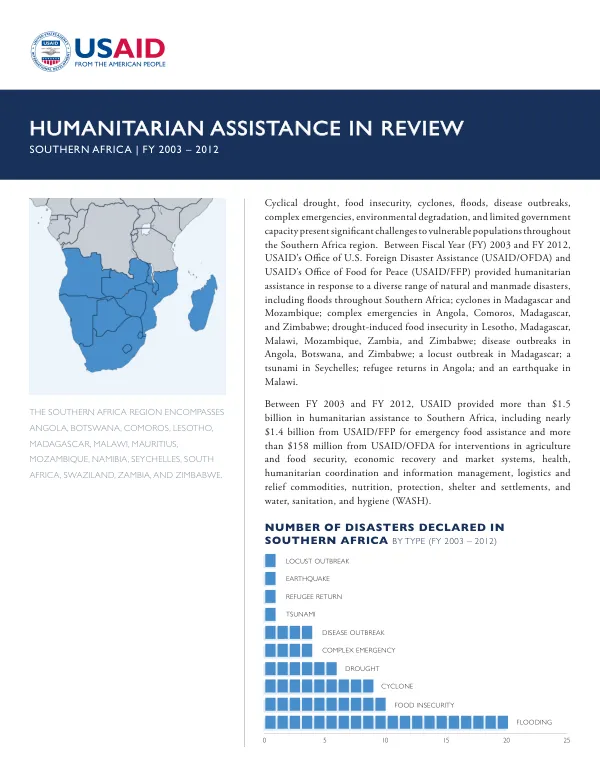
The Southern Africa region faces significant challenges due to cyclical drought, floods, and cyclones, as well as food insecurity.
2012 · 12 pages
Sign in to readA free account is required to download.
Abstract
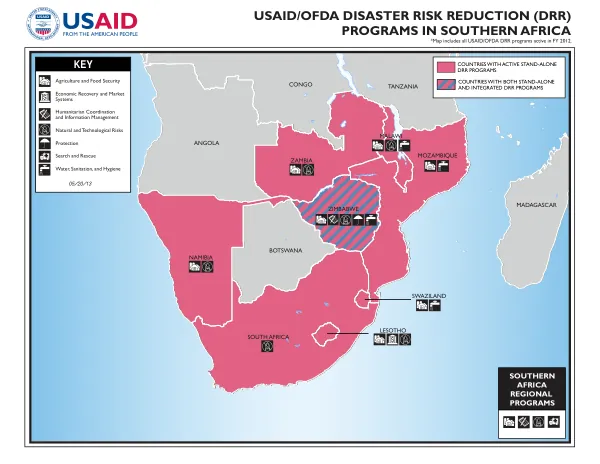
These disasters present substantial challenges to vulnerable populations, who often lack access to basic services and adequate resources to cope with crises. Environmental degradation and limited government capacity compound existing vulnerabilities, exacerbating the impact of disasters in this region. In response to these challenges, USAID's Office of U.S. Foreign Disaster Assistance (USAID/OFDA) implemented disaster risk reduction (DRR) programs in southern Africa during FY 2012. These programs focused on instituting early warning systems for floods and cyclones, building national and regional capacity for risk management, strengthening agricultural livelihoods to mitigate the effects of drought and food insecurity, and managing environmental health concerns to reduce the incidence of waterborne disease. USAID/OFDA provided nearly $45.7 million for DRR projects throughout southern Africa during FY 2012. The funding supported stand-alone DRR programs, as well as regional and global initiatives. At the regional and country levels, USAID/OFDA and implementing partners engaged communities, national and local governments, international and regional organizations, and non-governmental organizations (NGOs) to develop effective strategies tailored to the needs of at-risk populations to reduce the risk of disasters. One of the key regional programs supported by USAID/OFDA was the Global Flash Flood Guidance System. This program, implemented by the U.N. World Meteorological Organization (WMO), aimed to strengthen the capacity of national meteorological and hydrological services through cross-training of hydrologists and meteorologists. The program also encouraged cross-border cooperation in monitoring flash floods, preparing flood warnings, and devising flood response strategies. Another regional program supported by USAID/OFDA was the Views from the Frontline (VFL) project. This project, implemented by the African Centre for Disaster Studies at North-West University in South Africa, aimed to bring the voices and concerns of vulnerable people into DRR policy and practice. The project strengthened links among local, national, regional, and international civil society organizations. USAID/OFDA also supported several other regional programs, including the Partners Enhancing Resilience to People Exposed to Risks – Universities (Periperi U) program, the Rescue Programme for National Development (RESPOND) initiative, the Land and Livelihoods Restoration through Holistic Management program, the Regional Girls in Risk Reduction Leadership (G.I.R.R.L.) Program, the Coordination and Advocacy for Conservation Agriculture project, and the Coordination of Food and Agricultural Disaster Risk Reduction and Management program. These programs aimed to improve the resilience of communities in southern Africa to disasters, strengthen national and regional capacity for risk management, and promote the use of conservation agriculture techniques to mitigate the effects of drought. The programs also aimed to reduce the incidence of waterborne disease and improve food security in the region.
Related documents