USAID/OFDA
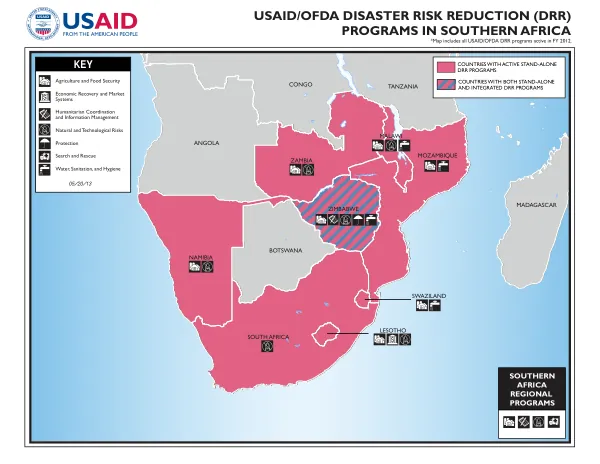
USAID/OFDA Disaster Risk Reduction (DRR) Programs in Southern Africa
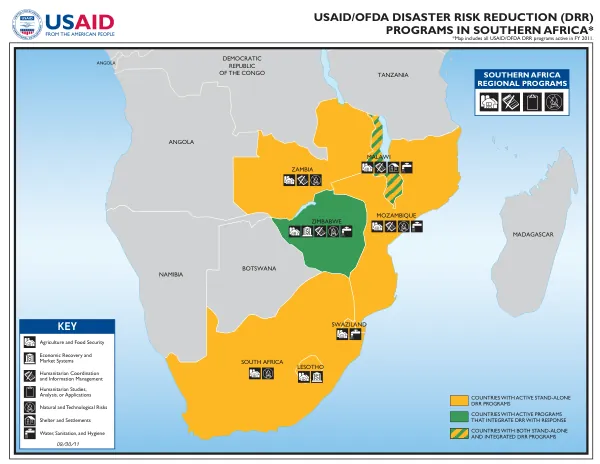
The USAID/OFDA Disaster Risk Reduction (DRR) programs in Southern Africa are implemented in 11 countries, including Angola, Namibia, Zambia, South Africa, Tanzania, Mozambique, Botswana, Madagascar, Congo, Zimbabwe, and Malawi.
2013 · 1 pages
Sign in to readA free account is required to download.
Abstract
These programs focus on reducing the impact of natural and technological disasters on vulnerable populations. Agriculture and food security are key areas of focus for DRR programs in the region. In countries such as Mozambique and Madagascar, where agricultural production is a significant contributor to the economy, DRR initiatives aim to improve crop yields and reduce the risk of crop failure due to natural disasters. In addition, programs in countries like South Africa and Namibia focus on improving early warning systems and emergency preparedness to mitigate the effects of droughts and floods. Economic recovery and market systems are also critical components of DRR programs in Southern Africa. In countries such as Tanzania and Zambia, where economic growth is heavily reliant on agriculture, DRR initiatives aim to improve market access and increase the resilience of local economies to disasters. Furthermore, programs in countries like Zimbabwe and Malawi focus on supporting small-scale farmers and traders to improve their ability to recover from disasters. Humanitarian coordination and information management are essential for effective DRR in Southern Africa. In countries such as Congo and Angola, where humanitarian crises are frequent, DRR programs aim to improve the coordination of emergency response efforts and enhance the availability of critical information during disasters. In addition, programs in countries like Botswana and Namibia focus on improving early warning systems and emergency preparedness to reduce the risk of disasters. The USAID/OFDA DRR programs in Southern Africa are implemented through a combination of stand-alone and integrated programs. Stand-alone programs focus on a specific area of DRR, such as agriculture or economic recovery, while integrated programs combine multiple components to address the complex needs of vulnerable populations. The programs are implemented in partnership with local governments, NGOs, and other stakeholders to ensure that DRR efforts are tailored to the specific needs of each country and community.