USAID/OFDA
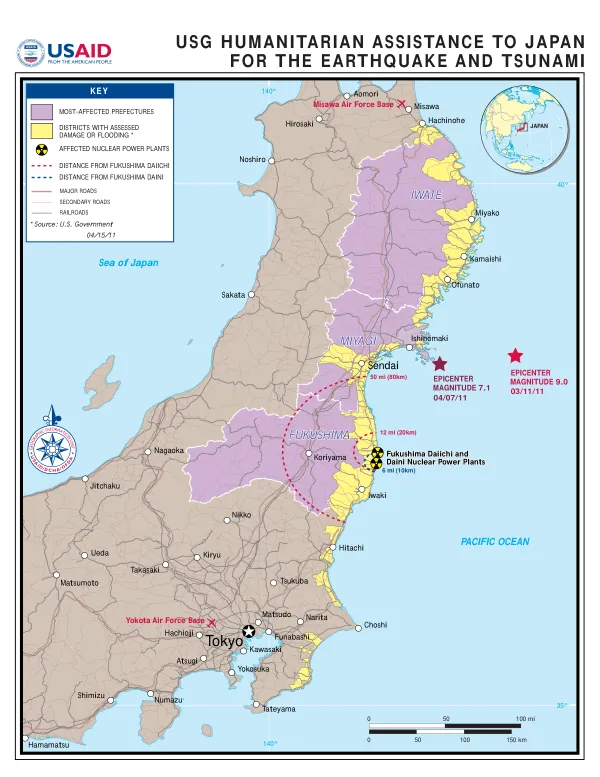
USAID/OFDA Japan Program Map
The Tohoku earthquake occurred on March 11, 2011, with a magnitude of 9.0.
2011 · 1 pages
Sign in to readA free account is required to download.
Abstract
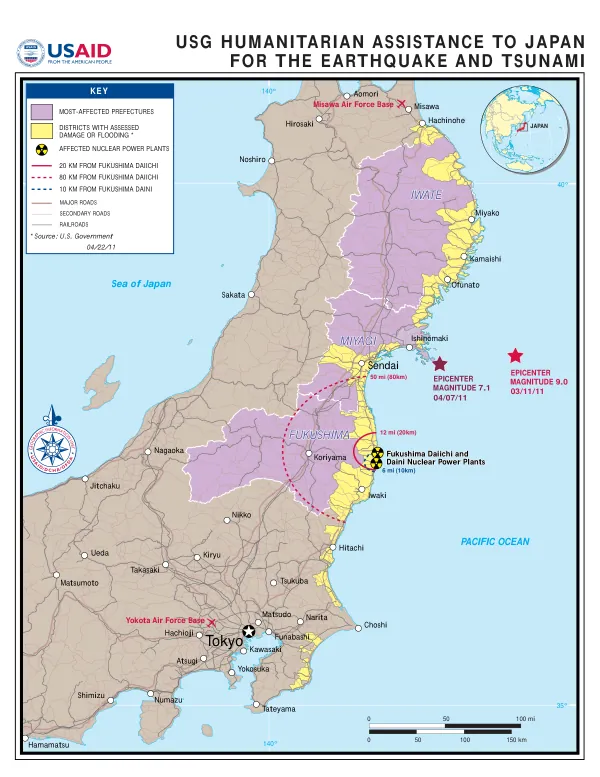
The epicenter was located in the Pacific Ocean, approximately 430 kilometers east of the Oshika Peninsula in Miyagi Prefecture. The earthquake triggered a massive tsunami that affected several prefectures, including Miyagi, Fukushima, and Iwate. The tsunami caused widespread destruction and flooding in coastal areas, with waves reaching as high as 40 meters in some locations. The cities of Sendai and Ishinomaki in Miyagi Prefecture were severely affected, with entire neighborhoods being inundated by the tsunami. In Fukushima Prefecture, the cities of Soma and Minamisoma were also heavily damaged. The earthquake and tsunami resulted in significant damage to infrastructure, including roads, railways, and buildings. The Fukushima Daiichi and Daini Nuclear Power Plants were also affected, with the Daiichi plant experiencing a series of equipment failures and radioactive material releases. The nearby city of Fukushima was evacuated due to concerns over radiation exposure. The USG Humanitarian Assistance to Japan for the Earthquake and Tsunami provided support to affected areas, including Miyagi and Fukushima Prefectures. The assistance included food, shelter, and medical aid, as well as support for the recovery and reconstruction efforts. The affected areas were divided into several districts, with some areas experiencing assessed damage or flooding. The major roads in the affected areas were severely damaged, with several sections being washed away by the tsunami. The secondary roads and railways were also affected, with many sections being impassable due to damage or flooding. The cities of Tokyo and Yokota Air Force Base were also affected, with some areas experiencing power outages and communication disruptions. The earthquake and tsunami resulted in significant loss of life, with over 15,000 people reported dead or missing. The disaster also caused widespread displacement, with many people being forced to evacuate their homes and seek shelter in temporary facilities. The affected areas were declared disaster zones, with the Japanese government declaring a state of emergency in response to the crisis. The recovery and reconstruction efforts were led by the Japanese government, with support from international organizations and aid agencies. The efforts focused on providing relief to affected communities, rebuilding infrastructure, and promoting economic recovery. The affected areas were also subject to ongoing monitoring and assessment, with efforts being made to mitigate the risks of future disasters.