USAID/OFDA
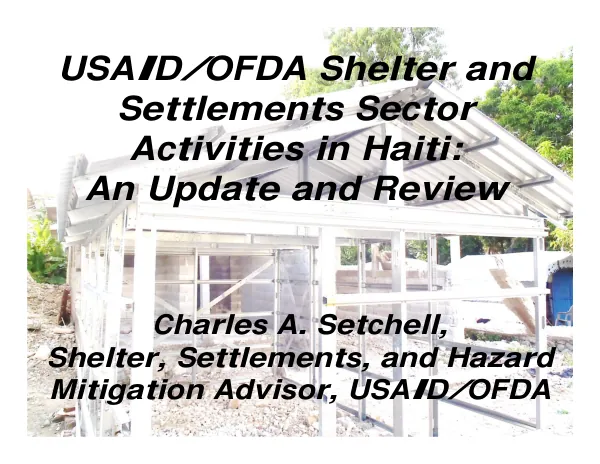
USAID/OFDA Shelter and Settlements Sector Activities in Haiti: An Update and Review
The Haitian context is characterized by extreme poverty, with 60% of the population living below the poverty line, earning less than $2 per day per capita.
2011 · 48 pages
Sign in to readA free account is required to download.
Abstract
The country's capital, Port-au-Prince, has a significant proportion of the population, approximately 70%, that does not officially exist, as they rent, lease, or squat on land without ownership. This situation is further exacerbated by limited institutional capacities and high vulnerability to natural disasters, including flooding, landslides, hurricanes, and earthquakes. The aftermath of the 2010 earthquake highlighted the urgent need for shelter and settlements sector activities in Haiti. The disaster resulted in an estimated 78 million cubic yards of rubble, equivalent to a pile rising 727 feet, which was deposited on the mall in Port-au-Prince. This massive amount of debris posed significant challenges for recovery efforts. In the affected areas, makeshift shelters and settlements, such as Bedsheet City in Leogane and Carrefour, became a reality for many displaced individuals. The USAID/OFDA Shelter and Settlements Sector Activities in Haiti aimed to address the critical shelter needs of the affected population. The initiative focused on providing safe and durable shelter solutions, as well as promoting sustainable and resilient community development. The program's objectives included improving the living conditions of vulnerable populations, enhancing community resilience, and supporting the recovery and reconstruction efforts in Haiti. Implementation of the program involved various interventions, including the provision of shelter materials, technical assistance, and capacity building for local authorities and communities. The program also emphasized the importance of community-led recovery and reconstruction efforts, recognizing the critical role that local stakeholders play in shaping the recovery process. By engaging with local communities and promoting their participation in the recovery efforts, the program aimed to ensure that the shelter and settlements sector activities in Haiti were responsive to the needs and priorities of the affected population. The program's geographic focus was on the most affected areas, including Port-au-Prince, Leogane, and Carrefour. The timeframes for the program's implementation were not explicitly stated in the provided information. However, the program's objectives and activities suggest a long-term commitment to supporting the recovery and reconstruction efforts in Haiti. The program's recommendations and lessons learned from the implementation process are likely to inform future shelter and settlements sector activities in Haiti and other disaster-affected countries.