USAID/ECUADOR
USAID/OFDA Surge Program Enhances Response Operations
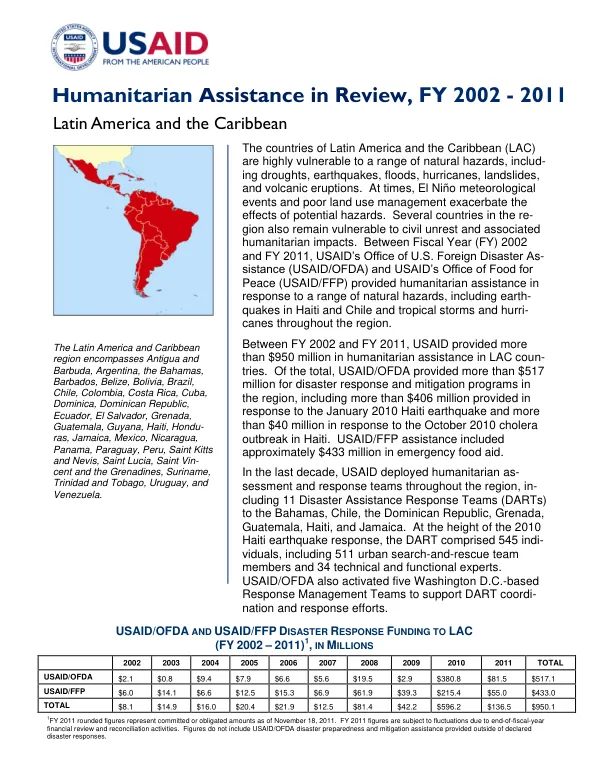
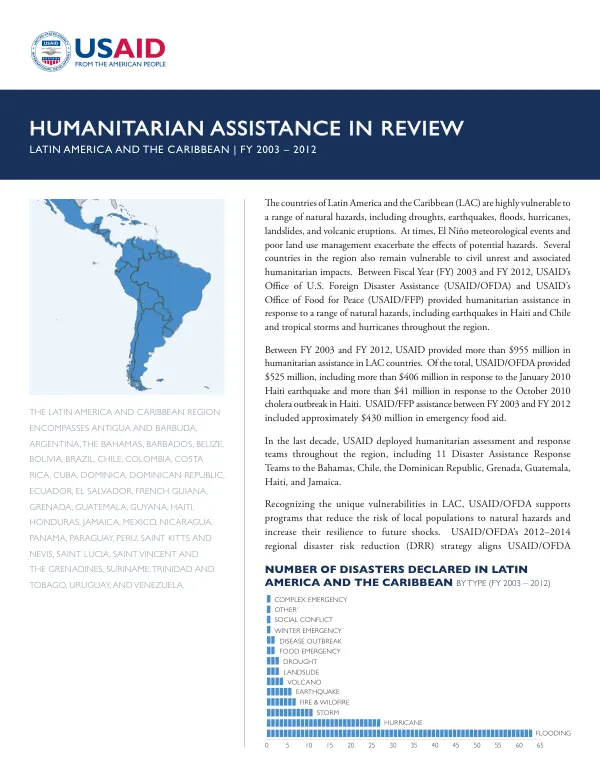
The USAID/OFDA Regional Office for Latin America and the Caribbean, based in San José, Costa Rica, plays a crucial role in disaster risk reduction and response in the region.
2012 · 2 pages
Sign in to readA free account is required to download.
Abstract
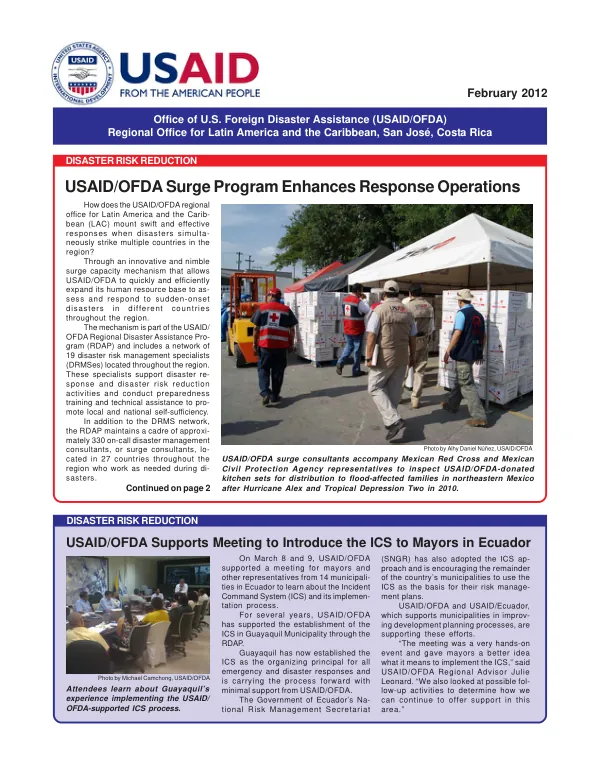
One of the key initiatives implemented by the office is the Incident Command System (ICS), a standardized approach to emergency and disaster responses. The ICS has been successfully established in Guayaquil Municipality, Ecuador, through the support of the Regional Disaster Assistance Program (RDAP). Guayaquil has now adopted the ICS as the primary organizing principle for all emergency and disaster responses, with minimal support from USAID/OFDA. The ICS meeting, held on March 8 and 9, 2012, in Ecuador, brought together mayors and representatives from 14 municipalities to learn about the ICS and its implementation process. The meeting was a hands-on event, providing mayors with a better understanding of what it means to implement the ICS. USAID/OFDA Regional Advisor Julie Leonard stated that the meeting was a success, and follow-up activities were discussed to determine how to continue offering support in this area. The RDAP surge consultant program is a critical component of the USAID/OFDA disaster response strategy in the region. The program allows the office to quickly and efficiently expand its human resource base to assess and respond to sudden-onset disasters in different countries throughout the region. The surge mechanism is part of the RDAP and includes a network of 19 disaster risk management specialists (DRMSes) located throughout the region. These specialists support disaster response and disaster risk reduction activities, conduct preparedness training, and provide technical assistance to promote local and national self-sufficiency. In addition to the DRMS network, the RDAP maintains a cadre of approximately 330 on-call disaster management consultants, or surge consultants, located in 27 countries throughout the region. These consultants work as needed during disasters, providing timely and cost-effective assistance with preliminary assessments or response activities. The surge program is based on a proactive approach to dealing with disasters, combining local capacity building with quick and efficient response operations. The surge consultants are local professionals familiar with the local language and customs, who can provide the USAID/OFDA team with insight into a country's political and geographic landscapes. They are typically deployed as part of a USAID/OFDA assessment or response team, arriving on site within hours to provide assistance. The surge program has become an integral piece of the response puzzle, allowing the USAID/OFDA team to respond to multiple disaster situations at the same time in a timely fashion. Senior Regional Advisor Tim Callaghan praised the surge staff, stating that they are highly experienced, low-maintenance contributors from their home countries, which adds value to USAID/OFDA's ability to respond and support host countries when countries make requests for humanitarian assistance. The high quality of the surge personnel has allowed the USAID/OFDA team to respond to multiple disaster situations at the same time in a timely fashion.