INTERNATIONAL CHILDREN'S FUND, INC.
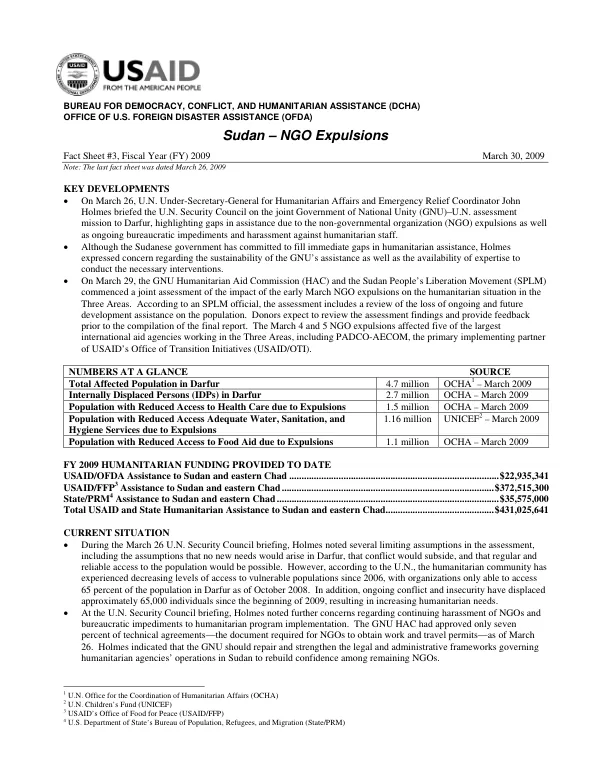
USAID/OFDA Zimbabwe Cholera Fact Sheet #7 2/02/2009
The cholera outbreak in Zimbabwe began in August 2008 and has since spread to all 10 provinces and 55 of the country's 62 districts.
2009 · 3 pages
Sign in to readA free account is required to download.
Abstract
As of February 1, 2009, the disease had caused more than 3,200 deaths, with over 62,900 cases reported and a case fatality rate of 5.1 percent, according to the U.N. World Health Organization (WHO). The cumulative number of reported cases exceeded WHO's earlier worst-case projection of 60,000 cases, prompting an increase in the worst-case projection to 81,000 to 115,000 cases. The outbreak has been exacerbated by seasonal floods, which have the potential to continue for several months. From January 18 to 24, WHO reported a third consecutive weekly increase in new cholera cases, but a decrease in both weekly cholera deaths and the weekly case fatality rate. The weekly institutional case fatality rate, measuring only cholera deaths in health facilities, cholera treatment centers (CTCs), and cholera treatment units (CTUs), declined to 1.3 percent, likely indicating improvements in case management. The U.N. Office for the Coordination of Humanitarian Affairs (OCHA) reported that the outbreak in Zimbabwe remained uncontrolled as of January 29, with newly reported case rates in urban areas appearing to have stabilized, but rates in rural areas continuing to increase. Cases in Mashonaland West, Masvingo, and Midlands provinces composed 57 percent of new cholera cases reported from January 18 to 24, according to WHO. The increasing percentage of deaths outside health facilities, CTCs, and CTUs likely represents deteriorating access to adequate care, but may also result from improvements in the institutional case fatality rate. USAID/OFDA has contributed $750,000 to WHO for humanitarian coordination and information management through the cholera command-and-control center. This support aims to assist in improving data collection, analysis, and dissemination, enabling humanitarian organizations to direct expertise and resources where most needed. USAID/OFDA has also committed more than $5.4 million for WASH programs, including $400,000 to assist individuals in cholera-affected areas in Limpopo Province, South Africa. The recent decrease in the weekly institutional case fatality rate has been attributed in part to the increased presence of health professionals involved in the response to the cholera outbreak. Staff from the International Center for Diarrheal Disease Research, Bangladesh, have conducted training sessions for health staff in Mashonaland West, Matabeleland North, Harare, and Bulawayo provinces to improve case management. Cholera transmission in rural areas results primarily from person-to-person contact, emphasizing the need for continued active case-finding and participatory health and hygiene education to encourage affected individuals to seek early treatment. USAID/OFDA support of the cholera command-and-control center assists WHO in compiling epidemiological reports, conducting case management training, establishing early warning mechanisms, and responding rapidly to new alerts. In response to the current cholera outbreak, USAID/OFDA has committed more than $360,000 for the procurement and transport of hygiene supplies for use in hygiene promotion programs in Zimbabwe. The U.S. Government has provided more than $264 million in humanitarian assistance to Zimbabwe since the outbreak began.