MINISTRY OF ENVIRONMENT AND SUSTAINABLE DEVELOPMENT
USAID Páramos and Forests Activity Newsletter January - February 2020
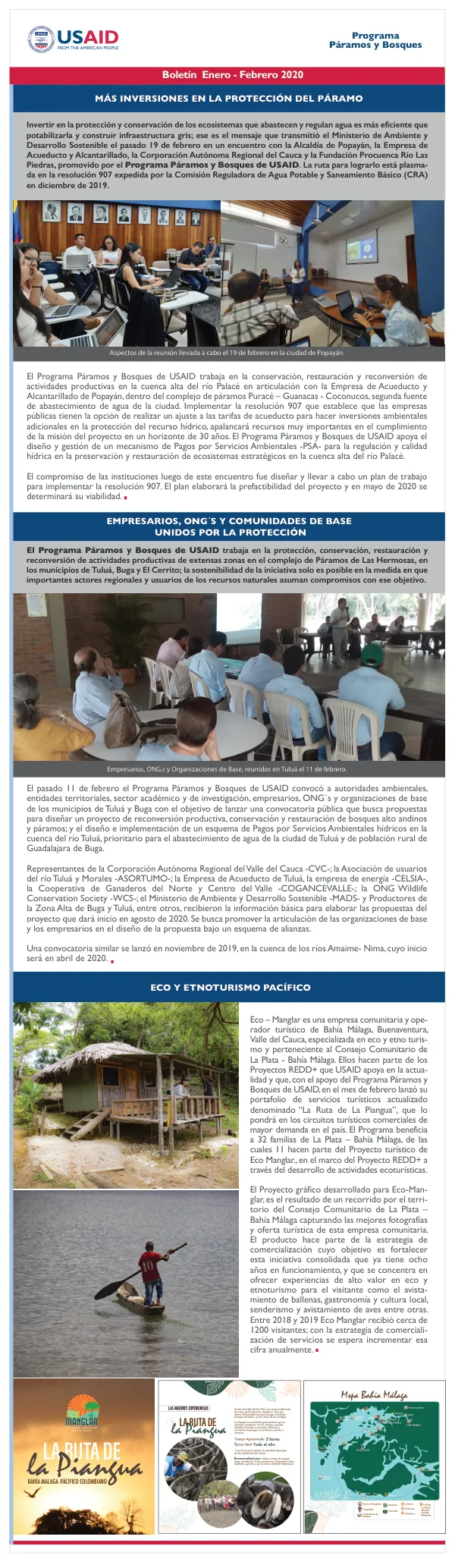
The USAID Páramos and Forests Activity is a conservation and restoration initiative focused on the Palacé River upper watershed in the Puracé – Guanacas - Coconucos páramos.
2020 · 1 pages
Sign in to readA free account is required to download.
Abstract
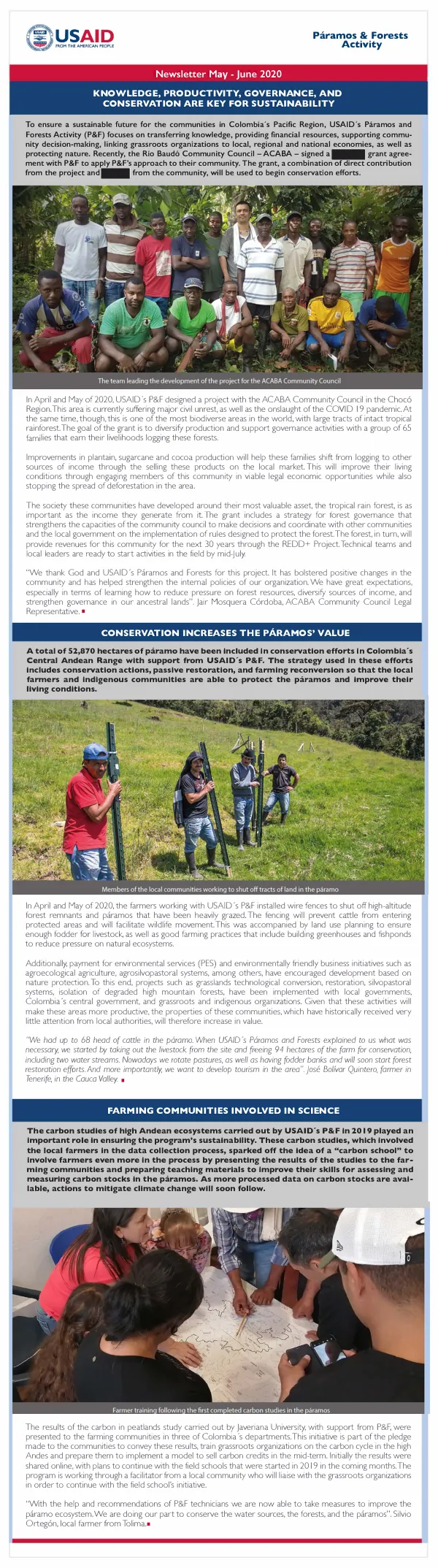
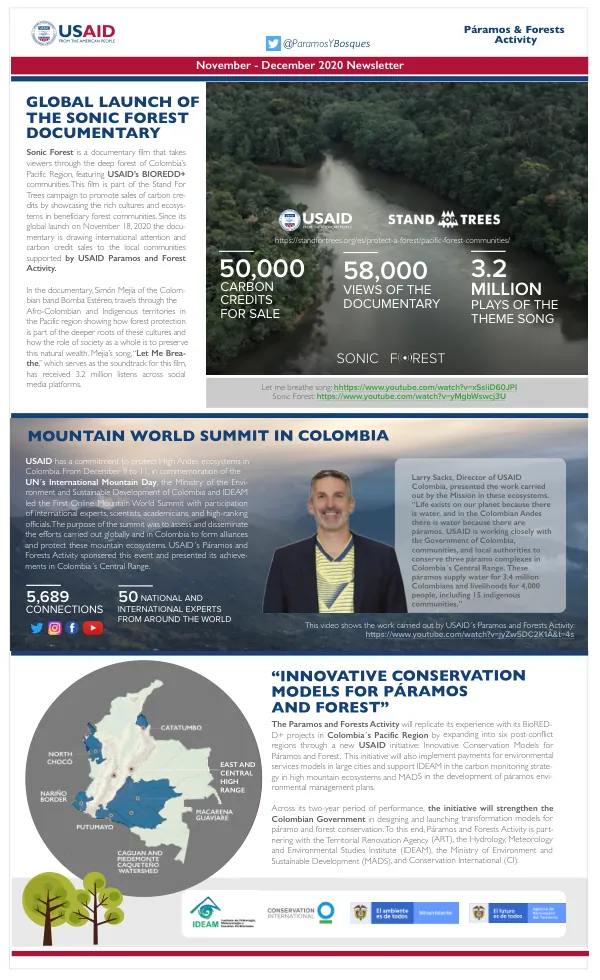
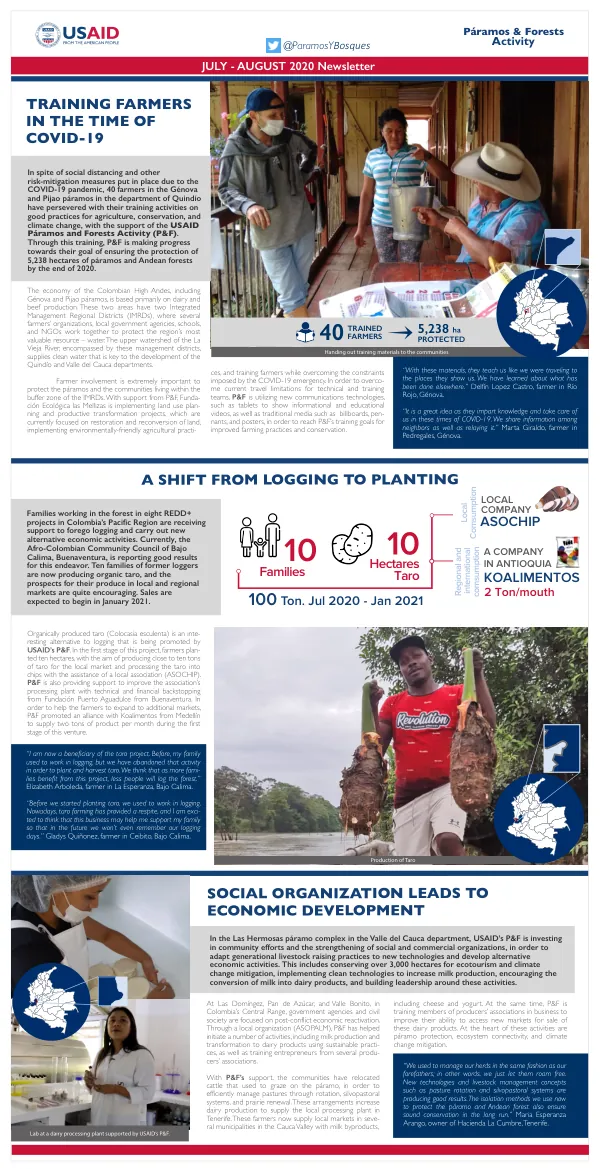
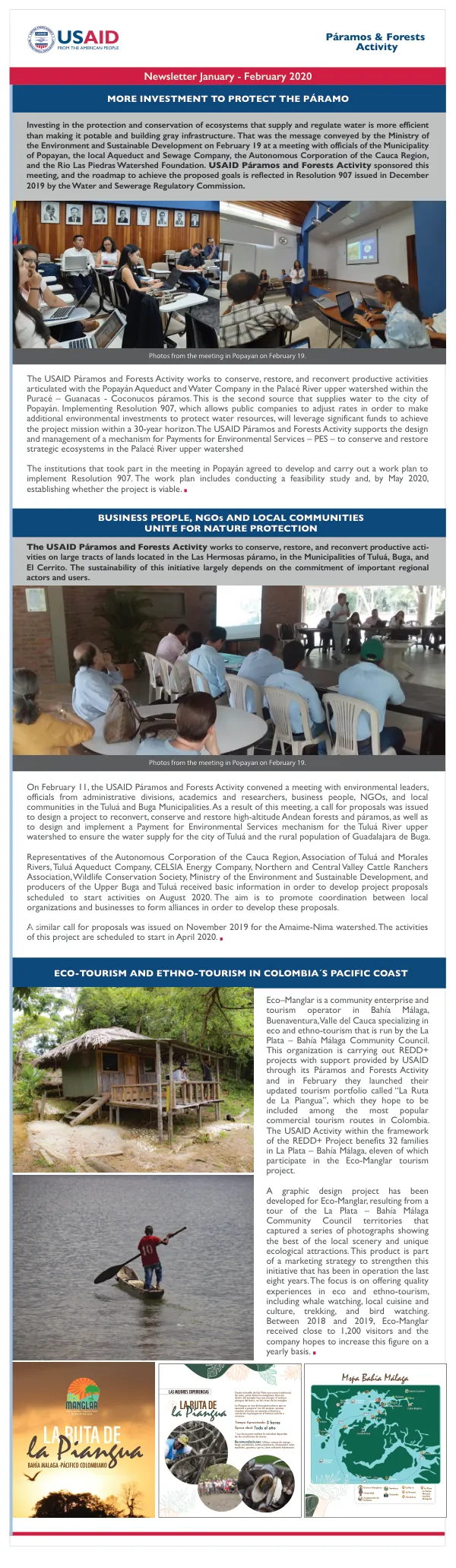
This region is the second source of water supply for the city of Popayán. The project aims to conserve and restore strategic ecosystems in the area, leveraging significant funds through the implementation of Resolution 907, which allows public companies to adjust rates for environmental investments. The initiative supports the design and management of a mechanism for Payments for Environmental Services (PES) to promote the conservation and restoration of ecosystems in the Palacé River upper watershed. A work plan has been developed to implement Resolution 907, including a feasibility study to determine the project's viability. The study is expected to be completed by May 2020. A meeting was convened by the USAID Páramos and Forests Activity on February 11, bringing together environmental leaders, officials, academics, businesspeople, NGOs, and local communities from the Tuluá and Buga Municipalities. The meeting resulted in a call for proposals to design a project for the reconversion, conservation, and restoration of high-altitude Andean forests and páramos, as well as the design and implementation of a PES mechanism for the Tuluá River upper watershed. The project aims to promote coordination between local organizations and businesses to develop project proposals, scheduled to start activities in August 2020. A similar call for proposals was issued in November 2019 for the Amaime-Nima watershed, with activities scheduled to start in April 2020. The USAID Páramos and Forests Activity also supports the Eco-Manglar community enterprise and tourism operator in Bahía Málaga, which is carrying out REDD+ projects with USAID support. Eco-Manglar has launched an updated tourism portfolio called "La Ruta de La Piangua," which aims to be included among the most popular commercial tourism routes in Colombia. The project benefits 32 families in La Plata – Bahía Málaga, with 11 participating in the Eco-Manglar tourism project. A graphic design project has been developed for Eco-Manglar, capturing the local scenery and unique ecological attractions to strengthen the initiative's marketing strategy. The USAID Páramos and Forests Activity also works to conserve, restore, and reconvert productive activities on large tracts of lands located in the Las Hermosas páramo, in the Municipalities of Tuluá, Buga, and El Cerrito. The sustainability of this initiative depends on the commitment of regional actors and users. The project aims to promote the protection and conservation of ecosystems that supply and regulate water, which is more efficient than making it potable and building gray infrastructure.