USAID
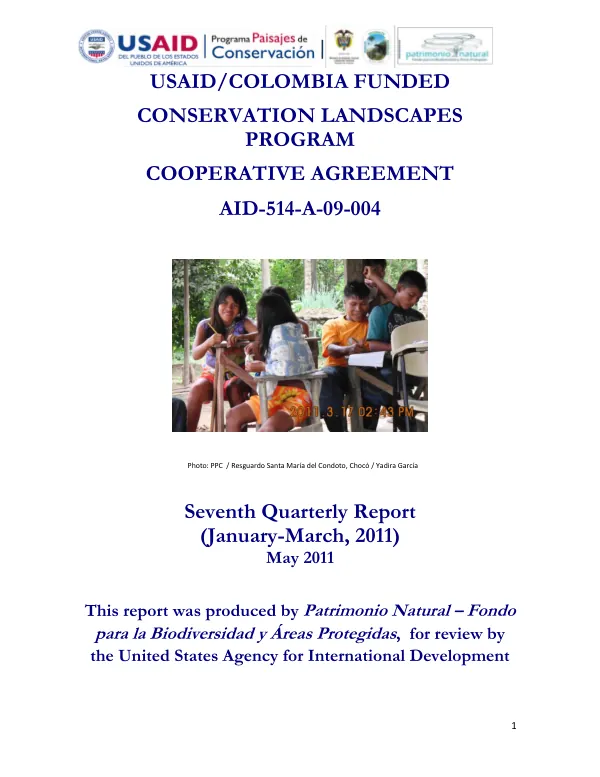
Sixth Quarterly Report: Conservation Landscapes Program
The Conservation Landscapes Program in Colombia began in 2010 with funding from USAID.
2011 · 38 pages
Sign in to readA free account is required to download.
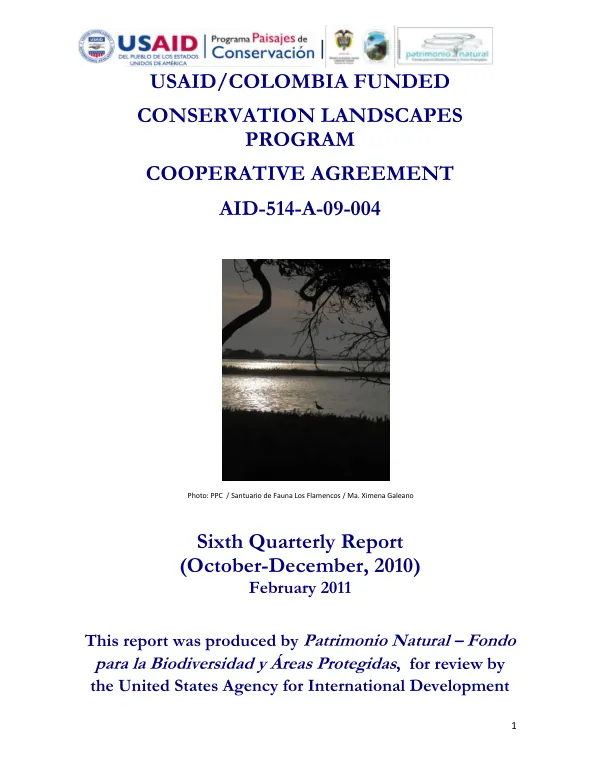
Abstract
The program aimed to strengthen the institutional capacity of the National Parks Unit (NPU) and promote sustainable livelihoods for local communities through ecotourism. The program's focus on ecotourism was driven by the potential for this industry to generate income and create jobs for local people while also promoting conservation. During the reporting period, the NPU applied a "hybrid methodology" to control unwanted impacts in the parks, which included elements of "tourism carrying capacity" and "limits of acceptable change." Formal documents related to carrying capacity were issued for several parks, including Tayrona, Los Nevados, Gorgona, and Vía Parque Isla Salamanca. Since 2004, some parks with existing tourism infrastructure and services were given concessions to private enterprises, while community groups were encouraged to provide ecotourism services in other parks. The implementation of the institutional strengthening component of the CLP by the NPU included the revision and analysis of the "hybrid methodology" with technical support from the US Forest Service. The USFS experts conducted meetings and workshops with the NPU, examining carrying capacity measuring methods and issuing recommendations for the Tayrona Park's infrastructure and paths. The group concluded that the document for measuring carrying capacity and ecotourism impacts had a good technical approach and was easy to understand and apply. The program's focus on ecotourism has led to significant advances in the NPU's institutional strengthening and relevant developments achieved by local operators for improving livelihoods and strengthening their participation and social capital. The program's efforts are expected to induce more people to visit these areas, generating options for local people and promoting conservation. The Performance Monitoring Plan Section has included additional information concerning the relevance of some activities and the advances or delays observed in each one of the targets when compared with the total numbers which must be completed by 2012. The program's activities are organized by each cluster, taking into account that some local operators have begun the execution of approved proposals, complementing the activities which up to the fifth quarter were carried out mainly by the NPU personnel. The program's success stories include the implementation of ecotourism services in Corales del Rosario, Iguaque, Otún-Quimbaya, Flamencos, Cocuy, and Utría, with the last three parks participating in the Conservation Landscapes Program. The program's lessons learned during this reporting period include the importance of capacity building in the "Leave No Trace" methodology, workshop design and maintenance of paths, workshop design and maintenance of sustainable infrastructure, planning for the management of Protected Areas in relation to ecotourism, and technical assistance. The program's activities for the next quarter include the implementation of ecotourism services in several parks, the revision and analysis of the "hybrid methodology," and the provision of technical assistance to local operators. The program's schedule of activities for the next quarter includes the following: * January 2011: Implementation of ecotourism services in Corales del Rosario and Iguaque * February 2011: Revision and analysis of the "hybrid methodology" with technical support from the US Forest Service * March 2011: Provision of technical assistance to local operators in the design and maintenance of sustainable infrastructure and paths.
Related documents