USAID DEC
Boletín Noviembre - Diciembre 2019 Páramos & Forests Activity JULY - AUGUST 2020 Newsletter TRAINING FARMERS IN THE TIME OF COVID-19
Sign inUSAID
Boletín Noviembre - Diciembre 2019 Páramos & Forests Activity JULY - AUGUST 2020 Newsletter TRAINING FARMERS IN THE TIME OF COVID-19
The USAID Páramos and Forests Activity (P&F) is a program aimed at protecting 5,238 hectares of páramos and Andean forests by the end of 2020.
2020 · 1 pages
Sign in to readA free account is required to download.
Abstract
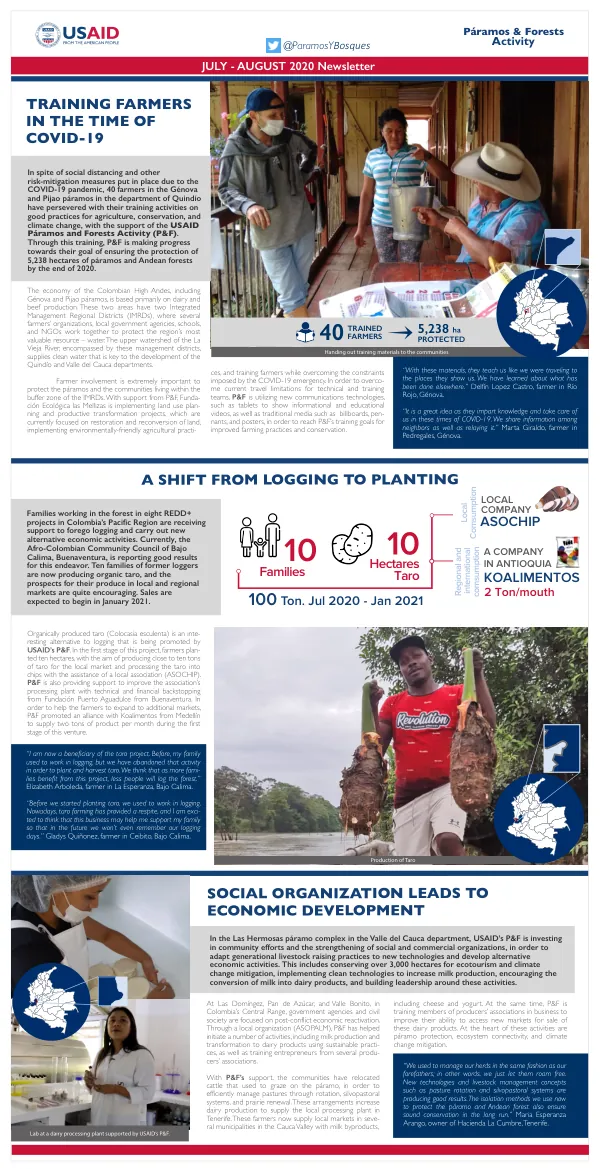
In the Génova and Pijao páramos in the department of Quindío, 40 farmers have persevered with their training activities on good practices for agriculture, conservation, and climate change, despite social distancing measures due to the COVID-19 pandemic. This training is part of P&F's goal to ensure the protection of the páramos and forests. In Colombia's Pacific Region, families working in the forest in eight REDD+ projects are receiving support to forego logging and carry out new alternative economic activities. The Afro-Colombian Community Council of Bajo Calima, Buenaventura, is reporting good results for this endeavor, with ten families of former loggers now producing organic taro. The prospects for their produce in local and regional markets are encouraging, with sales expected to begin in January 2021. The economy of the Colombian High Andes, including Génova and Pijao páramos, is based primarily on dairy and beef production. The upper watershed of the La Vieja River, which supplies clean water to the Quindío and Valle del Cauca departments, is a valuable resource that requires protection. Farmer involvement is crucial in protecting the páramos and the communities living within the buffer zone of the Integrated Management Regional Districts (IMRDs). With support from P&F, Fundación Ecológica las Mellizas is implementing land use planning and productive transformation projects, which include restoration and reconversion of land, environmentally-friendly agricultural practices, and training farmers. P&F is promoting organically produced taro as an alternative to logging. In the first stage of this project, farmers planted ten hectares, aiming to produce close to ten tons of taro for the local market. The taro will be processed into chips with the assistance of a local association (ASOCHIP). P&F is also providing support to improve the association's processing plant and has promoted an alliance with Koalimentos from Medellín to supply two tons of product per month during the first stage of this venture. In the Las Hermosas páramo complex in the Valle del Cauca department, P&F is investing in community efforts and the strengthening of social and commercial organizations to adapt generational livestock raising practices to new technologies and develop alternative economic activities. This includes conserving over 3,000 hectares for ecotourism and climate change mitigation, implementing clean technologies to increase milk production, encouraging the conversion of milk into dairy products, and building leadership around these activities.
Related documents